ISI sponsoring Khalistan networks in North America via drug cartels: Report
Synopsis
A new report in Khalsa Vox draws a direct line from Pakistan's ISI to Khalistan operations in North America, alleging drug-cartel money has plugged the funding gap left by shrinking diaspora donations — and cites Canada's own 2025 terror-financing assessment to back the claim. The question now is whether Ottawa treats this as the national security priority the report demands.
Key Takeaways
Pakistan's ISI is cited in multiple independent assessments as an external sponsor of the Khalistan campaign in North America , according to a Khalsa Vox report by Harleen Kaur .
Canada's Department of Finance 2025 risk assessment confirms Babbar Khalsa International and the International Sikh Youth Federation — both listed terrorist entities — receive financial support originating from Canada.
More than 200 gang-related homicides in British Columbia since 2007 are linked to rival Punjabi-Canadian gangs; a portion of drug revenues is reportedly diverted to pro-Khalistan causes.
In at least one case, financial intelligence allegedly traced tens of thousands of dollars from a raided drug house to a registered Canadian charity associated with pro-Khalistan causes.
CSIS has confirmed that Canada-based Khalistani extremists use the country as a base for promoting, fundraising, or planning violence primarily in India .
The report calls for financial intelligence analysis, charity audits, and proceeds-of-crime investigations targeting SFJ operational funding.
Pakistan's Inter-Services Intelligence (ISI) is cited in multiple independent assessments as an external sponsor of the Khalistan campaign operating out of North America, allegedly helping establish and sustain drug-cartel networks involving Punjabi-Canadian operators after traditional diaspora donations proved insufficient to fund desired levels of activity, according to a report published in Khalsa Vox.
Scale of the Khalistan Campaign in Canada and the US
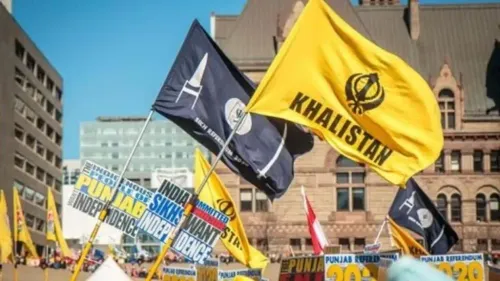
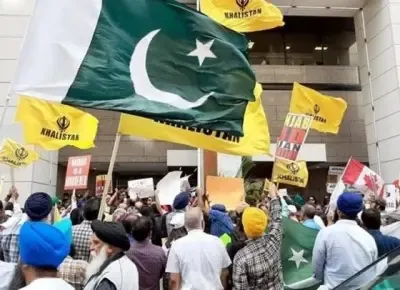
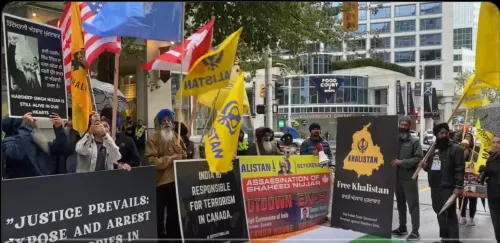
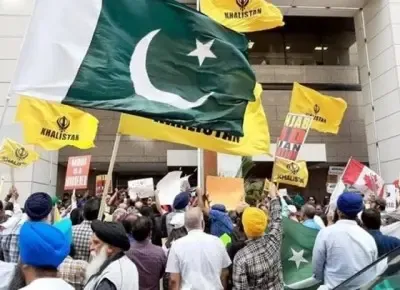
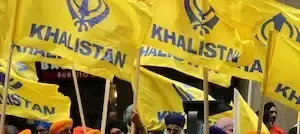
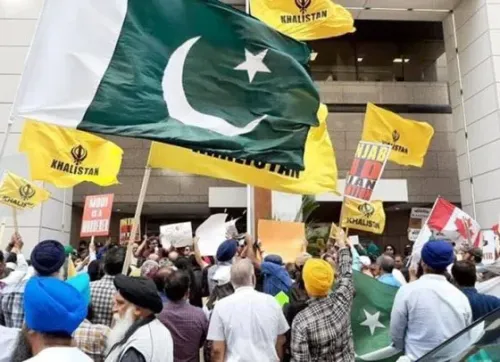
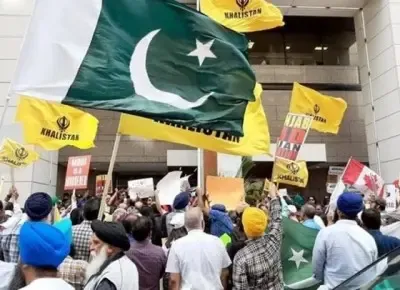
The report, authored by Harleen Kaur, argues that the Khalistani extremist movement is not a spontaneous expression of diaspora grievance but a sustained political and organisational enterprise. Sikhs for Justice (SFJ), she notes, has run a multi-year series of non-binding 'referendums' across Canadian and American cities, maintaining legal and advocacy infrastructure, staging regular public events, producing propaganda, and supporting legal defence and lobbying efforts.
'These activities require continuous funding for venues, logistics, materials, personnel, communications, and travel. Many of the people involved entered Canada or the United States as asylum seekers or temporary residents who described themselves as having fled with few resources. The operational scale of the campaign raises a basic question: where does the money come from?' Kaur wrote.
Canadian Government's Own Risk Assessment
The report cites Canada's Department of Finance 2025 Assessment of Money Laundering and Terrorist Financing Risks, which states that Babbar Khalsa International and the International Sikh Youth Federation — both listed terrorist entities under the Criminal Code in the Politically Motivated Violent Extremism category — have been observed by law enforcement and intelligence agencies to receive financial support originating from Canada.
According to the assessment, these groups are suspected of raising funds in Canada and elsewhere through documented methods including soliciting diaspora donations, abuse of non-profit and charitable organisations, cryptocurrencies, and criminal activity. The Canadian Security Intelligence Service (CSIS) has separately confirmed that a subset of Canada-based Khalistani extremists continues to use the country as a base for the promotion, fundraising, or planning of violence primarily in India.
Drug Trafficking and the Money Trail
The report identifies illegal drug trafficking as the highest money-laundering threat in Canada, involving billions of dollars annually. A subset of Punjabi-Canadian organised crime groups has, according to the report, long controlled significant portions of the cocaine, methamphetamine, and fentanyl trade moving through Western Canada and Ontario's trucking corridors.
Since 2007, more than 200 gang-related homicides in British Columbia alone have been linked to rival Punjabi-Canadian gangs contesting that trade, the report notes. Trucking companies have reportedly served as cover for bulk shipments, with major seizures — including hundreds of kilogrammes of cocaine in Peel Region — involving Indo-Canadian suspects.
Notably, in at least one reported case, financial intelligence allegedly traced tens of thousands of dollars from a raided drug house to a registered Canadian charity associated with pro-Khalistan causes. Indian investigators and Canadian law-enforcement sources have reportedly flagged that a portion of drug revenues is being diverted toward diaspora political campaigns, legal defence funds, and organisational support.
ISI Reassessing Spending as Punjab Support Wanes
Citing recent intelligence inputs, Kaur wrote that the ISI is reportedly reassessing its spending as grassroots support for Khalistan weakens on the ground in Punjab and some former backers distance themselves from what they describe as a criminal syndicate involved in drugs, arms trafficking, and extortion.
High-profile figures involved in organising the so-called referendums have faced firearms charges, the report adds — characterising these as patterns repeatedly observed by Canadian police and intelligence agencies, not abstract concerns.
What the Report Recommends
The report calls on Canadian law enforcement and intelligence agencies to treat the financing of the Khalistan campaign as a national security priority requiring rigorous, evidence-based scrutiny. It urges authorities to follow the specific money sustaining SFJ referendums, legal efforts, propaganda, and organisational infrastructure through financial intelligence analysis, charity audits, and proceeds-of-crime investigations. How Canadian authorities respond to these recommendations is likely to shape the trajectory of India-Canada security cooperation in the months ahead.
Point of View
Making its findings politically loaded even if the underlying evidence draws on Canadian government documents. The more significant detail is that Canada's own 2025 financing-risk assessment corroborates much of what New Delhi has argued for years — that Khalistan's operational infrastructure in Canada is not purely a civil society phenomenon. The ISI's reported pivot to drug-cartel financing, as diaspora donations thin out, is a structural shift that Canadian law enforcement has so far not publicly prioritised. Whether Ottawa acts on its own risk assessment, or treats it as another shelved document, will define how seriously it takes the India-Pakistan proxy dimension playing out on its soil.
NationPress
24 Oct 2026
Frequently Asked Questions
What does the report say about ISI's role in the Khalistan campaign in North America?
The report, published in Khalsa Vox, states that Pakistan's ISI appears in multiple independent assessments as an external sponsor of the Khalistan campaign in North America, allegedly helping establish and sustain drug-cartel networks involving Punjabi-Canadian operators because traditional diaspora donations were insufficient to sustain operations.
What is Canada's own assessment of Khalistan-linked terror financing?
Canada's Department of Finance 2025 Assessment of Money Laundering and Terrorist Financing Risks states that Babbar Khalsa International and the International Sikh Youth Federation — both listed terrorist entities under Canadian law — have been observed receiving financial support originating from Canada. CSIS has also confirmed that Canada-based Khalistani extremists use the country to fundraise or plan violence primarily in India.
How are drug-cartel proceeds allegedly linked to the Khalistan movement?
The report identifies a subset of Punjabi-Canadian organised crime groups that control portions of the cocaine, methamphetamine, and fentanyl trade in Western Canada and Ontario. It cites Indian investigators and Canadian law-enforcement sources as having flagged that a portion of these revenues is diverted to diaspora political campaigns and pro-Khalistan organisational support. In at least one reported case, financial intelligence traced tens of thousands of dollars from a raided drug house to a registered Canadian charity associated with pro-Khalistan causes.
What is Sikhs for Justice and why is its funding under scrutiny?
Sikhs for Justice (SFJ) is an organisation that has run a multi-year series of non-binding 'referendums' in Canadian and American cities, while also maintaining legal advocacy, producing propaganda, and supporting lobbying efforts. Its operational scale — requiring continuous spending on venues, logistics, personnel, and travel — has raised questions about funding sources, particularly given that many involved individuals entered Canada or the US as asylum seekers claiming limited resources.
What action does the report recommend for Canadian authorities?
The report recommends that Canadian law enforcement and intelligence agencies treat the financing of the Khalistan campaign as a national security priority. It specifically calls for financial intelligence analysis, charity audits, and proceeds-of-crime investigations targeting the funding pipelines that sustain SFJ referendums, legal efforts, propaganda, and organisational infrastructure.