CM Himanta Unveils People-First Assam Budget 2026
Synopsis
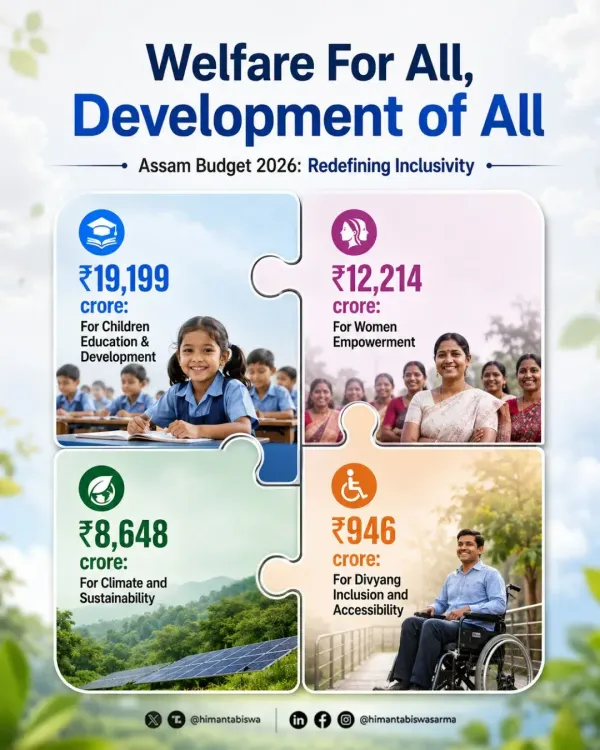
Assam Chief Minister Himanta Biswa Sarma on 16 July 2026 described Assam Budget 2026 as people-first, highlighting major investments in children, women, the Divyang community, and climate resilience, continuing the BJP-led state government's inclusive social-sector push.
Key Takeaways
CM Himanta Biswa Sarma described Assam Budget 2026 as 'people-first' on 16 July 2026 .
The budget prioritises four pillars: children, women, the Divyang community, and climate resilience .
Assam has progressively raised social-sector outlays in every budget since 2021 under the BJP-led government.
Climate resilience spending is critical given annual Brahmaputra flooding that displaces hundreds of thousands of residents.
Detailed allocations and scheme guidelines are expected during the upcoming Assam Assembly session.
CM Sarma also leads the North-East Democratic Alliance (NEDA) , positioning Assam's budget as a potential regional model.
Assam Chief Minister Himanta Biswa Sarma on Thursday, 16 July 2026 described the Assam Budget 2026 as a people-first plan anchored in significant investments for children, women, the Divyang community, and climate resilience, signalling the state government's continued commitment to inclusive social spending.
Context
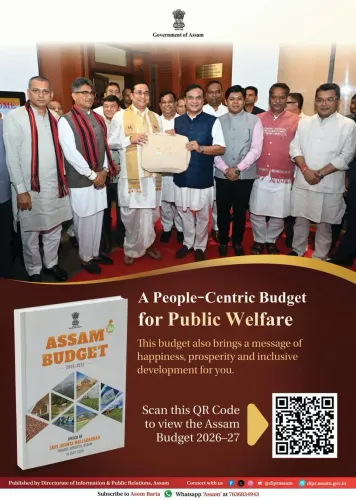
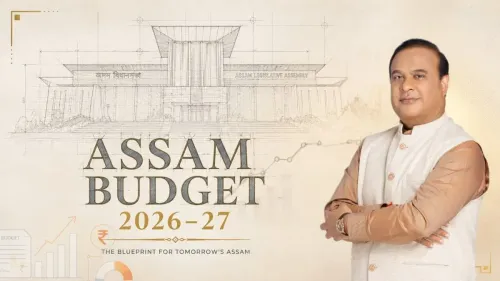
Taking to X, CM Sarma wrote: 'AssamBudget2026 puts people first — with significant investments in children, women, the Divyang community, and climate resilience.' The post, carrying the hashtag #AssamBudget2026, was accompanied by an image and quickly drew attention to the state government's stated social-sector priorities for the coming financial year.
Assam, a northeastern state of over 31 million people, faces recurrent annual flooding along the Brahmaputra river and carries persistent human development challenges, making the twin emphasis on welfare and climate resilience particularly significant.
Policy Backdrop
Since 2021, successive Assam state budgets under the BJP-led government have progressively raised outlays for women and child development alongside climate adaptation measures. Targeted welfare programmes for persons with disabilities and maternal health were introduced and expanded between 2022 and 2024, establishing a pattern of incremental social-sector scaling.
The current budget's framing around children, women, the Divyang community, and climate mirrors the broader policy direction of northeastern states seeking to close human development gaps while building environmental resilience. It also aligns with national frameworks on women's empowerment, disability rights under the Rights of Persons with Disabilities Act, and sustainable development goals.
CM Sarma, who also serves as convenor of the North-East Democratic Alliance (NEDA), has consistently positioned Assam as a model for inclusive governance in the region, and the budget framing reinforces that political messaging.
Stakeholders and Impact
The four pillars cited — children, women, the Divyang community, and climate resilience — represent some of Assam's most structurally vulnerable populations. Women and children in rural and flood-prone districts stand to benefit from enhanced welfare allocations, while the Divyang community has historically received attention through disability pensions, assistive devices, and accessible infrastructure schemes.
Climate resilience spending is especially consequential for Assam, where annual floods displace hundreds of thousands of people and damage agricultural livelihoods. Investments in flood management, early warning systems, and adaptive agriculture have featured in prior budgets and are expected to be deepened in the 2026 edition.
What's Next
Detailed scheme guidelines, specific allocation figures, and district-wise breakdowns are expected to be presented during the Assam Assembly session. Implementation progress on new welfare and climate-resilience components will be a key benchmark for the government's delivery record ahead of future electoral cycles.
If the stated priorities translate into on-ground allocations at scale, Assam Budget 2026 could set a new baseline for social-sector spending in the Northeast — and offer a template that other NEDA-aligned states may look to replicate.
Point of View
Who has built his governance identity around visible welfare delivery in a state with deep rural vulnerabilities. By foregrounding the Divyang community alongside women and children, the government is broadening its welfare coalition beyond traditional beneficiary groups — a move that carries both policy and electoral logic. The climate resilience plank adds a layer of developmental credibility at a time when flood-related displacement remains one of Assam's most persistent crises. Taken together, the budget's stated priorities suggest the BJP in Assam is doubling down on inclusive growth as its core narrative heading into the next political cycle.
NationPress
16 Jul 2026
Frequently Asked Questions
What are the main priorities of Assam Budget 2026?
Assam Budget 2026, as described by Chief Minister Himanta Biswa Sarma, prioritises significant investments in children, women, the Divyang community, and climate resilience.
Who presented Assam Budget 2026?
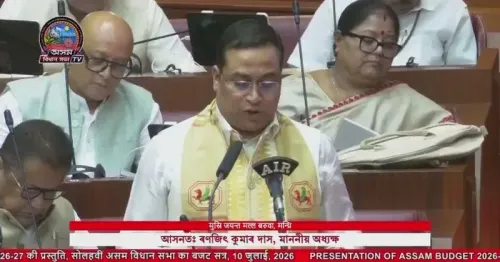
Assam Budget 2026 was announced by Chief Minister Himanta Biswa Sarma on 16 July 2026 via a post on X.
What is the Divyang community and why is it highlighted in Assam Budget 2026?
The Divyang community refers to persons with disabilities. The Assam government has expanded targeted welfare programmes for this group since 2022, including disability pensions and assistive devices, and Budget 2026 continues that focus.
Why does Assam Budget 2026 emphasise climate resilience?
Assam faces recurrent annual flooding along the Brahmaputra river that displaces hundreds of thousands of people and damages agricultural livelihoods, making climate resilience a critical and recurring budget priority.
When will the detailed allocations of Assam Budget 2026 be available?
Detailed scheme guidelines and district-wise allocations are expected to be presented during the upcoming Assam Assembly session following the budget announcement.