CM Karnataka Pays Tribute to Nehru on Children's Day
Synopsis
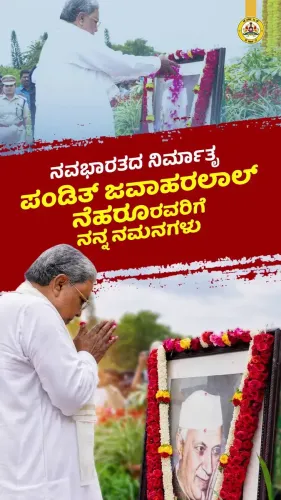
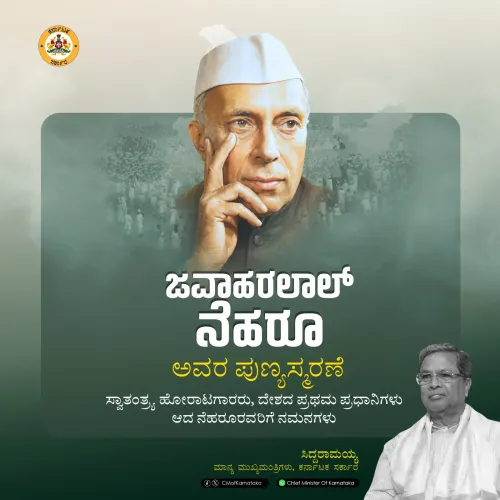
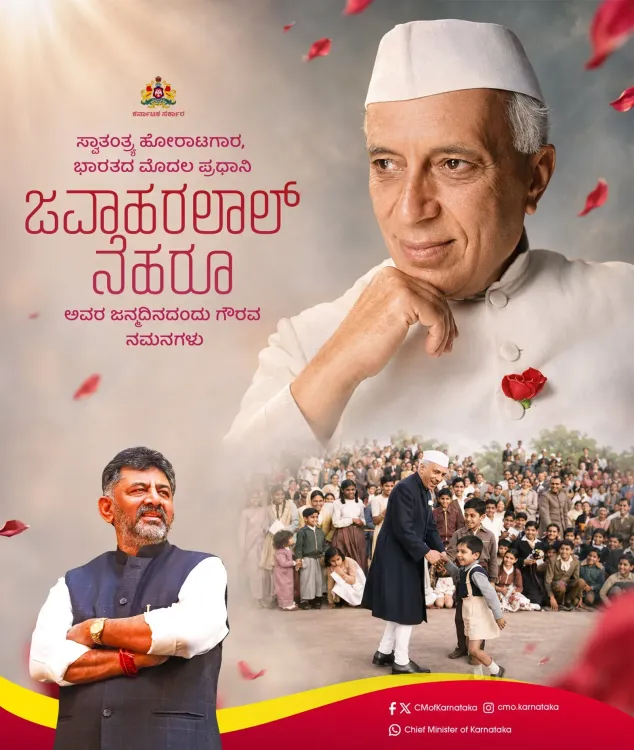
The Chief Minister's Office of Karnataka marked Children's Day on 14 November 2026 with a Kannada tribute to Jawaharlal Nehru, honouring the founding Prime Minister's legacy in education, democracy, and industrial development.
Key Takeaways
The Karnataka Chief Minister's Office posted a tribute to Jawaharlal Nehru on his birth anniversary, 14 November 2026 .
The post was in Kannada and cited Nehru's contributions to education, democracy, and industrial development in India.
Nehru is referred to as 'Chacha Nehru' — a title reflecting his legendary affection for children.
India has observed Nehru's birthday as Children's Day since the 1960s , following a parliamentary decision after his death in 1964 .
State and national governments across India routinely issue such tributes, reflecting continuity in official commemoration of founding leaders.
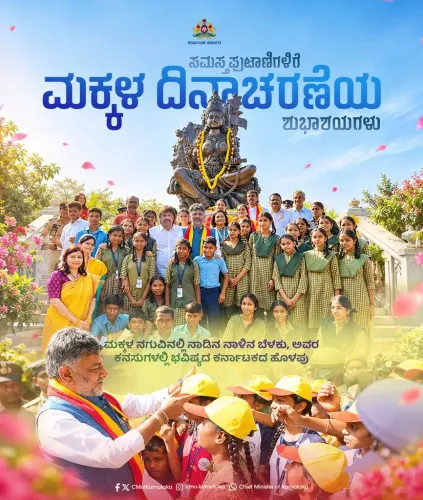
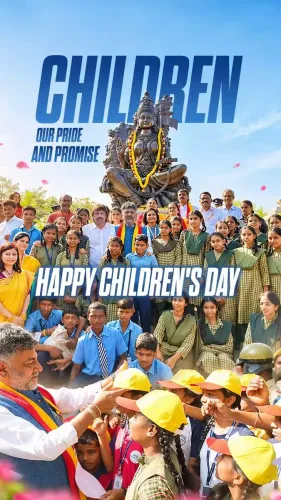
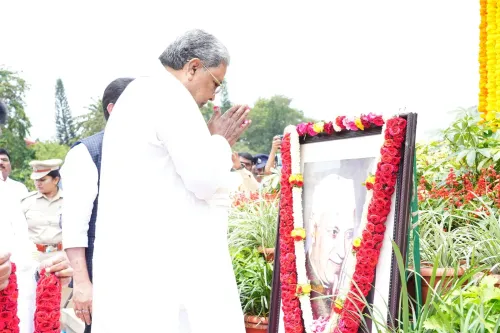
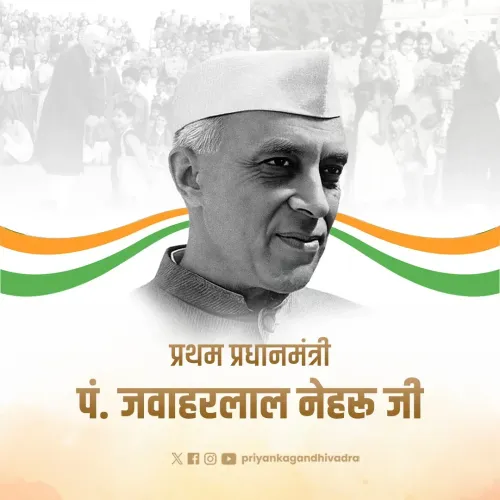
On Children's Day, 14 November 2026, the Chief Minister's Office of Karnataka paid solemn tribute to Pandit Jawaharlal Nehru — India's first Prime Minister and a towering figure of the independence movement — honouring the architect of modern India on his birth anniversary.
The post, written in Kannada, offered respectful salutations — 'ಗೌರವಪೂರ್ವಕ ನಮನಗಳು' (reverential salutations) — describing Nehru as the builder of a strong foundation for education, democracy, and industrial development in independent India. It called on citizens to remember the great leader by observing his birthday as Children's Day, a tradition that has held firm for over six decades.
Why 14 November belongs to India's children
Nehru's affection for children was legendary, earning him the endearing title 'Chacha Nehru' — 'Uncle Nehru.' After his death in 1964, the Indian Parliament decided that his birthday would be observed as Children's Day (Makkala Dinacharane in Kannada) across the nation — a living tribute that links the memory of a statesman to the future he believed in. The practice has continued without interruption, making it one of India's most consistent acts of civic commemoration.
Nehru's nation-building legacy that Karnataka's CMO invokes
Nehru's fingerprints are on the scaffolding of the Indian republic: the Planning Commission, the Indian Institutes of Technology, AIIMS, and the steel plants of Bhilai, Rourkela, and Durgapur all emerged under his tenure as Prime Minister from 1947 to 1964. His commitment to parliamentary democracy and a secular constitution gave independent India its foundational grammar. It is this constellation of institution-building that the Karnataka CMO's tribute specifically invokes — education, democracy, industrial progress — framing Nehru not merely as a historical figure but as a continuing reference point for state governance.
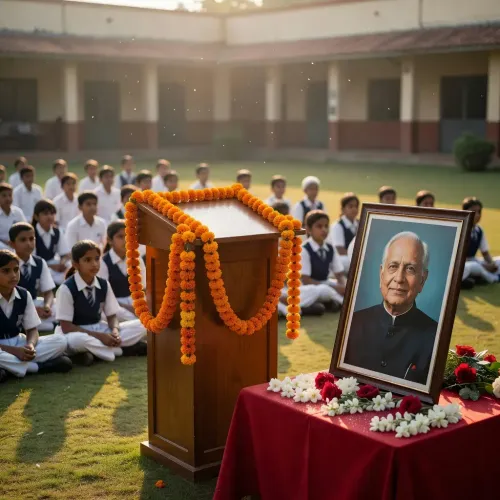
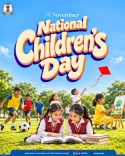
Across India, schools mark the day with cultural programmes, speeches, and competitions — a nationwide ritual that keeps Nehru's connection to childhood and the future alive in the public imagination.
Sixty-two years on, a birthday still belongs to every child in India — and that, more than any monument, may be Nehru's most enduring legacy.
Point of View
Democracy, and industrial development as Nehru's pillars, the Congress-led Karnataka government aligns itself with a Nehruvian ideological lineage at a time when that legacy is actively contested in national discourse. Such annual tributes serve a dual function: civic commemoration and a quiet assertion of political identity. The consistent framing of Nehru as 'architect of modern India' by state governments led by the Indian National Congress underscores how foundational figures remain live instruments in contemporary political positioning.
NationPress
14 Nov 2026
Frequently Asked Questions
Why is 14 November celebrated as Children's Day in India?
14 November is celebrated as Children's Day in India because it is the birth anniversary of Jawaharlal Nehru , India's first Prime Minister, who was famously fond of children and was affectionately called 'Chacha Nehru.' The observance began after his death in 1964 .
What did Karnataka CMO post for Children's Day 2026?
The Chief Minister's Office of Karnataka posted a tribute in Kannada on 14 November 2026 , offering respectful salutations to Nehru and urging citizens to remember him by observing his birthday as Children's Day .
What is the meaning of 'Chacha Nehru'?
'Chacha Nehru' literally means 'Uncle Nehru' in Hindi. The title was given to Jawaharlal Nehru because of his deep affection for children, and it remains one of his most popular and enduring honorifics.
What institutions did Jawaharlal Nehru establish in India?
During his tenure as Prime Minister from 1947 to 1964 , Jawaharlal Nehru was instrumental in establishing the Planning Commission , the Indian Institutes of Technology (IITs) , AIIMS , and major steel plants at Bhilai, Rourkela, and Durgapur , laying the groundwork for India's industrial and educational framework.
How do Indian states celebrate Children's Day?
On Children's Day (14 November) , schools across India organise cultural programmes, debates, sports events, and competitions. State governments and official bodies issue formal tributes to Jawaharlal Nehru , and child-centric events are held at both state and national levels.