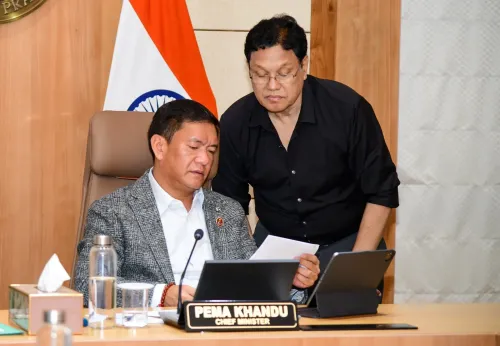
CM Pema Khandu Greets 50 Years of Arunachal Transport
Synopsis
Chief Minister Pema Khandu has greeted the golden jubilee of Arunachal Pradesh State Transport Services and extended wishes for the 'Look Into The Future' workshop from 29-31 May 2026, highlighting five decades of connectivity in the state's remote regions.
Key Takeaways
Arunachal Pradesh Chief Minister Pema Khandu extended greetings on 25 May 2026 for the 50-year commemoration of the Arunachal Pradesh State Transport Services (APSTS) .
A three-day workshop titled 'Look Into The Future' is scheduled from 29 to 31 May 2026 alongside the golden jubilee celebrations.
The APSTS was established around 1972 when Arunachal Pradesh became a Union Territory, with its mandate expanding after full statehood in 1987 .
CM Khandu specifically highlighted the service's role in connecting 'remote and far-flung regions' of the state.
National programmes including SARDP-NE and Bharatmala Pariyojana have complemented state transport efforts over the decades.
The workshop is expected to address fleet modernisation and alignment with the central government's Act East Policy connectivity agenda.
Arunachal Pradesh Chief Minister Pema Khandu on Monday, 25 May 2026 extended warm greetings on the occasion of the Commemoration of 50 Years of Arunachal Pradesh State Transport Services, and conveyed best wishes for the accompanying Workshop on 'Look Into The Future', scheduled from 29 to 31 May 2026.
Context
In his post, CM Khandu acknowledged that for five decades the Arunachal Pradesh State Transport Services (APSTS) has played a 'vital role in connecting people, strengthening accessibility, and supporting the growth and development of our state, especially in remote and far-flung regions.' He extended wishes to organisers, officials, staff, and participants for a 'successful and meaningful event.'
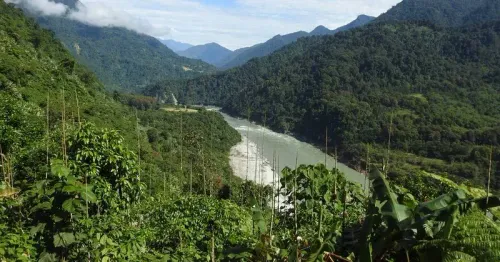
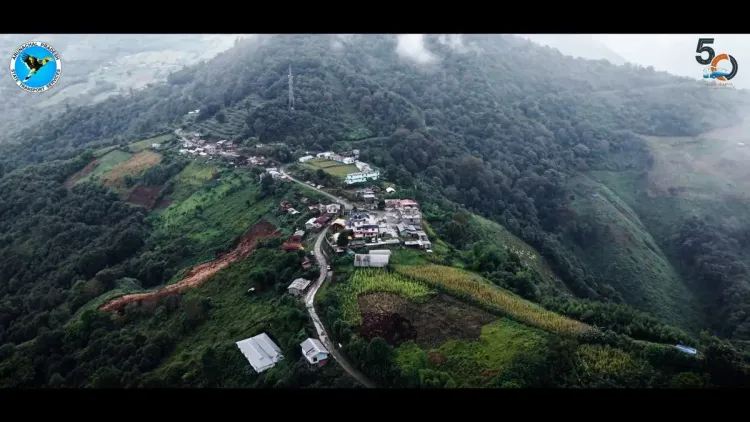
The golden jubilee marks a significant milestone for a state whose rugged, mountainous terrain makes public bus services one of the few affordable lifelines for communities in interior districts. Arunachal Pradesh, India's northeasternmost state, shares borders with China and Myanmar, giving its transport network both a developmental and a strategic dimension.
Policy Backdrop
The roots of the APSTS trace back to 1972, when Arunachal Pradesh was constituted as a Union Territory and dedicated state transport infrastructure was established to serve its dispersed population. The grant of full statehood in 1987 expanded the mandate and fleet operations of the service considerably.
Over subsequent decades, successive central and state governments treated road and bus connectivity as foundational to integrating Arunachal Pradesh with the rest of India. National programmes such as the Special Accelerated Road Development Programme for the North East (SARDP-NE), active since the mid-2000s, have complemented state-level transport efforts by improving the highway corridors on which bus services operate. More recently, the Bharatmala Pariyojana has brought fresh investment to national highway stretches in the northeast, creating an opportunity for state transport agencies to extend their reach.
Stakeholders and Impact
The primary beneficiaries of APSTS are the remote communities of Arunachal Pradesh — tribal villages, border hamlets, and highland settlements — for whom state buses often represent the only regular public-transport option. The service also sustains a sizeable workforce of transport employees whose livelihoods are directly tied to its operations.
The three-day workshop, titled 'Look Into The Future', signals a forward-planning exercise that could encompass fleet modernisation, route rationalisation, and possible integration with upcoming national highway stretches. Analysts have noted that periodic reviews of this kind increasingly link local transport planning to the broader Act East Policy connectivity goals championed by the central government.
What's Next
The workshop running from 29 to 31 May 2026 is expected to bring together state transport officials, planners, and stakeholders to chart the next phase of APSTS operations. Possible outcomes include announcements on fleet upgrades or alignment of state services with new highway infrastructure under Bharatmala.
As Arunachal Pradesh deepens its connectivity with the rest of India and with neighbouring countries under the Act East Policy, the role of a modernised state transport service is likely to grow — making the golden jubilee commemoration not merely a ceremonial milestone but a platform for defining the next fifty years of public mobility in one of India's most strategically significant states.
Point of View
Timed ahead of the three-day workshop, position the golden jubilee as more than a ceremonial occasion — they frame public transport as a pillar of state-building in a border territory where connectivity equals sovereignty. The reference to 'remote and far-flung regions' is a deliberate political signal that the BJP-led state government remains attentive to peripheral communities ahead of future electoral cycles. Situating the APSTS milestone within the broader Act East Policy narrative also allows the state to claim credit for national-level infrastructure dividends. The 'Look Into The Future' workshop title suggests the administration is preparing a forward agenda, possibly tied to Bharatmala highway timelines, that could define transport policy in Arunachal Pradesh for the next decade.
NationPress
20 Sept 2026
Frequently Asked Questions
What is the Arunachal Pradesh State Transport Services golden jubilee about?
The golden jubilee marks 50 years of the Arunachal Pradesh State Transport Services (APSTS) , the state-run bus network that connects remote and hilly districts of Arunachal Pradesh. A three-day commemorative workshop titled 'Look Into The Future' is being held from 29 to 31 May 2026 .
When was Arunachal Pradesh State Transport Services established?
The APSTS was set up around 1972 when Arunachal Pradesh was constituted as a Union Territory, with its fleet and mandate expanding significantly after the state gained full statehood in 1987 .
What did CM Pema Khandu say about the APSTS anniversary?
CM Pema Khandu said the APSTS has played a 'vital role in connecting people, strengthening accessibility, and supporting the growth and development of our state, especially in remote and far-flung regions' over the past five decades.
What is the 'Look Into The Future' workshop in Arunachal Pradesh?
The 'Look Into The Future' workshop is a three-day event from 29 to 31 May 2026 focused on the future direction of Arunachal Pradesh State Transport Services , likely covering fleet modernisation, route planning, and integration with national highway projects.
Why is public transport important for Arunachal Pradesh?
Arunachal Pradesh has rugged, mountainous terrain and shares borders with China and Myanmar , making state bus services one of the few affordable transport options for remote communities and a strategic asset for national integration.