CM Pema Khandu Meets ACF on Freedom of Religion Act Rules
Synopsis
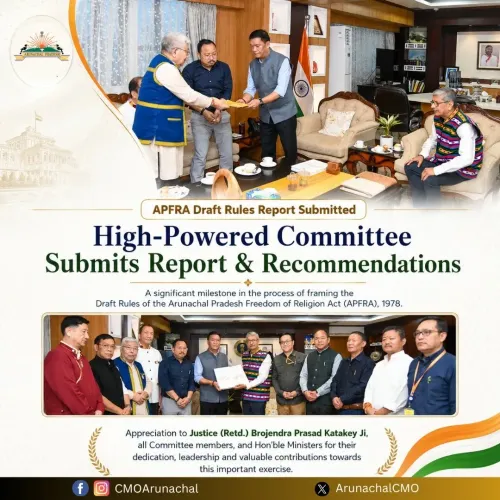
Arunachal Pradesh Chief Minister Pema Khandu held a 'positive and meaningful' meeting with the Arunachal Christian Forum on 15 June 2026 to consult on draft rules under the state's Freedom of Religion Act, 1978, reaffirming his government's commitment to communal peace and inclusivity.
Key Takeaways
CM Pema Khandu met newly elected Central Executive Members of the Arunachal Christian Forum (ACF) on 15 June 2026 .
The meeting focused on draft implementing rules under the Arunachal Pradesh Freedom of Religion Act, 1978 (APFRA) .
The 1978 Act prohibits religious conversions by force, fraud, or inducement but has historically lacked notified rules for enforcement.
Khandu stated that no religious community should 'feel hurt, excluded, or alienated' in the state.
The rule-making process mirrors similar legislative exercises in several other Indian states since the 1960s .
Final gazette notification of the APFRA rules and any subsequent judicial or legislative review remain the key steps to watch.
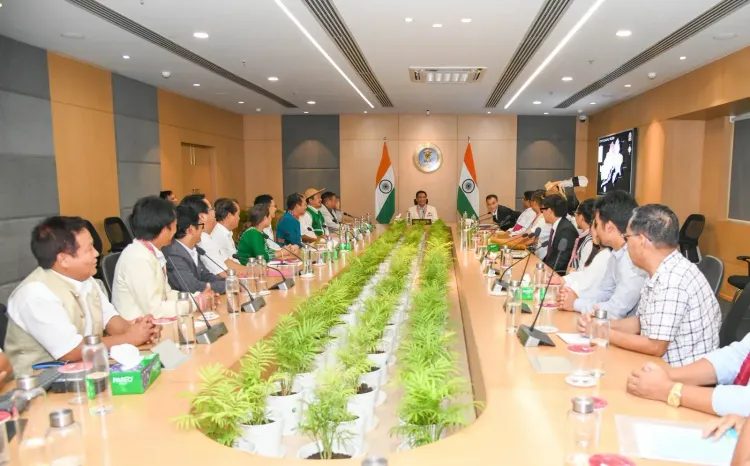
Arunachal Pradesh Chief Minister Pema Khandu met the newly elected Central Executive Members of the Arunachal Christian Forum (ACF) on Monday, 15 June 2026, to discuss the draft rules under the Arunachal Pradesh Freedom of Religion Act, 1978 (APFRA). Khandu described the sitting as 'positive and meaningful,' signalling that the state government is actively consulting religious stakeholders before finalising the rules.
Context
The meeting centred on draft rules being framed under the Arunachal Pradesh Freedom of Religion Act, 1978, a state law enacted to regulate religious conversions carried out by force, fraud, or inducement while simultaneously protecting the constitutional right to freedom of religion. Khandu affirmed that his government's 'driving priority will always be peace, harmony, and progress,' and that 'no religious community should ever feel hurt, excluded, or alienated.'
The ACF is a body that represents Christian communities across Arunachal Pradesh and has historically engaged with the state government on matters of religious policy. The forum's newly elected Central Executive Members participated in what appears to be a formal consultation with the Chief Minister's office on the ongoing rule-making exercise.
Policy Backdrop
The Arunachal Pradesh Freedom of Religion Act has been on the books since 1978 but has long operated without notified implementing rules, limiting its practical enforcement. The current exercise to frame those rules places Arunachal Pradesh in the company of several other Indian states — including Odisha, Madhya Pradesh, Chhattisgarh, Gujarat, Himachal Pradesh, and Uttarakhand — that enacted similar Freedom of Religion legislation from the 1960s onward to address concerns about induced conversions.
In India's Northeast, such laws carry particular weight because they intersect with tribal customs, shifting religious demographics, and the long presence of missionary activity. Community consultations of the kind held on 15 June are therefore a standard — and politically significant — step in the rule-making process, aimed at preventing alienation among minority religious groups who fear the law could be misused to restrict legitimate religious practice.
Stakeholders and Impact
Arunachal Pradesh is home to significant religious diversity: indigenous animist traditions (Donyi-Polo), Hinduism, Buddhism, and Christianity all have substantial followings among the state's tribal communities. Christian organisations, which have historically raised concerns about anti-conversion laws across India, are among the most directly affected stakeholders in the rule-drafting process.
Khandu's emphasis that 'every faith, every tradition, and every citizen is an invaluable part of the Arunachal family' is a deliberate signal of inclusivity. By engaging the ACF at the executive level before rules are notified, the government is attempting to build consensus and reduce the risk of legal or community challenges once the rules come into force.
What's Next
The immediate next step is the finalisation and gazette notification of the implementing rules under APFRA. Once notified, the rules will govern how complaints of forced or fraudulent conversion are investigated and adjudicated in the state. Any substantive disagreements between the government and religious communities that remain unresolved during consultations could surface in the form of representations to the state legislature or petitions before the Gauhati High Court.
The outcome of this rule-making process will be closely watched by religious organisations, tribal bodies, and legal advocates across the Northeast, as it could set a template for how other states in the region balance anti-conversion regulation with constitutional guarantees of religious freedom.
Point of View
Harmony, and inclusion, he is attempting to decouple the law's regulatory intent from the perception that it targets minority faiths. The broader pattern across India's Northeast suggests that rule-making under such laws is as much a political exercise in coalition management as it is a legal one. How the final rules balance enforcement mechanisms with safeguards against misuse will ultimately determine whether this consultation translates into durable communal trust or merely defers conflict.
NationPress
14 Sept 2026
Frequently Asked Questions
What is the Arunachal Pradesh Freedom of Religion Act, 1978?
The Arunachal Pradesh Freedom of Religion Act, 1978 is a state law that prohibits religious conversions carried out by force, fraud, or inducement, while upholding the constitutional right to freely profess and practise one's religion. The state government is currently drafting implementing rules under the Act.
Why did CM Pema Khandu meet the Arunachal Christian Forum?
CM Pema Khandu met the newly elected Central Executive Members of the Arunachal Christian Forum on 15 June 2026 to discuss the draft rules being framed under the Arunachal Pradesh Freedom of Religion Act, 1978, as part of a broader stakeholder consultation process.
What are the draft rules under APFRA about?
The draft rules are the implementing regulations that will govern how the Arunachal Pradesh Freedom of Religion Act, 1978 is enforced in practice. Specific provisions in the draft have not been publicly disclosed and remain under consultation.
Does Arunachal Pradesh have a large Christian population?
Yes. Arunachal Pradesh is religiously diverse, with significant communities following Christianity, indigenous animist traditions such as Donyi-Polo, Hinduism, and Buddhism, largely among its tribal populations.
Which other Indian states have similar freedom of religion laws?
Several Indian states including Odisha, Madhya Pradesh, Chhattisgarh, Gujarat, Himachal Pradesh, and Uttarakhand have enacted Freedom of Religion Acts since the 1960s to regulate conversions, making Arunachal Pradesh's 1978 law part of a broader national legislative pattern.