CM Pema Khandu Meets Ex-LBSNAA Chief, Receives Book on India's States
Synopsis
Arunachal Pradesh Chief Minister Pema Khandu met former LBSNAA Director and historian Dr Sanjeev Chopra on 22 June 2026, receiving his book on the making and remaking of India's internal state boundaries. The meeting highlights continued elite engagement with India's federal geography and state-formation history.
Key Takeaways
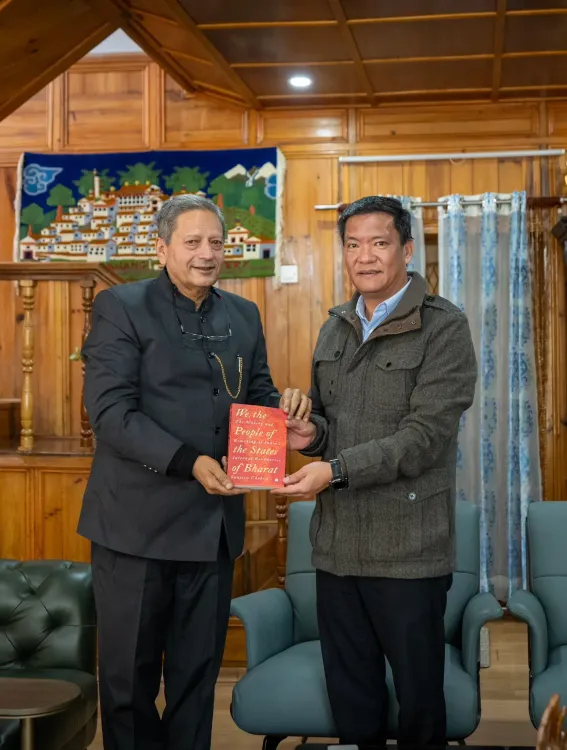
CM Pema Khandu met Dr Sanjeev Chopra , former Director of LBSNAA , on 22 June 2026 .
Dr Chopra gifted the Chief Minister his book We, the People of the States of Bharat: The Making and Remaking of India's Internal Boundaries .
LBSNAA in Mussoorie is India's premier training institution for IAS and All India Services officers.
The book's subject — India's evolving internal boundaries — traces policy lineage back to the States Reorganisation Act of 1956 .
States including Chhattisgarh , Jharkhand and Telangana were created through subsequent reorganisation processes after 1956 .
CM Khandu said he was 'looking forward to exploring this remarkable journey of the evolution of Bharat's states.'
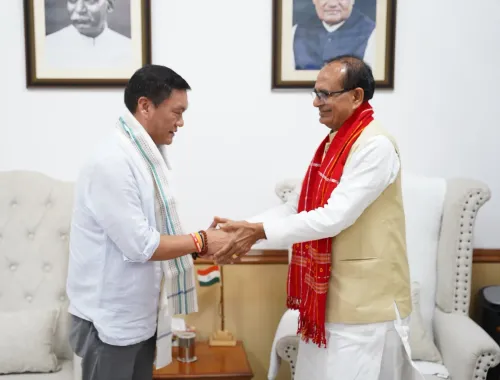
Arunachal Pradesh Chief Minister Pema Khandu on Monday, 22 June 2026 met Dr Sanjeev Chopra, former Director of the Lal Bahadur Shastri National Academy of Administration (LBSNAA), distinguished retired IAS officer, author and historian. The Chief Minister received a copy of Dr Chopra's book, We, the People of the States of Bharat: The Making and Remaking of India's Internal Boundaries, and expressed enthusiasm for exploring its contents.
Context
CM Khandu described the meeting as 'a delight' and thanked Dr Chopra for the 'thoughtful gift' of his book, which traces the evolution of India's internal state boundaries from independence to the present day. The Chief Minister said he was 'looking forward to exploring this remarkable journey of the evolution of Bharat's states,' signalling a personal interest in the subject of federal geography and state formation.
The encounter brings together a sitting chief minister of one of India's northeastern frontier states and a former head of the country's premier civil service training institution — a pairing that underscores the continued elite engagement with questions of federal structure and administrative identity.
Policy Backdrop
The book's subject matter sits at the heart of one of independent India's most consequential governance decisions: the States Reorganisation Act of 1956, which redrawn the country's internal map primarily along linguistic lines. That legislation set the template for how India has since balanced linguistic identities, administrative efficiency and regional aspirations in determining its internal boundaries.
Since 1956, successive governments have continued to reshape the federal map. New states — including Chhattisgarh, Jharkhand (both carved out in 2000) and Telangana (created in 2014) — have been formed through legislative processes in response to long-standing regional and administrative demands. Demands from other regions remain active, making the study of state-formation criteria a live policy question.
LBSNAA, based in Mussoorie, Uttarakhand, is the apex training institution for Indian Administrative Service officers and other All India Services recruits. Its former directors carry considerable scholarly and administrative authority, and Dr Chopra has built a reputation as a historian of India's administrative evolution.
Stakeholders and Impact
The book's themes resonate directly with state administrators, federalism scholars, and policymakers engaged in ongoing debates about regional representation and administrative reorganisation. For Arunachal Pradesh — a state whose own boundaries, identity and constitutional status have been subjects of sustained political and legal scrutiny — the Chief Minister's interest in this scholarship carries particular resonance.
Academic and policy communities tracking federal restructuring will likely note the meeting as a signal of continuing elite interest in revisiting the criteria and processes by which India has drawn and redrawn its internal lines. Scholars studying the northeast's integration into the Indian Union may find the Chief Minister's engagement with this body of work especially significant.
What's Next
Observers will watch for any academic or policy events organised around Dr Chopra's book, including potential lectures, panel discussions or roundtables that may draw participation from serving administrators or elected representatives. Any related deliberations at bodies such as NITI Aayog or parliamentary committees on state reorganisation criteria could give the subject renewed institutional momentum. CM Khandu's public endorsement of the book may also encourage broader readership among Arunachal Pradesh's administrative cadre and the wider northeast governance community.
Point of View
A state whose boundaries have long been contested externally and whose tribal administrative structures were shaped by successive reorganisation decisions, the Chief Minister's interest in this subject carries policy undertones. Dr Sanjeev Chopra's institutional standing as a former LBSNAA Director lends academic credibility to the exchange, potentially amplifying the book's reach within the civil service community. The meeting fits a broader pattern of India's political and administrative elite revisiting the criteria and processes of state formation at a time when demands for new states and administrative units continue to surface across the country.
NationPress
21 Sept 2026
Frequently Asked Questions
Who is Dr Sanjeev Chopra and why did he meet CM Pema Khandu?
Dr Sanjeev Chopra is a former Director of LBSNAA, a distinguished retired IAS officer, and a historian and author. He met Arunachal Pradesh Chief Minister Pema Khandu on 22 June 2026 and gifted him his book on the making and remaking of India's internal state boundaries.
What is the book Dr Sanjeev Chopra gifted to CM Pema Khandu?
The book is titled 'We, the People of the States of Bharat: The Making and Remaking of India's Internal Boundaries.' It traces the evolution of India's internal state boundaries from independence to the present day.
What is LBSNAA and where is it located?
LBSNAA, or the Lal Bahadur Shastri National Academy of Administration, is India's premier training institute for IAS and All India Services officers. It is located in Mussoorie, Uttarakhand.
What is the States Reorganisation Act of 1956?
The States Reorganisation Act of 1956 redrew India's internal state boundaries primarily along linguistic lines and set the framework for how the country has since managed regional and administrative identity questions. It remains the foundational legislation in India's state-formation history.
Which new states has India created since the States Reorganisation Act?
Since 1956, India has created several new states including Chhattisgarh and Jharkhand in 2000 and Telangana in 2014, each formed through legislative processes in response to long-standing regional demands.