CM Majhi: 43,000 Evacuated, 931 Babies Born Amid Cyclone

Synopsis
Odisha CM Mohan Charan Majhi confirmed over 43,000 evacuations, 313 ground response teams, and 931 safe deliveries of babies born to the 2,245 pregnant women specially transferred to health centres during the cyclone emergency.
Key Takeaways
Over 43,000 people have been evacuated from cyclone-affected areas in Odisha.
313 response teams are operational at ground zero across affected districts.
2,245 pregnant women were prioritised and moved to health centres before the cyclone peaked.
931 babies were delivered safely during the emergency period.
Odisha has maintained one of India's most advanced cyclone-preparedness systems since the catastrophic 1999 super cyclone .
CM Mohan Charan Majhi called citizen safety the government's 'highest priority' as administration continues round-the-clock operations.
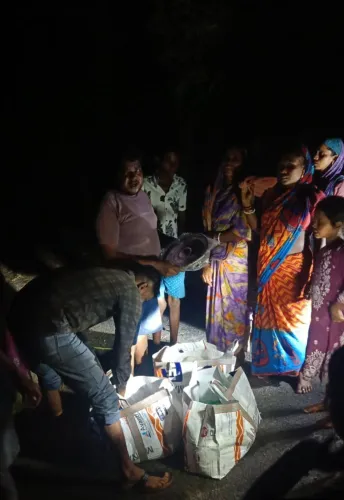
In the middle of a cyclone emergency, Odisha Chief Minister Mohan Charan Majhi reported on Wednesday, October 28 that over 43,000 people had been moved to safety — and that amid the chaos, 931 newborns had entered the world safely inside sheltered health centres. That is not a statistic. That is a rescue operation running well.
43,000 moved, 313 teams on the ground
Posting in Odia and English, CM Majhi confirmed that 313 response teams are deployed at ground zero across cyclone-affected zones in the state. The administration has maintained continuous operations, he said — 'ପ୍ରଶାସନ ନିରବଚ୍ଛିନ୍ନ ଭାବେ ଜନସେବାରେ ନିୟୋଜିତ ରହିଛି' ('the administration remains ceaselessly engaged in public service').
Odisha, perched on the Bay of Bengal coast, is no stranger to catastrophic storms. Since the devastating 1999 super cyclone killed nearly 10,000 people, successive governments have methodically built one of India's most respected disaster-response architectures — early warning systems, pre-positioned teams, and a culture of mass, pre-emptive evacuation. When Cyclone Fani struck in 2019, more than one million people were evacuated in under 48 hours, drawing global attention. That institutional muscle is now firing again.
2,245 pregnant women: the priority that defines a response
The sharpest measure of this operation's precision is not the headline evacuation figure — it is the 2,245 pregnant women who were identified, individually tracked, and transferred to health centres before the cyclone peaked. Of those, 931 delivered safely during the crisis window. Moving a woman close to term through flooded roads and battered infrastructure requires coordination most disaster systems simply cannot achieve.
CM Majhi framed the effort with a direct declaration: 'ନାଗରିକଙ୍କ ସୁରକ୍ଷା ସରକାରଙ୍କ ସର୍ବୋଚ୍ଚ ପ୍ରାଥମିକତା' — 'the safety of citizens is the government's highest priority.' In disaster management, that phrase is easy to say. Delivering 931 babies safely while a cyclone runs overhead is how you prove it.
What Odisha's model means beyond the state
Odisha's disaster framework has been studied by other coastal states and international agencies as a replicable model. CM Majhi, who took office in June 2024 under the BJP, now stewards that institutional legacy through a fresh emergency. The numbers posted suggest the machinery is holding. Relief distribution, infrastructure damage assessment, and restoration of full health services in affected districts remain the next critical milestones to watch.
Nine hundred and thirty-one children were born safely in the middle of a cyclone. That is the story of a state that learned from its worst day and refused to repeat it.
Point of View
With the BJP-led government now drawing on the same administrative DNA as its predecessors. The specific callout of 2,245 pregnant women as a tracked, prioritised cohort is a marker of operational sophistication that sets Odisha apart from most Indian states. For Majhi personally, a well-managed cyclone response consolidates governing credibility early in his tenure. The post-cyclone phase — relief distribution, health-system restoration, and damage accountability — will be the sharper political and administrative test.
NationPress
29 Oct 2026
Frequently Asked Questions
How many people were evacuated in the Odisha cyclone 2026?
Over 43,000 people were evacuated from cyclone-affected areas in Odisha, according to CM Mohan Charan Majhi's official update on October 28, 2026.
How many response teams are deployed in Odisha for the cyclone?
A total of 313 response teams are deployed at ground zero across cyclone-hit districts in Odisha.
How many pregnant women were evacuated during the Odisha cyclone?
2,245 pregnant women were specially transferred to health centres as a priority group during the Odisha cyclone emergency.
How many babies were born during the Odisha cyclone 2026?
931 babies were safely delivered in health centres after 2,245 pregnant women were evacuated ahead of the cyclone.
What is Odisha's history with cyclone management?
Odisha developed one of India's strongest cyclone-preparedness systems after the 1999 super cyclone, which killed nearly 10,000 people. The state evacuated over one million people ahead of Cyclone Fani in 2019 and has maintained robust protocols across successive governments.