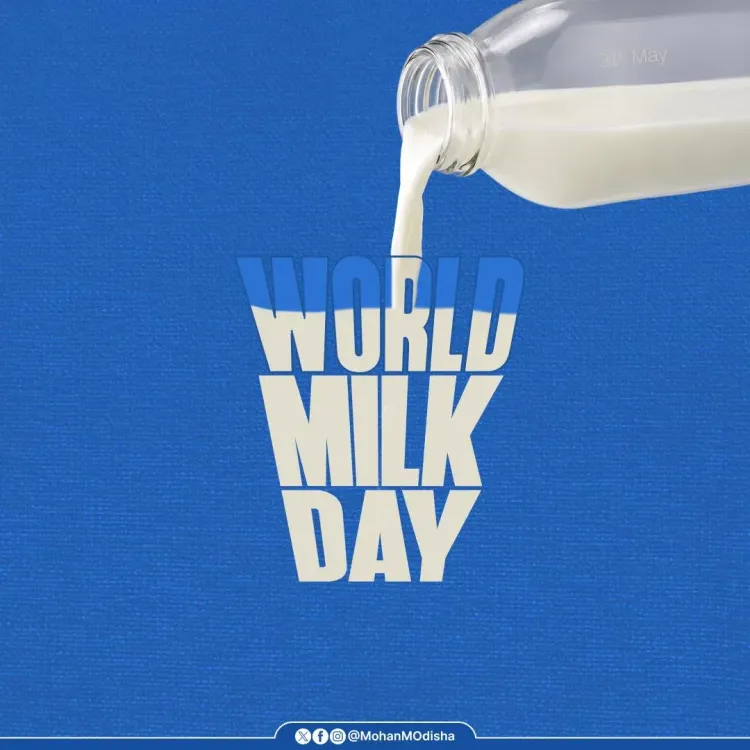
CM Majhi Marks World Milk Day, Highlights Odisha Dairy Schemes
Synopsis
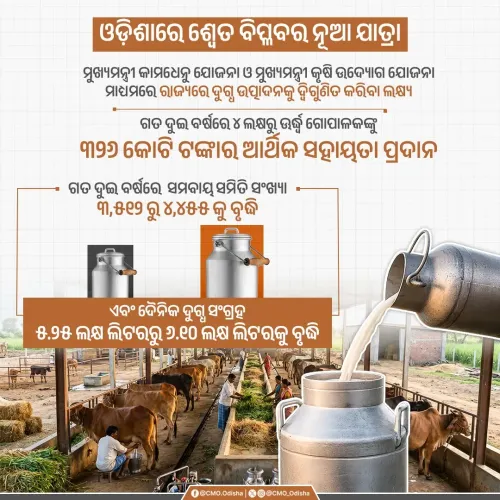
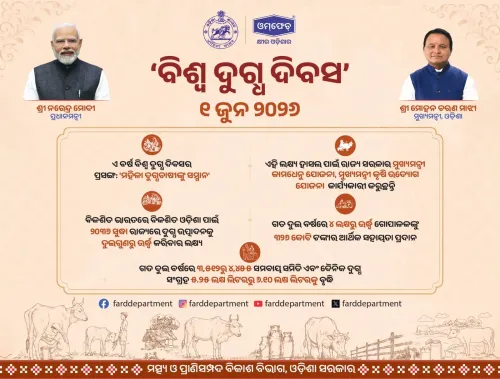
On World Milk Day, 1 June 2026, Odisha Chief Minister Mohan Charan Majhi congratulated dairy farmers and spotlighted the Mukhyamantri Kamdhenu Yojana and GOMATA Yojana as the state government's key instruments for strengthening the dairy sector and improving rural livelihoods across Odisha.
Key Takeaways
Odisha Chief Minister Mohan Charan Majhi marked World Milk Day on 1 June 2026 with a message to dairy farmers.
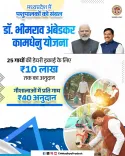
The Mukhyamantri Kamdhenu Yojana supports dairy farmers through milch animal supply, subsidies and livestock infrastructure.
The GOMATA Yojana focuses on cattle development, conservation and productivity for small livestock holders.
Odisha's rural economy is heavily dependent on agriculture and animal husbandry, making the dairy sector central to livelihoods.
India's dairy policy lineage — including Operation Flood (1970) and the National Dairy Development Board (1965) — underpins state-level schemes like those in Odisha.
Progress reports and budget allocations for both yojanas in the next legislative session will be key indicators of implementation.
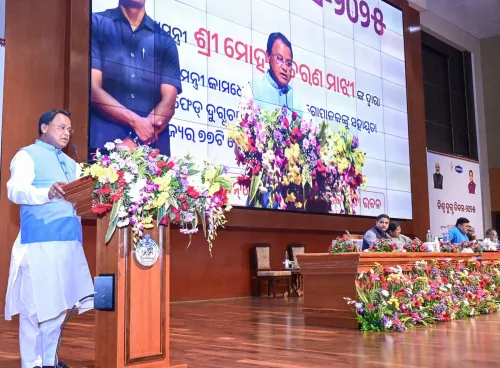
Odisha Chief Minister Mohan Charan Majhi on Monday, 1 June 2026 marked World Milk Day by congratulating dairy farmers across the state and reaffirming his government's commitment to strengthening the livestock and dairy sector through two flagship state programmes.
Context
World Milk Day, observed every year on 1 June, was established by the Food and Agriculture Organisation (FAO) in 2001 to recognise the dairy sector's contribution to nutrition, rural livelihoods and agricultural economies worldwide. Chief Minister Majhi used the occasion to address the farming community directly, stating: 'I congratulate our dairy farmers for their invaluable contribution to nutrition, livelihoods and rural prosperity.'
The message highlights two state-level interventions — the Mukhyamantri Kamdhenu Yojana and the GOMATA Yojana — as the government's primary instruments for dairy sector development in Odisha.
Policy Backdrop
The Mukhyamantri Kamdhenu Yojana provides support to dairy farmers through the supply of milch animals, subsidies and infrastructure for livestock rearing. The GOMATA Yojana focuses on cattle development, conservation and productivity enhancement, with a particular emphasis on small and marginal livestock holders.
Both schemes sit within a long lineage of dairy policy in India. The country's Operation Flood programme, launched in 1970, built a national cooperative dairy network and positioned India as the world's largest milk producer. The National Dairy Development Board, established in 1965, continues to guide state-level dairy infrastructure and cooperative formation — providing the institutional scaffolding on which state schemes such as those in Odisha are built.
Across BJP-led state governments, named cattle-focused yojanas that combine animal distribution, veterinary services and market linkages have become a recurring feature of rural policy. Odisha's two programmes reflect this broader pattern of targeted livestock interventions aimed at raising rural incomes and improving nutritional outcomes.
Stakeholders and Impact
The primary beneficiaries of the two yojanas are dairy farmers and livestock farmers across Odisha, a state where agriculture and animal husbandry remain the dominant sources of rural employment and income. Improved milk productivity and better market access can translate directly into higher household earnings for these communities.
Beyond individual farmers, stronger dairy infrastructure contributes to rural nutrition outcomes — a dimension Chief Minister Majhi explicitly acknowledged in his post by linking the sector to 'a healthier and more prosperous Odisha.' Women-led self-help groups and small cooperative societies that handle milk procurement and processing also stand to benefit from sustained government focus on the sector.
What's Next
Observers will watch the next Odisha legislative session for budget allocations and progress reports on the Mukhyamantri Kamdhenu Yojana and GOMATA Yojana, including district-wise milk procurement figures and animal productivity data. Any expansion of beneficiary coverage or enhancement of subsidy structures under either scheme would be a concrete indicator of the government's follow-through on the commitment reaffirmed on World Milk Day.
The Chief Minister's message closes with a forward call to action — 'Let us continue working towards a healthier and more prosperous Odisha' — signalling that dairy sector development will remain a visible plank of the state government's rural economy agenda in the months ahead.
Point of View
Lending the statement more substance than a routine greeting. By naming the Mukhyamantri Kamdhenu Yojana and GOMATA Yojana, the government signals that its dairy agenda is programme-led rather than aspirational. This fits a wider BJP state-government pattern of branding livestock welfare as both an economic and cultural priority, with cattle-focused schemes serving dual purposes of rural income support and political messaging. The real test will come when physical progress data — beneficiary numbers, milk procurement volumes and budget utilisation — are placed before the legislature.
NationPress
15 Oct 2026
Frequently Asked Questions
What is the Mukhyamantri Kamdhenu Yojana in Odisha?
The Mukhyamantri Kamdhenu Yojana is an Odisha state scheme that supports dairy farmers by providing milch animals, subsidies and infrastructure for livestock rearing, aimed at boosting rural incomes and milk productivity.
What is the GOMATA Yojana in Odisha?
The GOMATA Yojana is an Odisha government programme focused on cattle development, conservation and productivity enhancement, with a particular emphasis on small and marginal livestock holders.
Why is World Milk Day celebrated on 1 June?
World Milk Day is observed on 1 June every year, a date established by the FAO in 2001 to highlight the dairy sector's importance to global nutrition, rural livelihoods and agricultural economies.
Who is Mohan Charan Majhi?
Mohan Charan Majhi is the Chief Minister of Odisha and the BJP legislature party leader in the state, having assumed office in June 2024 following the state assembly elections.
How does Odisha's dairy policy connect to national dairy development?
Odisha's state schemes build on India's national dairy infrastructure, including the National Dairy Development Board set up in 1965 and Operation Flood launched in 1970, which established cooperatives and made India the world's largest milk producer.