CM Majhi Clears ₹258 Crore Irrigation Push for Balasore Farmers
Synopsis
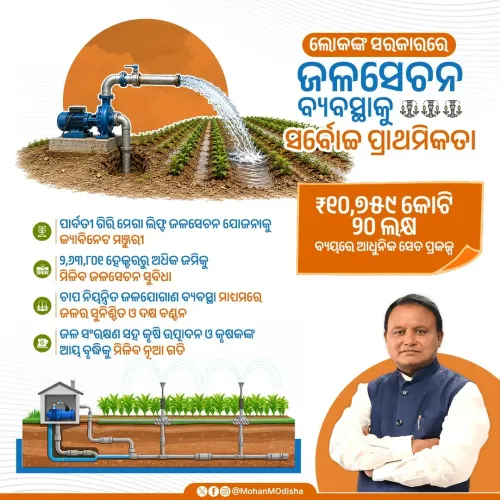
The Odisha cabinet has cleared two packages worth ₹258.14 crore under the Anandapur Integrated Barrage Project to build underground pipeline irrigation across five Balasore blocks, covering 12,200 hectares. CM Mohan Charan Majhi announced the decision on 3 August 2026, framing it as a step toward farmer empowerment and reduced water wastage.
Key Takeaways
The Odisha cabinet approved two packages under the Anandapur Integrated Barrage Project on 3 August 2026 .
Total outlay: ₹258.14 crore for underground pipeline-based irrigation infrastructure.
Coverage: approximately 12,200 hectares of agricultural land across five Balasore blocks.
Beneficiary blocks: Soro, Oupada, Nilgiri, Remuna and Balasore Sadar .
The project aims to cut water conveyance losses and ensure continuous, efficient water distribution to farmers.
Next milestones: tendering, contractor selection and physical progress tracking for both packages.
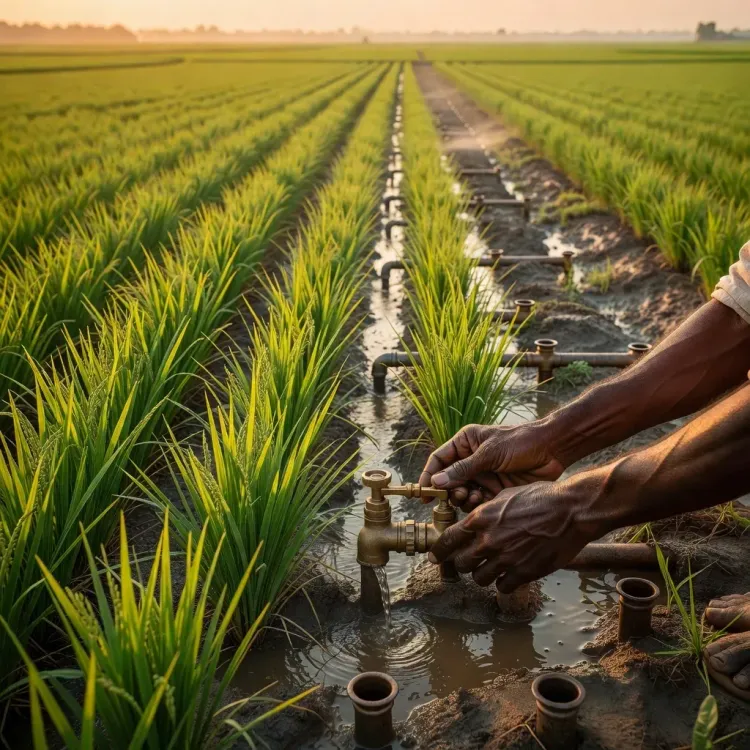
Underground pipes are about to replace open canals for 12,200 hectares of farmland in northern Odisha — and the approval that makes it possible came straight from the state cabinet. Odisha Chief Minister Mohan Charan Majhi announced on Monday, 3 August 2026 that the state cabinet has cleared two packages under the Anandapur Integrated Barrage Project, committing ₹258.14 crore to build a pressurised underground pipeline irrigation network across five blocks of Balasore district.
Writing in Odia, CM Majhi framed the decision as a commitment to modern, efficient irrigation: 'ଆମ ସରକାର କୃଷକଙ୍କ ପାଇଁ ଆଧୁନିକ ଓ ଦକ୍ଷ ଜଳସେଚନ ବ୍ୟବସ୍ଥା ଗଢ଼ି ତୋଳିବାକୁ ପ୍ରତିବଦ୍ଧ' ('Our government is committed to building a modern and efficient irrigation system for farmers'). The project, he said, will reduce water wastage while ensuring continuous and efficient water distribution — giving a 'new momentum to agricultural production and farmer prosperity.'
Five Balasore Blocks, One Pipeline Network
The beneficiary blocks — Soro, Oupada, Nilgiri, Remuna and Balasore Sadar — sit across Balasore, a coastal district in northern Odisha. Farmers in these blocks have historically depended on canal-based distribution tied to the Anandapur barrage on the Baitarani river. Open canals lose significant water to seepage and evaporation; the shift to underground pipelines directly addresses that conveyance loss, delivering pressurised water closer to the field.
The two cabinet-approved packages together cover the pipeline design, laying and ancillary infrastructure. At ₹258.14 crore, the investment works out to roughly ₹2.1 lakh per hectare of coverage — in line with similar pressurised-irrigation packages sanctioned elsewhere in eastern India over the past decade.
Odisha's Shift from Canals to Pressurised Systems
This approval is not a standalone decision — it fits a decade-long pattern in Odisha of retrofitting barrage-linked irrigation with piped networks to raise water-use efficiency and cropping intensity. Successive state cabinets have sanctioned multiple such packages, particularly in water-stressed coastal and northern blocks where erratic monsoon distribution makes assured irrigation critical to double-cropping.
The broader eastern India push — covering Odisha, West Bengal and Bihar — reflects a central policy direction toward micro and pressurised irrigation to stretch limited water resources further. For Balasore farmers, assured water access in the rabi (winter) season is the immediate practical gain: it is the season most vulnerable to dry spells after the monsoon retreats.
What Comes Next for the Project
Cabinet clearance is the starting gun, not the finish line. The next milestones to watch are the tendering process for the two packages, contractor selection, and physical progress benchmarks. Whether the Majhi government extends similar underground pipeline packages to adjoining districts — given the evident template — will signal how aggressively the administration intends to scale the model.
CM Majhi closed his post with a three-part vision: 'ସଶକ୍ତ କୃଷକ, ସମୃଦ୍ଧ ଓଡ଼ିଶା ଏବଂ ବିକଶିତ ଭାରତ' — 'Empowered farmers, prosperous Odisha, and a developed India.' The pipeline will be judged by whether those words reach the field.
Point of View
Which began in 2024. Approving a capital-intensive infrastructure package in Balasore — a district with significant farming communities — serves both a development and a political consolidation purpose in a region the BJP needs to hold. The underground pipeline model also aligns with the Centre's push toward micro-irrigation efficiency, giving the state government a ready national-policy hook. Whether implementation pace matches the announcement will be the real test of the project's political and agrarian value.
NationPress
3 Aug 2026
Frequently Asked Questions
What is the Anandapur Integrated Barrage Project?
The Anandapur Integrated Barrage Project is an Odisha irrigation initiative linked to the Baitarani river barrage at Anandapur, designed to deliver water to farmland in northern Odisha through modern distribution networks including underground pipelines.
Which districts and blocks will benefit from the new irrigation project?
Five blocks in Balasore district — Soro, Oupada, Nilgiri, Remuna and Balasore Sadar — will benefit, with approximately 12,200 hectares of agricultural land set to receive modern irrigation coverage.
How much money has the Odisha government approved for this irrigation project?
The Odisha cabinet has approved ₹258.14 crore across two packages for the underground pipeline-based irrigation system under the Anandapur Integrated Barrage Project.
What is the advantage of underground pipeline irrigation over open canals?
Underground pressurised pipelines significantly reduce water loss from seepage and evaporation that occurs in open canals, enabling more reliable and efficient water delivery to fields — particularly important during the dry rabi (winter) cropping season.
When was the cabinet approval for the Anandapur irrigation packages announced?
Odisha Chief Minister Mohan Charan Majhi announced the cabinet approval on Monday, 3 August 2026 , via a post on X.