CM Majhi Declares Odisha Naxal-Free on National Unity Day
Synopsis
Odisha Chief Minister Mohan Charan Majhi declared the state fully free of Naxalism on National Unity Day, with nearly 1,000 citizens from 19 formerly affected districts attending the Bhubaneswar ceremony marking Sardar Patel's 151st birth anniversary.
Key Takeaways
CM Mohan Charan Majhi declared Odisha completely Naxal-free at a National Unity Day event in Bhubaneswar on 31 October 2026 .
Nearly 1,000 citizens from 19 formerly Naxal-affected districts attended the Ekatanagar Mahamanchha ceremony as a symbolic demonstration of the declaration.
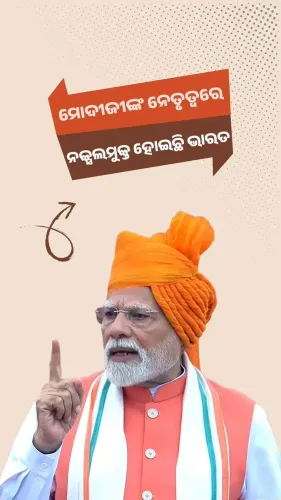
Majhi credited PM Narendra Modi's guidance and Home Minister Amit Shah's leadership for the anti-Naxal success.
The CM linked the improved security environment to a 'new era of investment and industrialisation' in Odisha.
Majhi paid tribute to Sardar Patel on his 151st jayanti , citing the 2018 Statue of Unity and the 2019 Article 370 abrogation as fulfilments of Patel's vision.
He called on Odias across caste and religious lines to unite for a 'Prosperous Odisha' as part of building a Viksit Bharat.
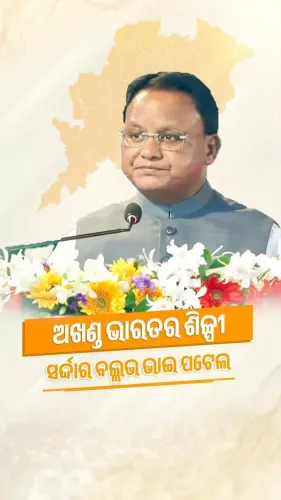
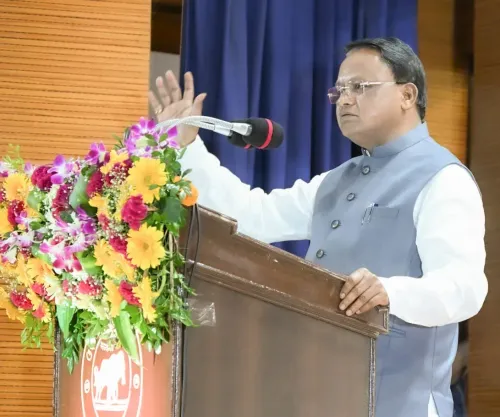
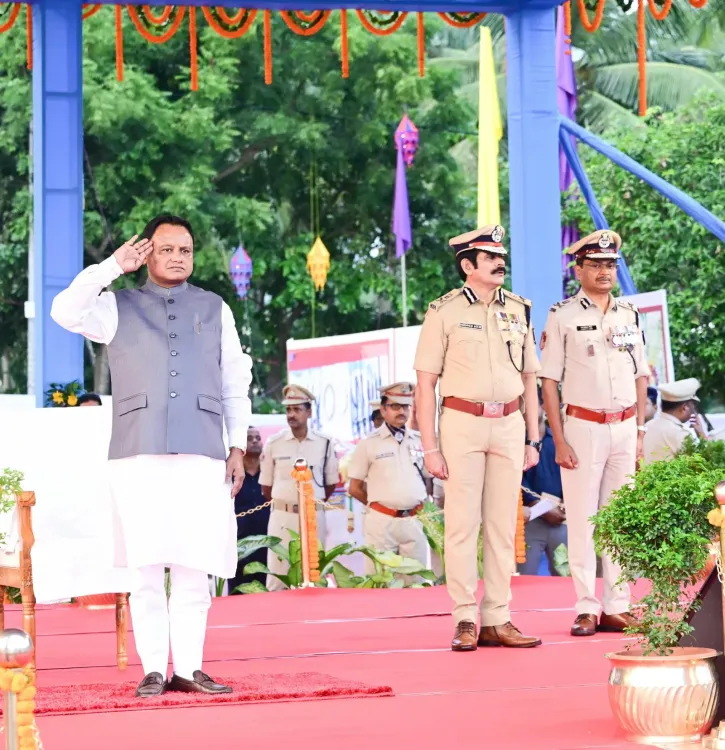
On Sardar Vallabhbhai Patel's 151st birth anniversary, Odisha Chief Minister Mohan Charan Majhi stood at a ceremony in Bhubaneswar on 31 October 2026 and made a declaration that reframes the state's security landscape entirely: Odisha is now completely free of Naxalism, with nearly 1,000 citizens from 19 formerly Naxal-affected districts gathered at the Ekatanagar Mahamanchha (Grand Unity Stage) as living proof.
A Tribute to the 'Iron Man' and the Vision of Akhand Bharat
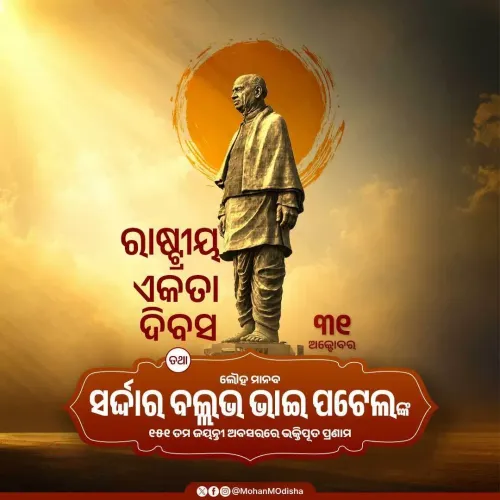
Majhi paid homage to Sardar Patel — honouring him as Lauha Manav, the Iron Man — crediting the founding statesman's ideal of an undivided India as the guiding philosophy that continues to shape national policy. The Chief Minister highlighted two milestones that, in his framing, represent the full honouring of Patel's legacy: the abrogation of Article 370 in August 2019, which he called the correction of a 'historical mistake' relating to Kashmir, and Prime Minister Narendra Modi's inauguration of the Statue of Unity at Kevadia, Gujarat — the world's tallest statue — dedicated to Patel in October 2018.
National Unity Day has been observed every 31 October since 2014, the year the Modi government institutionalised the observance to mark Patel's birth anniversary. This year's edition carries an added charge: it falls on the 151st jayanti of the Iron Man himself.
Nineteen Districts, One Declaration: Odisha's Anti-Naxal Milestone
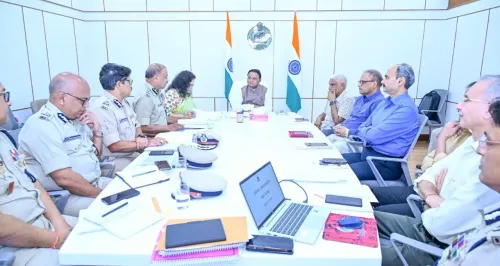
The centrepiece of Majhi's address was the Naxal-free announcement. Representatives from 19 districts — areas that once struggled under the shadow of Left Wing Extremism — attended the Bhubaneswar event, a symbolic choreography designed to underscore the government's claim that the insurgency's grip on Odisha has been broken. The Chief Minister credited Union Home Minister Amit Shah's leadership and the coordinated push by central and state forces for the transformation.
Central and state governments have stepped up anti-Naxal operations since 2014, progressively shrinking the number of Left Wing Extremism-affected districts across the country. Odisha, which shares forested borders with historically insurgency-prone states, has been a focal point of that campaign. Majhi argued that the resulting law-and-order stability is now directly enabling a 'new era of large-scale investment and industrialisation' in the state.
Odisha Police Saluted; Youth Called the Real Answer to Extremism
In a pointed passage, Majhi congratulated Odisha Police for their 'indomitable courage and bravery' in maintaining law and order — a rare public salute that carries weight on a day marking national integration. But he reserved his sharpest message for what he called forces attempting to create anarchy by disrespecting the Constitution, and for a 'hidden Naxal mentality' still lurking in public life. His answer: Odisha's aware youth have already delivered a fitting democratic response.
The framing positions young Odias not just as beneficiaries of security but as active agents who have rejected extremism through the ballot and civil engagement — a narrative that ties internal-security success to democratic legitimacy.
From Patel's Pledge to a 'Prosperous Odisha'
Majhi closed with a call that stitched together the personal and the national: irrespective of caste or religion, all Odias should unite to build a Samriddha Odisha (Prosperous Odisha) as their contribution toward a Sashakta aur Vikasit Bharat — an empowered and developed India. It is a formulation the BJP government has consistently used to align state-level governance goals with the Centre's Viksit Bharat development vision.
With investors watching and industrial corridors being planned across eastern India, the timing of the Naxal-free declaration is anything but accidental.
Point of View
Investable destination ahead of anticipated industrial announcements. Invoking Sardar Patel's integration legacy — and explicitly linking it to the Article 370 abrogation and the Statue of Unity — reinforces the party's claim to be the ideological heir of Patel's brand of muscular nationalism, a framing it has deployed consistently since 2014. The pointed reference to a 'hidden Naxal mentality' is a coded political jab that extends the security argument into the electoral arena, suggesting the insurgency's ideological sympathisers remain a live target. Whether the investment dividends Majhi promises actually materialise will be the real test of whether security gains translate into lasting economic transformation for Odisha's eastern districts.
NationPress
31 Oct 2026
Frequently Asked Questions
What did Odisha CM Mohan Majhi announce on National Unity Day 2026?
Chief Minister Mohan Charan Majhi declared that Odisha is now completely free of Naxalism, citing the presence of nearly 1,000 citizens from 19 formerly Naxal-affected districts at the Bhubaneswar ceremony as proof of the milestone.
When and where is National Unity Day celebrated in India?
National Unity Day, also called Rashtriya Ekta Diwas, is observed every year on 31 October — the birth anniversary of Sardar Vallabhbhai Patel. The Government of India institutionalised the observance in 2014.
What is the Statue of Unity and where is it located?
The Statue of Unity is the world's tallest statue, built in honour of Sardar Vallabhbhai Patel at Kevadia in Gujarat. It was inaugurated by Prime Minister Narendra Modi in October 2018.
What is the significance of abrogating Article 370 in the context of Sardar Patel?
The BJP government has consistently argued that the full integration of Jammu and Kashmir into the Indian Union through the August 2019 abrogation of Article 370 completed the work of national integration that Patel began after 1947, correcting what they describe as a historical anomaly.
How does Odisha's Naxal-free status affect investment in the state?
CM Majhi stated that improved law and order following the elimination of Naxal influence is already creating a new era of large-scale investment and industrialisation in Odisha, positioning security as a prerequisite for economic growth in the state's forested and mineral-rich districts.