CM Majhi Highlights Eastern Regional Agriculture Summit
Synopsis
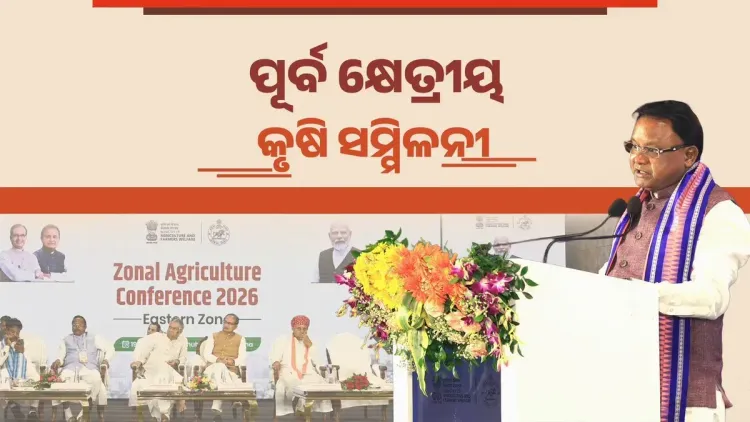
Odisha Chief Minister Mohan Charan Majhi shared memorable moments from the Eastern Regional Agriculture Summit on 22 May 2026, describing the event as a defining convergence of the state's traditional farming heritage and modern technology, aimed at charting new progress for the state's farming communities.
Key Takeaways
CM Mohan Charan Majhi publicly highlighted the Eastern Regional Agriculture Summit on 22 May 2026 via an Odia-language post on X.
The summit focused on merging Odisha's traditional farming knowledge with modern agricultural technology including AI, drones and data analytics.
Agriculture is the primary livelihood for over 60 percent of Odisha 's population, making such summits of direct policy significance.
The event aligns with the Government of India's Digital Agriculture Mission (2021) and central schemes like PM-KISAN and e-NAM .
Small and marginal farmers and agricultural extension workers are the primary stakeholders expected to benefit from summit outcomes.
Follow-up announcements on technology pilots and budget allocations are anticipated in Odisha 's next budget session.
Odisha Chief Minister Mohan Charan Majhi on Friday, 22 May 2026, shared highlights from the Eastern Regional Agriculture Summit, calling it a landmark convergence of the state's rich farming heritage and modern technology that charts a new course for the progress of farmers across the region.
Posting in Odia, the Chief Minister described the summit as 'ଆମ ରାଜ୍ୟର ସମୃଦ୍ଧ କୃଷି ପରମ୍ପରା ଏବଂ ଆଧୁନିକ ପ୍ରଯୁକ୍ତିବିଦ୍ୟାର ଏହି ମହାସଙ୍ଗମ' — 'this grand confluence of our state's rich agricultural tradition and modern technology' — one that has given 'a new direction for the progress of our farmer brothers and sisters.'
Context
The Eastern Regional Agriculture Summit brought together stakeholders from eastern Indian states to address the specific challenges and opportunities facing the region's farming communities. Odisha, where agriculture sustains the livelihoods of over 60 percent of the population, has been a natural host for such dialogue. The summit's emphasis on blending indigenous farming knowledge with precision agriculture tools reflects a growing consensus among state governments that local context must anchor technology adoption.
CM Majhi, who took office in June 2024 following the BJP's assembly election victory in the state, has positioned agriculture modernisation as a central pillar of his administration's agenda.
Policy Backdrop
The summit sits within a broader national push to digitise and modernise Indian farming. The Government of India's Digital Agriculture Mission, introduced in 2021, has sought to accelerate the use of AI, drones, and data analytics across farm operations. Regional summits of this kind serve as crucial translation points, helping eastern states adapt central programmes such as PM-KISAN and e-NAM to local crops, soil types, and climate risks.
Odisha's own policy history in farmer welfare includes the KALIA scheme, launched in 2018, which provided direct income support and livelihood assistance to small and marginal farmers. The current administration's focus on technology integration builds on that foundation of direct farmer support.
Stakeholders and Impact
The primary beneficiaries of the summit's outcomes are Odisha's small and marginal farmers, who cultivate the bulk of the state's rice, pulses, and climate-resilient varieties. Agricultural extension workers — the field-level link between policy and farm practice — are also key stakeholders, as they translate new technology pilots into on-ground action.
Eastern India's agriculture is particularly exposed to cyclone risk, erratic monsoons, and post-harvest losses, making the integration of modern tools with traditional resilience strategies especially consequential. The summit's framing around 'farmer brothers and sisters' signals an intent to keep smallholder welfare at the centre of any technology rollout.
What's Next
Attention will now turn to whether the summit produces concrete follow-up commitments — technology pilots, budget allocations in Odisha's next annual budget session, or coordinated action among eastern state agriculture ministers at national review meetings. The Chief Minister's public highlighting of the event suggests the administration intends to build visible political momentum around agricultural modernisation ahead of future budget and policy cycles.
Point of View
Rather than a replacement of, traditional farming reflects a politically astute positioning that avoids alienating smallholders wary of disruption. This summit fits into a broader pattern of BJP-governed states using regional agricultural conclaves to localise central schemes and demonstrate delivery credentials ahead of budget cycles. The real test will be whether the momentum translates into measurable budget commitments or technology pilots in the months ahead.
NationPress
7 Oct 2026
Frequently Asked Questions
What is the Eastern Regional Agriculture Summit?
The Eastern Regional Agriculture Summit is a regional gathering that brings together stakeholders from eastern Indian states to combine traditional farming practices with modern technology, with the goal of improving farmer incomes and agricultural productivity.
What did Odisha CM Mohan Majhi say about the agriculture summit?
CM Mohan Charan Majhi described the summit as a grand confluence of Odisha's rich agricultural tradition and modern technology, saying it has given a new direction for the progress of farmer brothers and sisters in the state.
How does the Eastern Regional Agriculture Summit relate to PM-KISAN and e-NAM?
Regional summits like this one help eastern states adapt central government schemes such as PM-KISAN and e-NAM to local crops, soil conditions, and climate risks, making national programmes more effective at the ground level.
What is the KALIA scheme in Odisha?
The KALIA scheme was launched in Odisha in 2018 to provide direct income support and livelihood assistance to small and marginal farmers; it forms part of the state's policy history in farmer welfare on which current technology-focused initiatives build.
What should we watch for after the Eastern Regional Agriculture Summit in Odisha?
Key things to watch include follow-up announcements on agricultural technology pilots, budget allocations in Odisha's next annual budget session, and whether eastern state agriculture ministers coordinate at national-level review meetings.