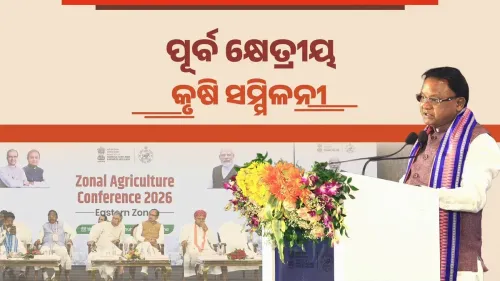
CM Majhi Outlines Farm-to-Market Vision for Samruddha Odisha
Synopsis
Odisha Chief Minister Mohan Charan Majhi on 14 July 2026 laid out a multi-pronged agricultural agenda — spanning higher MSP, record procurement, storage expansion, millet promotion and input assistance — as the backbone of his Samruddha Odisha vision to raise farmer incomes and cut post-harvest losses.
Key Takeaways
CM Mohan Charan Majhi articulated a farm-to-market agricultural agenda on 14 July 2026 under the Samruddha Odisha banner.
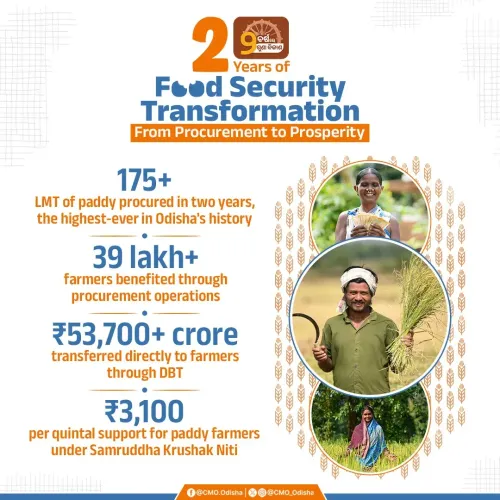
Key pillars include higher Minimum Support Price (MSP) , record procurement, expanded storage infrastructure and enhanced input assistance.
Millet promotion is an explicit priority, building on the Odisha Millets Mission launched in 2016-17 .
The government's stated goals are increasing farmer incomes and reducing post-harvest losses across the entire value chain.
These commitments echo the BJP 's 2024 Odisha election manifesto pledges on farm infrastructure and procurement.
Concrete delivery will be measured through upcoming state budget allocations and assembly-tabled procurement targets.
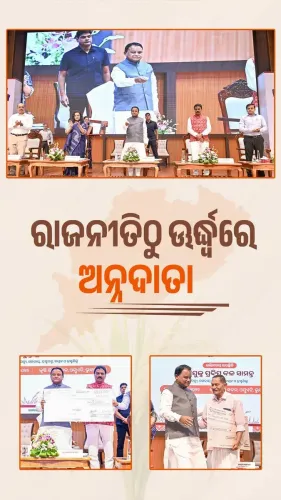
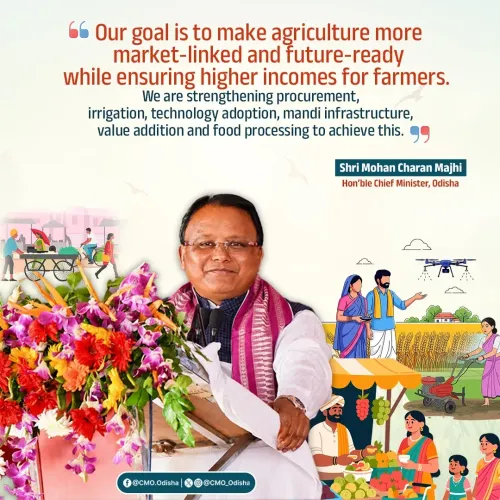
Odisha Chief Minister Mohan Charan Majhi on Tuesday, 14 July 2026 outlined a comprehensive agricultural agenda centred on higher minimum support prices, expanded procurement, improved storage infrastructure, millet promotion and enhanced input assistance, framing these measures as the foundation of his government's Samruddha Odisha (Prosperous Odisha) vision.
Context
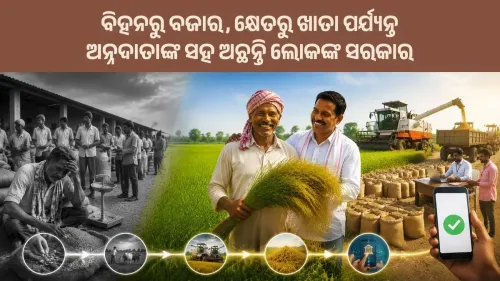
In the post, CM Majhi stated that 'every initiative is designed to strengthen agriculture and improve farmers' livelihoods,' with a focus on increasing incomes, reducing post-harvest losses and creating opportunities 'across the entire farm-to-market value chain.' The statement is directed squarely at Odisha's large agrarian population, which depends heavily on rice, millets and pulses cultivation across the state's districts.
The BJP government, which came to power in Odisha in June 2024 after winning the state assembly election, made higher MSP, expanded procurement and farm infrastructure central planks of its election manifesto. Tuesday's statement signals that these commitments remain a live policy priority heading into the second year of the administration.
Policy Backdrop
The Minimum Support Price mechanism is the cornerstone of India's farmer income-protection architecture, operated jointly by the central government and state procurement agencies. For Odisha, paddy procurement through state agencies has historically been one of the largest such operations in eastern India.
On millets, the state has a head start: the Odisha Millets Mission was launched in 2016-17 to revive cultivation of crops such as ragi and bajra, improve nutritional security and raise farmer earnings. CM Majhi's explicit mention of millet promotion suggests the current government intends to build on and expand that programme rather than replace it. Nationally, the PM-KISAN direct income-support scheme, operational since 2019, continues to provide a baseline transfer to eligible farm households in Odisha as well.
Storage infrastructure has been a persistent gap in Odisha's agricultural supply chain. Reducing post-harvest losses — which can erode a significant share of a smallholder's effective income — through warehousing and cold-chain investment is consistent with both state and central policy directions articulated after 2014.
Stakeholders and Impact
The primary beneficiaries of the policies cited are Odisha's farming households, particularly smallholders who are most exposed to price volatility and post-harvest wastage. Agri-value chain participants — including traders, processors and logistics operators — stand to gain from improved infrastructure and higher volumes moving through formal procurement channels.
Millet farmers in tribal and rain-fed districts of Odisha represent a specific sub-group that could see outsized gains if procurement support and market linkages for coarse cereals are strengthened. Enhanced input assistance, another element cited by CM Majhi, would directly reduce the cost burden on cultivators ahead of each sowing season.
What's Next
The concrete test of the government's agricultural ambitions will come through state budget allocations for storage infrastructure and input-subsidy programmes, as well as any new procurement targets tabled in the Odisha Legislative Assembly. Observers will watch whether the Samruddha Odisha framing translates into specific scheme announcements or enhanced outlay in the next budget cycle.
If the administration follows through on expanded storage capacity and higher millet procurement, Odisha could strengthen its position as a model for integrating nutritional-crop promotion with mainstream MSP-backed procurement — a template other eastern states may look to replicate.
Point of View
A challenge the state has historically struggled with. Whether this articulation is backed by fresh budgetary commitment will determine if the vision moves beyond messaging into measurable outcomes.
NationPress
13 Oct 2026
Frequently Asked Questions
What is Samruddha Odisha and what does it mean for farmers?
'Samruddha Odisha' translates to 'Prosperous Odisha' and is the overarching development vision of Chief Minister Mohan Charan Majhi's BJP government. For farmers, it encompasses higher MSP, expanded procurement, improved storage infrastructure, millet promotion and enhanced input assistance aimed at raising incomes and reducing post-harvest losses.
What is the Odisha Millets Mission?
The Odisha Millets Mission is a state programme launched in 2016-17 to revive cultivation of coarse cereals such as ragi and bajra, improve nutritional security and raise incomes for farmers — particularly in tribal and rain-fed districts. CM Majhi's government has indicated it will continue and expand the initiative.
How does MSP benefit Odisha farmers?
The Minimum Support Price is a guaranteed floor price set by the government for key crops, protecting farmers from sharp price falls. In Odisha, paddy procurement at MSP through state agencies is one of the largest such operations in eastern India and provides income certainty to millions of smallholders.
What are post-harvest losses and why does the Odisha government want to reduce them?
Post-harvest losses refer to crop wastage that occurs after harvesting due to inadequate storage, poor logistics or lack of processing facilities. They can erode a significant share of a smallholder's effective income. The Odisha government's focus on storage infrastructure is aimed at closing this gap and ensuring farmers realise more of the value of what they grow.
What should Odisha farmers watch for next from CM Majhi's government?
Farmers and observers should track state budget allocations for warehousing and cold-chain infrastructure, new procurement targets announced in the Odisha Legislative Assembly, and any formal expansion of input-assistance schemes — these will indicate whether the Samruddha Odisha agricultural agenda is backed by concrete financial commitment.