CM Fadnavis tells Uddhav to read Ramraksha Stotra
Synopsis
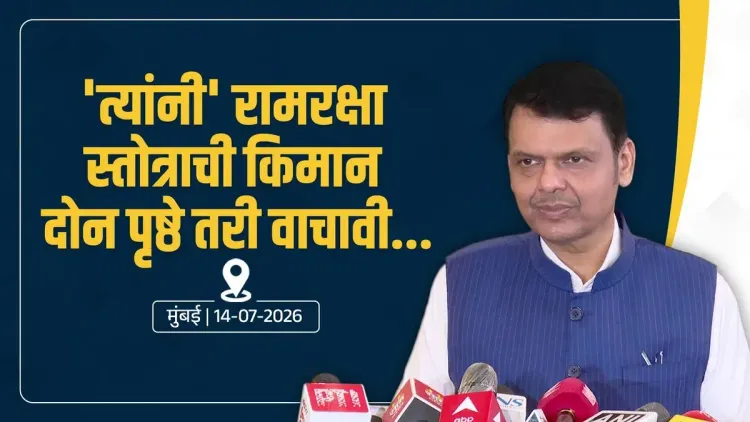
Maharashtra CM Devendra Fadnavis publicly told Uddhav Thackeray to read at least two pages of the Ramraksha Stotra in a bilingual post from Mumbai on 14 July 2026, sharpening the BJP-Shiv Sena (UBT) rivalry through religious and cultural symbolism.
Key Takeaways
Devendra Fadnavis posted in both Hindi and Marathi on 14 July 2026 , advising Uddhav Thackeray to read at least two pages of the Ramraksha Stotra.
The remark is part of the sustained BJP–Shiv Sena (UBT) rivalry that has defined Maharashtra politics since the June 2022 Shiv Sena split.
The Ramraksha Stotra is a revered Sanskrit hymn widely recited across Maharashtra , making the reference culturally loaded in the state's political context.
By directing the remark at Thackeray, Fadnavis implicitly challenges Shiv Sena (UBT)'s claim to a Hindutva identity .
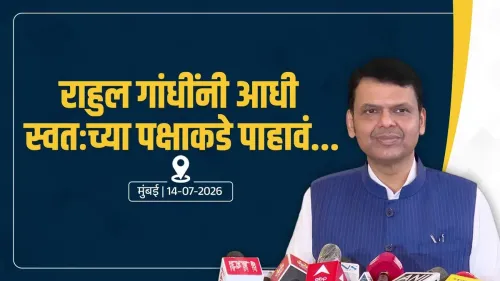
A video was attached to the post, likely to extend its reach among party workers and regional audiences.
Responses from Thackeray's camp and potential escalation ahead of future polls are the key developments to watch.
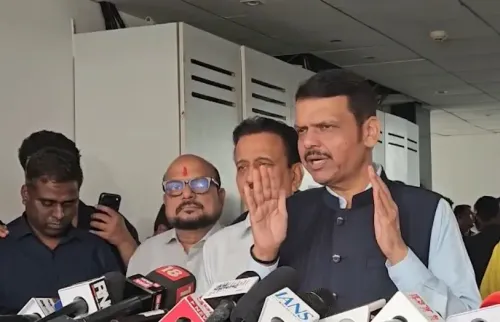
Maharashtra Chief Minister Devendra Fadnavis on Tuesday, 14 July 2026, directed a sharp cultural jibe at opposition leader Uddhav Thackeray, publicly suggesting the former Chief Minister should read at least two pages of the Ramraksha Stotra, a revered Sanskrit hymn dedicated to Lord Ram.
Context
Fadnavis posted the remark in Hindi and Marathi from Mumbai, writing: 'उद्धव ठाकरे यांनी रामरक्षा स्तोत्राची किमान दोन पृष्ठे तरी वाचावीत' ('Uddhav Thackeray should at least read two pages of the Ramraksha Stotra'). The bilingual post — addressed as a reply to his own handle @Dev_Fadnavis — signals the remark was part of an ongoing public exchange. The exact statement from Thackeray's side that prompted the retort could not be independently confirmed at the time of publication.
Policy Backdrop
The exchange sits within a pattern of BJP leaders invoking religious texts and cultural symbols in political discourse against opposition figures in Maharashtra and across western India. Such rhetoric has intensified since the June 2022 split of the Shiv Sena, when Uddhav Thackeray resigned as Chief Minister and a BJP-backed government was formed under Eknath Shinde. The Ramraksha Stotra, composed in Sanskrit, holds deep devotional significance among Hindu communities in Maharashtra and is widely recited in households and temples across the state.
For the BJP, positioning itself as the custodian of Hindu religious tradition has been a consistent electoral and cultural strategy. Directing such a reference at Thackeray — whose own party, Shiv Sena (UBT), has historically claimed a Hindutva identity — carries a pointed political charge, implying a lapse in religious or cultural authenticity on the part of the opposition.
Stakeholders and Impact
The remark lands squarely in the ongoing rivalry between the ruling Mahayuti alliance and the Maha Vikas Aghadi opposition bloc, of which Shiv Sena (UBT) is a key constituent. For Thackeray's faction, which has sought to reclaim its Hindutva credentials since the 2022 split, the jibe is a direct challenge to its ideological positioning. Political observers note that such exchanges are closely tracked by the Maharashtra political class as indicators of the temperature ahead of future electoral contests.
The video attached to the post is likely to amplify the message beyond Fadnavis's immediate follower base, reaching regional media and party workers across the state.
What's Next
Attention will now turn to the response from Thackeray's camp, with Shiv Sena (UBT) leaders expected to counter the narrative, potentially invoking their own record on religious and cultural issues. With local body elections and the 2029 Maharashtra assembly polls on the horizon, such exchanges are likely to grow sharper as both sides compete for the same voter base. The use of religious texts as political currency in public discourse will remain a defining feature of Maharashtra's competitive political landscape.
Point of View
The Chief Minister keeps the opposition on the defensive over identity rather than governance. This fits a broader BJP pattern of using cultural and devotional symbols to set the terms of political debate in Maharashtra. The exchange signals that the ideological contest between these two camps will remain as much about symbolism as about policy in the run-up to future elections.
NationPress
13 Oct 2026
Frequently Asked Questions
What did Devendra Fadnavis say about Uddhav Thackeray and the Ramraksha Stotra?
On 14 July 2026, CM Devendra Fadnavis publicly stated in a bilingual Hindi-Marathi post that Uddhav Thackeray should read at least two pages of the Ramraksha Stotra, a revered Sanskrit hymn dedicated to Lord Ram.
What is the Ramraksha Stotra?
The Ramraksha Stotra is a classical Sanskrit hymn dedicated to Lord Ram. It is widely recited in Maharashtra households and temples and holds deep devotional significance among Hindu communities in the state.
Why did Fadnavis target Uddhav Thackeray with this remark?
The remark is part of the ongoing BJP–Shiv Sena (UBT) rivalry. By invoking a Hindu religious text, Fadnavis implicitly challenged Thackeray's Hindutva credentials, a politically sensitive point since the Shiv Sena split in June 2022.
What is the BJP–Shiv Sena (UBT) rivalry about in Maharashtra?
Since the June 2022 Shiv Sena split, when Uddhav Thackeray resigned as Chief Minister and a BJP-backed government took over, the two camps have clashed repeatedly over governance, identity, and Hindutva credentials in Maharashtra.
What is the political significance of invoking religious texts in Maharashtra politics?
Using religious texts and symbols in public political exchanges has become a recurring feature of Maharashtra politics since 2022, with BJP leaders frequently deploying cultural references to challenge opposition parties on their Hindu identity.