Giriraj Singh Holds Talks With Assam, Bihar Ministers at BharatTex 2026
Synopsis
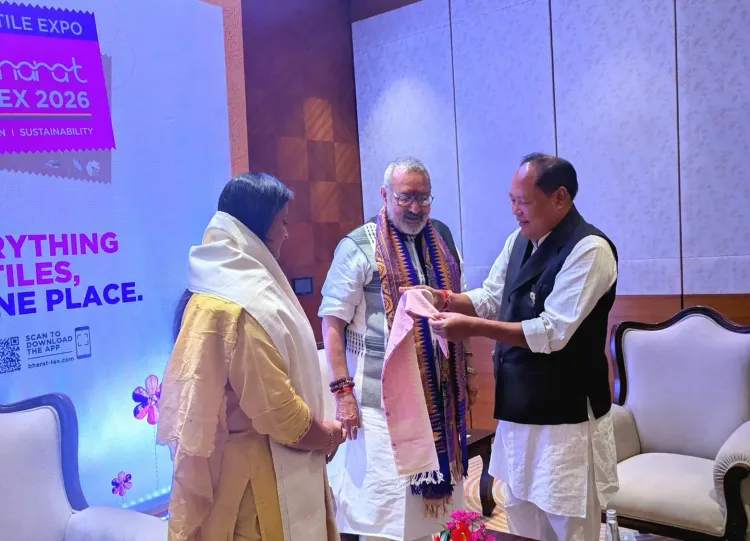
Union Textiles Minister Giriraj Singh held talks with Assam Textiles Minister Biswajit Daimary and Bihar Industry Minister Shreyasi Singh at BharatTex 2026, focusing on promoting local textile products and securing new market access under the Vocal for Local framework.
Key Takeaways
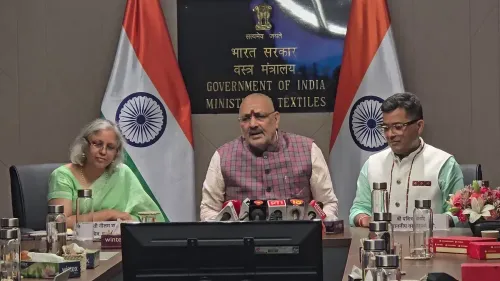
Union Textiles Minister Giriraj Singh met state ministers from Assam and Bihar on the sidelines of BharatTex 2026 on 14 July 2026 .
Biswajit Daimary (Assam Textiles Minister) and Shreyasi Singh (Bihar Industry Minister) participated in separate cordial meetings with Singh.
Discussions covered textiles, industry, and strategies to give local products wider recognition and market reach.
The talks are aligned with the Vocal for Local initiative launched under the Atmanirbhar Bharat package in May 2020 .
Both Assam and Bihar have significant handloom and silk textile traditions that stand to benefit from enhanced promotion and export linkages.
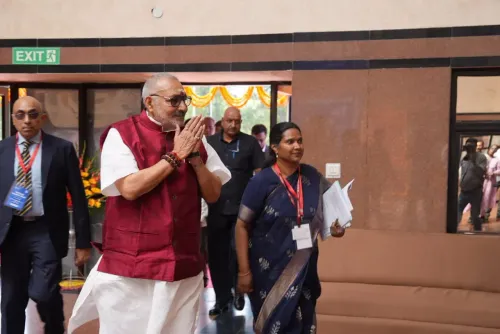
Union Textiles Minister Giriraj Singh met with Assam Textiles Minister Biswajit Daimary and Bihar Industry Minister Shreyasi Singh on the sidelines of BharatTex 2026 on 14 July 2026, holding discussions on textiles, industry, and expanding market access for local products.
Context
Singh described the meetings as 'sauhaardpurna bhet evam saarthak vichar-vimarsh' ('cordial meeting and meaningful deliberations'), with conversations ranging across textiles and industry-related subjects. A key focus, he noted, was on giving local products wider recognition and ensuring their promotion and reach into new markets — themes he tied to the #VocalForLocal campaign.
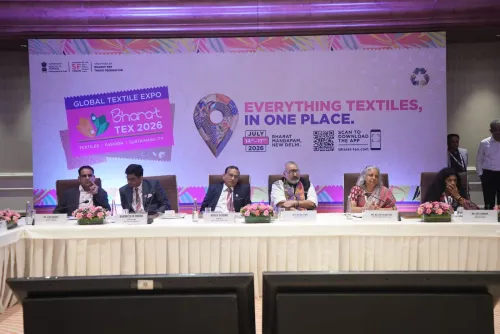
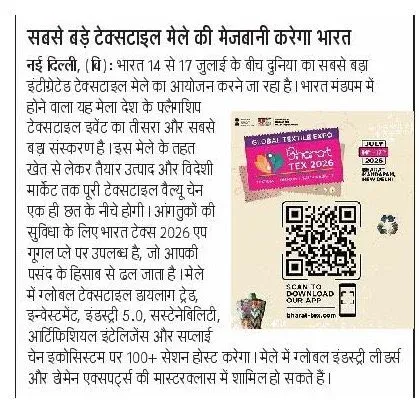
BharatTex 2026 serves as the backdrop for these bilateral conversations, bringing together central and state stakeholders in the textiles ecosystem under one roof. The event has emerged as a significant platform for aligning policy priorities between the Union government and state administrations.
Policy Backdrop
The Vocal for Local initiative was launched by Prime Minister Narendra Modi in May 2020 as part of the Atmanirbhar Bharat economic package, with the explicit goal of boosting domestic manufacturing and reducing import dependence. Since then, the Union Textiles Ministry has anchored several outreach and branding efforts for regional textile clusters under this framework.
Meetings of this kind between the Union ministry and state counterparts reflect an established pattern of federal coordination in the sector — aligning state-level industry departments with central schemes on market linkages, export promotion, and product branding for indigenous textiles.
Stakeholders and Impact
Assam and Bihar are both significant contributors to India's textile landscape. Assam is known for its silk traditions — particularly Muga and Eri silk — while Bihar has clusters producing Bhagalpuri silk and other handloom products. Expanded market access and promotional support for these goods could directly benefit weavers and artisans at the grassroots level.
State industry departments, textile producers, and handloom cooperatives stand to gain from any follow-up measures that emerge from such consultations, particularly if they translate into dedicated branding initiatives or entry into new domestic and export markets.
What's Next
The discussions at BharatTex 2026 are expected to feed into broader state-level participation in central textile schemes. Observers will watch for any follow-up announcements on regional textile branding, geographic indication support, or new market linkage programmes for Assam and Bihar products.
As BharatTex 2026 concludes, the outcomes of these ministerial-level conversations will be a key indicator of how effectively India's federal structure can coordinate to advance the Vocal for Local agenda in the textiles sector.
Point of View
Not just articulated at the centre. The BJP's political footprint in both states adds a layer of context: seamless coordination with state counterparts reinforces the party's governance narrative ahead of any electoral cycles. The real test, however, will be whether these cordial consultations translate into concrete schemes, branding support, or market access mechanisms for artisans on the ground.
NationPress
14 Jul 2026
Frequently Asked Questions
What is BharatTex 2026?
BharatTex 2026 is a major Indian textiles industry event that brings together central and state government stakeholders, manufacturers, and trade bodies to discuss policy, promotion, and market development for the sector.
Who did Giriraj Singh meet at BharatTex 2026?
Giriraj Singh met Assam Textiles Minister Biswajit Daimary and Bihar Industry Minister Shreyasi Singh on the sidelines of BharatTex 2026 on 14 July 2026.
What is the Vocal for Local initiative?
Vocal for Local is a campaign launched by Prime Minister Narendra Modi in May 2020 as part of the Atmanirbhar Bharat package, aimed at promoting domestic products, boosting local manufacturing, and reducing India's import dependence.
What textiles are Assam and Bihar known for?
Assam is renowned for Muga and Eri silk, while Bihar is known for Bhagalpuri silk and a range of handloom products, both of which are key targets for market promotion under central textile schemes.
What were the key topics discussed at the BharatTex 2026 ministerial meeting?
The discussions covered textiles and industry policy, strategies for giving local products wider recognition, promotional outreach, and ensuring access to new markets under the Vocal for Local framework.