Joshi meets TN minister, reviews KMS 2025-26 paddy procurement target
Synopsis
Union Consumer Affairs Minister Pralhad Joshi met Tamil Nadu's food minister on 14 July 2026 to review the state's request for a higher KMS 2025-26 paddy procurement target and an advance adjustment against KMS 2026-27, with the Centre signalling readiness to cooperate.
Key Takeaways
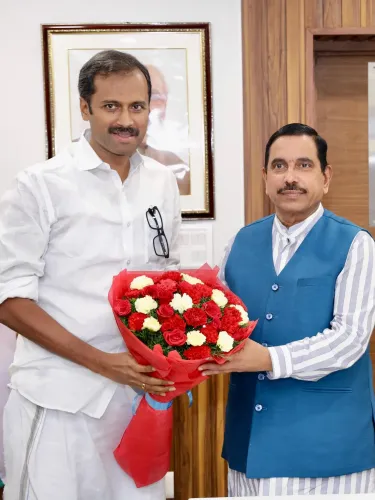
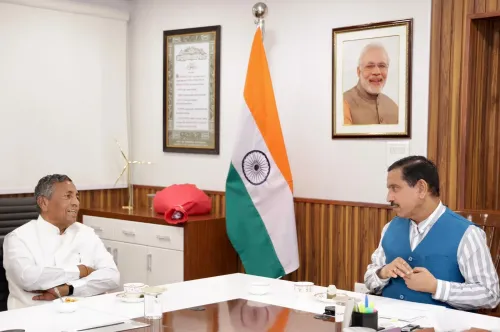
Union Minister Pralhad Joshi held a meeting with Tamil Nadu's food minister R.
Venkatesh in New Delhi on 14 July 2026 .
Tamil Nadu formally requested a revision of its KMS 2025-26 paddy procurement target, citing record production and procurement this season.
The state also sought treatment of additional procurement as an advance adjustment against the KMS 2026-27 target.
The Central Government expressed readiness to work with Tamil Nadu to protect farmers' interests and ensure food security.
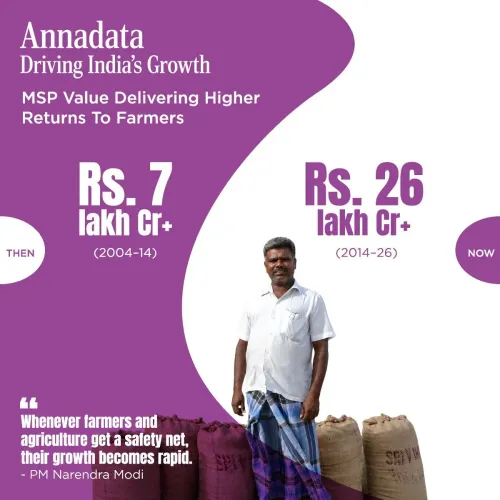
The MSP for common paddy was fixed at Rs 2,300 per quintal for KMS 2024-25, underscoring the Centre's commitment to price support.
Final approval rests with the Department of Food and Public Distribution , which must formally notify any revised ceiling.
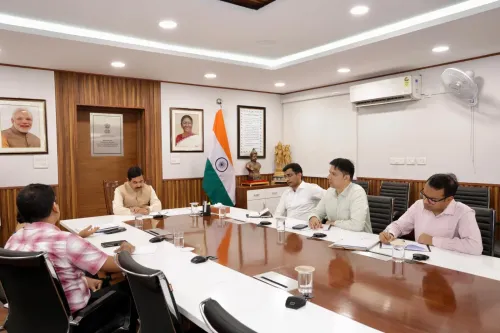
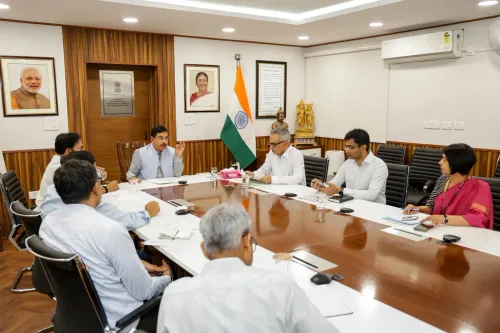
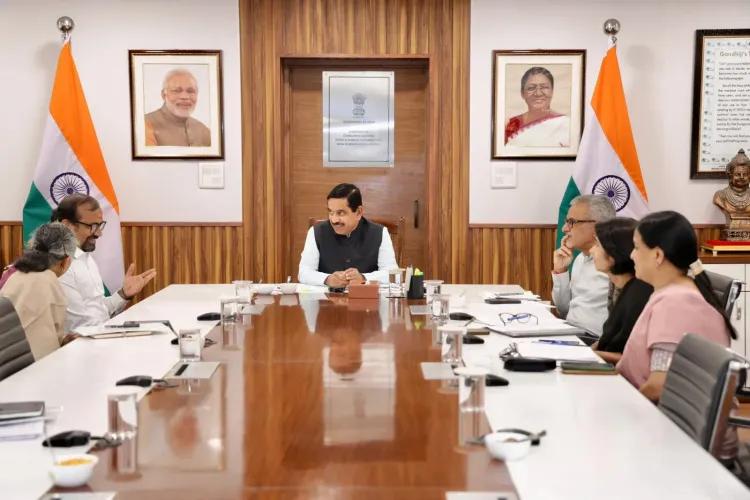
Union Consumer Affairs Minister Pralhad Joshi met Tamil Nadu's Minister for Food, Civil Supplies, Consumer Protection and Price Control, Shri R. Venkatesh in New Delhi on Tuesday, 14 July 2026, to discuss the state government's formal request for an upward revision of the Kharif Marketing Season (KMS) 2025-26 paddy procurement target, citing record production and procurement during the current season.
Context
The Tamil Nadu minister submitted a written proposal seeking two concessions from the Centre: a revised, higher procurement ceiling for KMS 2025-26, and the treatment of any additional procurement above the existing target as an advance adjustment against the likely target for KMS 2026-27. Minister Joshi confirmed that both sides discussed the proposal 'in detail.' The Central Government indicated it is 'ready to work closely' with Tamil Nadu to protect farmers' interests and ensure food security.
Tamil Nadu is one of India's significant rice-producing and rice-consuming states, participating in both centralised and decentralised procurement operations under the National Food Security Act (NFSA). When seasonal output exceeds initial estimates, states must seek Centre's approval to procure beyond the notified target, as surplus stocks held by state agencies require FCI backing and storage allocation.
Policy Backdrop
The Kharif Marketing Season runs from October to September each year and is the primary window for procuring paddy at the government-guaranteed Minimum Support Price (MSP). The Food Corporation of India (FCI), the central nodal agency, coordinates with state procurement agencies to lift paddy, mill it into rice, and channel it into the Public Distribution System (PDS). The MSP for common paddy was set at Rs 2,300 per quintal for KMS 2024-25, reflecting a sustained policy push to incentivise cultivation.
The Decentralised Procurement Scheme, introduced in 1997-98, allows states such as Tamil Nadu to procure paddy directly on behalf of FCI and retain stocks for their own PDS requirements. This arrangement gives states operational flexibility but ties them to centrally approved procurement ceilings. Revisions to those ceilings require approval from the Department of Food and Public Distribution, making the kind of ministerial-level meeting held on 14 July a standard but critical step in the process.
Central-state coordination on procurement targets has intensified in recent seasons as production fluctuations test buffer-stock norms. Several rice-producing states have periodically sought upward revisions or advance adjustments when output surpasses initial estimates — a pattern Tamil Nadu appears to be repeating this season.
Stakeholders and Impact
Tamil Nadu farmers stand to benefit most directly from a revised procurement target, as an expanded government buying window ensures more paddy is lifted at MSP rather than being sold at lower open-market prices. For PDS beneficiaries across the country, higher procurement underpins food security by replenishing central pool stocks. The advance-adjustment mechanism, if approved, would also give Tamil Nadu's procurement agencies greater operational certainty heading into KMS 2026-27, smoothing out year-to-year budget and storage planning.
The FCI and state civil supplies corporations will need to align on storage capacity and milling timelines if the target is revised upward. Any supplementary budgetary allocation for Tamil Nadu agencies would need to be factored into the Union government's food subsidy expenditure under the NFSA.
What's Next
The immediate next step is a formal notification by the Department of Food and Public Distribution revising Tamil Nadu's KMS 2025-26 procurement ceiling, should the Centre accept the state's proposal. Separately, any decision on treating excess procurement as an advance against KMS 2026-27 targets would require inter-departmental clearance and possibly a supplementary allocation. Minister Joshi's public statement signals political goodwill, but the administrative and financial decisions will determine how quickly farmers and state agencies see the benefit on the ground.
Point of View
Administratively consequential. For the BJP-led Centre, publicly signalling cooperation with a DMK-governed Tamil Nadu on a farmers' welfare issue carries cross-partisan optics value, particularly as several state elections loom. The advance-adjustment mechanism being sought is not unprecedented, but its approval would set a template other surplus-producing states could invoke. Ultimately, how quickly the Department of Food and Public Distribution moves from ministerial goodwill to a formal notification will reveal the real priority the Centre assigns to Tamil Nadu's paddy farmers this season.
NationPress
14 Jul 2026
Frequently Asked Questions
What is KMS 2025-26 and why does Tamil Nadu want its procurement target revised?
KMS 2025-26 refers to the Kharif Marketing Season running from October 2025 to September 2026, during which paddy is procured at the government's Minimum Support Price. Tamil Nadu has sought a higher target because production and procurement this season have exceeded the original estimates, and without a revised ceiling, surplus paddy cannot be officially lifted by state agencies at MSP.
What is an advance adjustment in paddy procurement?
An advance adjustment means that procurement done above the current season's approved target is counted against the following season's likely target. Tamil Nadu has requested that any extra paddy bought in KMS 2025-26 be treated as an advance against its KMS 2026-27 quota, giving the state financial and operational flexibility.
Who is Pralhad Joshi and what is his role in food procurement?
Pralhad Joshi is the Union Minister of Consumer Affairs, Food and Public Distribution, and New and Renewable Energy, and a senior BJP leader from Karnataka. His ministry oversees MSP procurement policy, the Food Corporation of India, and the Public Distribution System, making him the key Central Government interlocutor for state procurement requests.
How does Tamil Nadu procure paddy under the central scheme?
Tamil Nadu participates in the Decentralised Procurement Scheme introduced in 1997-98, under which the state procures paddy directly on behalf of the Food Corporation of India and retains stocks for its own PDS. Procurement ceilings are set centrally and must be revised by the Department of Food and Public Distribution if the state needs to buy more.
What happens if the Centre approves Tamil Nadu's request?
If approved, Tamil Nadu's procurement agencies can buy additional paddy at MSP beyond the current ceiling, benefiting farmers who would otherwise have to sell in the open market at lower prices. The extra stock enters the central pool, supporting national food security buffers under the National Food Security Act.