Kishan Reddy meets Pralhad Joshi over Telangana paddy procurement

Synopsis
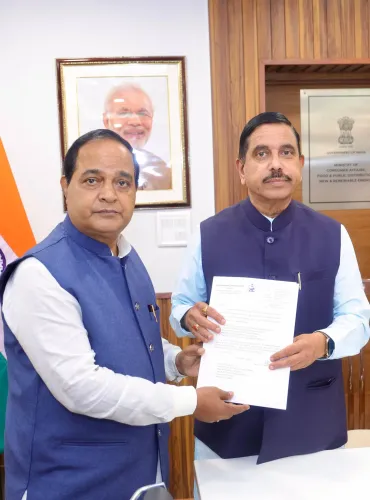
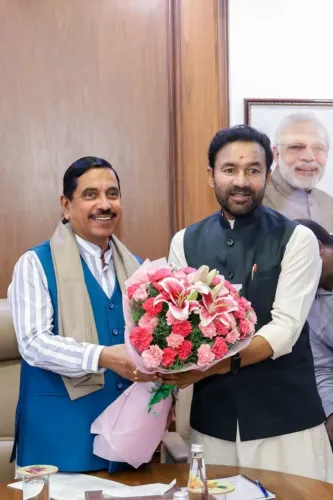
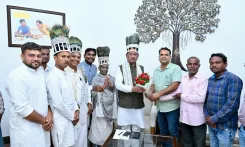
Union Coal and Mines Minister G. Kishan Reddy met Union Food Minister Pralhad Joshi in New Delhi on May 26, 2026, to discuss Telangana's paddy procurement operations. Telangana MLA P. Harish Babu was also present. The meeting comes ahead of the kharif 2026 procurement season.
Key Takeaways
Kishan Reddy met Pralhad Joshi in New Delhi on May 26, 2026 to discuss Telangana paddy procurement.
Harish Babu attended the meeting alongside the two Union ministers.
Telangana procures paddy under the Decentralised Procurement Scheme launched in 1997-98 for the central pool.
The Food Corporation of India (FCI) is the central nodal agency overseeing paddy procurement at MSP under the National Food Security Act, 2013 .
Telangana is a major kharif paddy producer and has historically sought higher central procurement quotas and faster miller payments.
The meeting signals active central-level engagement ahead of the kharif 2026 procurement season.
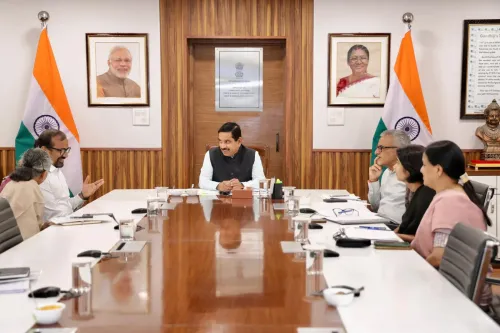
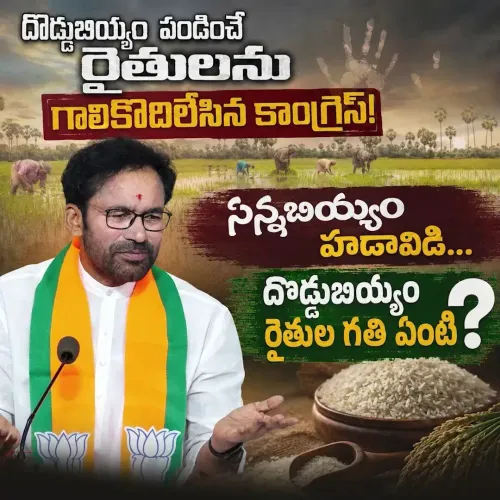
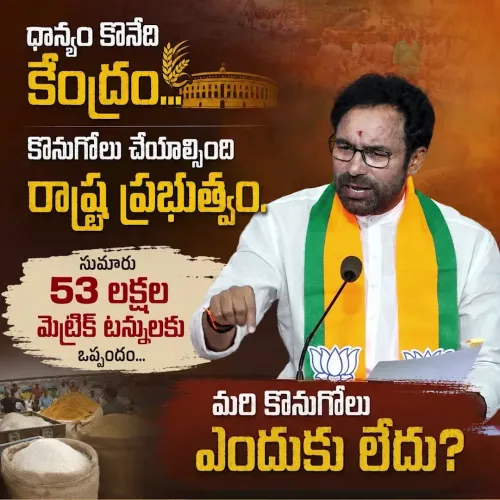
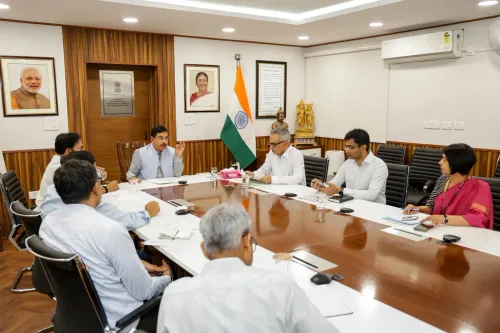
Union Coal and Mines Minister G. Kishan Reddy met Union Minister of Food and Public Distribution and New and Renewable Energy Pralhad Joshi in New Delhi on Tuesday, May 26, 2026, to discuss paddy procurement operations in Telangana. Telangana MLA P. Harish Babu was also present at the meeting.
Context
The meeting centred on paddy procurement operations in Telangana, a major kharif paddy-producing state in southern India. Central-state coordination on procurement volumes, payments to millers, and storage logistics under the federal food-security architecture is a recurring necessity for the state.
Kishan Reddy, who also serves as BJP's Telangana state president, has been a consistent advocate for the state's agricultural interests at the central level. The presence of MLA P. Harish Babu indicates the meeting carried a direct constituency dimension alongside the policy discussion.
Policy Backdrop
Paddy procurement in India operates under the National Food Security Act, 2013, which mandates the purchase and distribution of subsidised foodgrains at the Minimum Support Price (MSP). The Food Corporation of India (FCI) is the central nodal agency responsible for procuring paddy into the central pool.
Under the Decentralised Procurement Scheme, launched in 1997-98, select states including Telangana are permitted to procure paddy and rice directly on behalf of the central pool. Telangana has historically sought higher central procurement quotas and faster clearance of miller payments, making such ministerial-level meetings a regular feature of the kharif season cycle.
Stakeholders and Impact
The primary stakeholders in Telangana's paddy procurement chain are the state's paddy farmers and rice millers, whose livelihoods depend on timely central procurement at MSP and prompt settlement of milling charges. Delays or shortfalls in central purchases directly affect farmer incomes and the financial health of the milling sector.
For the broader public distribution system, efficient procurement from a surplus state like Telangana is essential to maintaining adequate foodgrain stocks. Any resolution on procurement targets or payment timelines from this meeting would have downstream benefits for both producers and consumers within the national food-security framework.
What's Next
With the kharif 2026 procurement season approaching, the key variables to watch are any revision in Telangana's share of central-pool purchases and the pace of miller payment clearances. The meeting signals that state-level BJP leadership is actively engaging the central government on agricultural grievances ahead of the harvest cycle.
Further clarity on procurement targets and operational timelines is expected as the Food Ministry and state agencies finalise kharif season logistics in the coming weeks.
Point of View
Kishan Reddy's decision to personally take up paddy procurement concerns with the Food Ministry is a calculated move to demonstrate the party's responsiveness to farmer distress in a state where it remains in opposition. The meeting fits a broader pattern of central BJP leaders using ministerial access to build agricultural credibility in Telangana ahead of future electoral cycles. The inclusion of a sitting MLA signals that the party is channelling ground-level grievances upward through formal institutional routes. Whether the engagement translates into tangible procurement relief — higher quotas or faster miller payments — will determine its political and policy value.
NationPress
10 Oct 2026
Frequently Asked Questions
Why did G. Kishan Reddy meet Pralhad Joshi?
G. Kishan Reddy met Pralhad Joshi on May 26, 2026 in New Delhi to discuss paddy procurement operations in Telangana, including issues related to central procurement volumes and the kharif season.
What is the Decentralised Procurement Scheme for paddy?
The Decentralised Procurement Scheme , launched in 1997-98 , allows select states like Telangana to procure paddy and rice directly on behalf of the central pool, reducing the logistical burden on the Food Corporation of India .
What role does the Food Corporation of India play in Telangana paddy procurement?
The Food Corporation of India (FCI) is the central nodal agency that procures paddy at MSP under the National Food Security Act, 2013 and manages storage and distribution for the public distribution system.
Who is P. Harish Babu?
P. Harish Babu is a Telangana MLA who was present at the May 26 meeting between Kishan Reddy and Pralhad Joshi in New Delhi.
What are Telangana's concerns about paddy procurement?
Telangana, a major kharif paddy producer, has repeatedly sought higher central procurement quotas and faster clearance of miller payments under the federal procurement system.