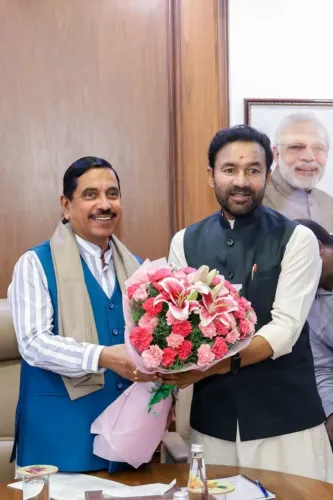
Joshi, Kishan Reddy Meet on Telangana Paddy Procurement
Synopsis
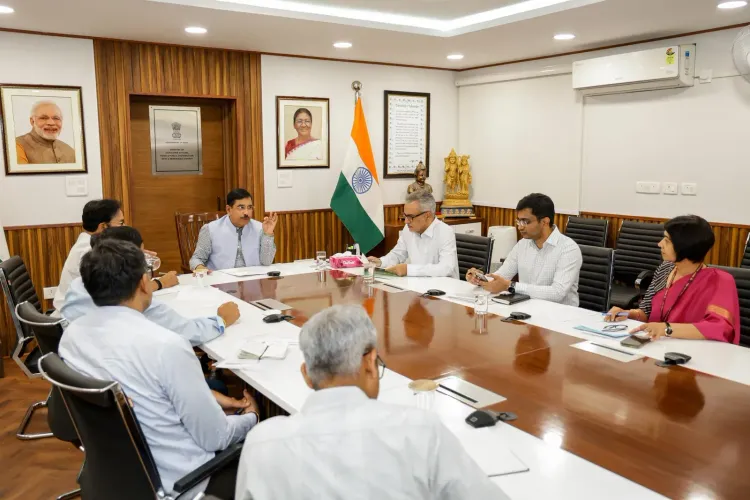
Union Consumer Affairs Minister Pralhad Joshi and Coal and Mines Minister G. Kishan Reddy met at Krishi Bhavan on 27 May 2026 to discuss paddy procurement operations, storage infrastructure upgrades, and food grain management in Telangana to better support farmers.
Key Takeaways
Pralhad Joshi and G.
Kishan Reddy held a bilateral meeting at Krishi Bhavan, New Delhi on 27 May 2026 .
Discussions centred on paddy procurement operations , storage infrastructure strengthening, and food grain management in Telangana .
Telangana operates under the Decentralised Procurement Scheme , procuring paddy directly for the central pool since 1997-98 .
The Food Corporation of India has been expanding modern storage capacity nationally to cut post-harvest losses.
The meeting precedes the Kharif 2026 procurement season, making infrastructure and logistics decisions time-sensitive for farmers.
Outcomes could include fresh sanctions for silo or warehouse projects in Telangana under the storage modernisation programme.
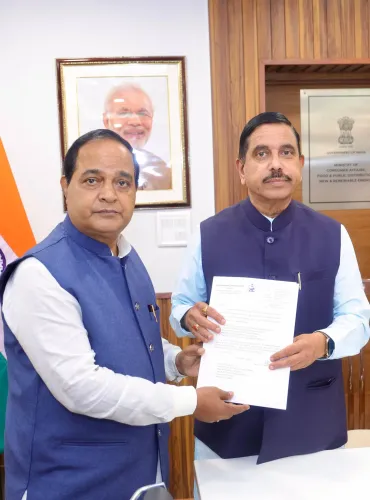
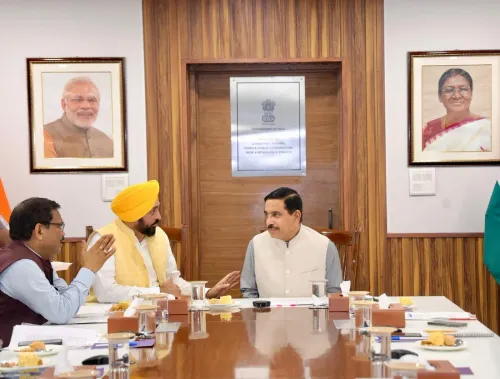
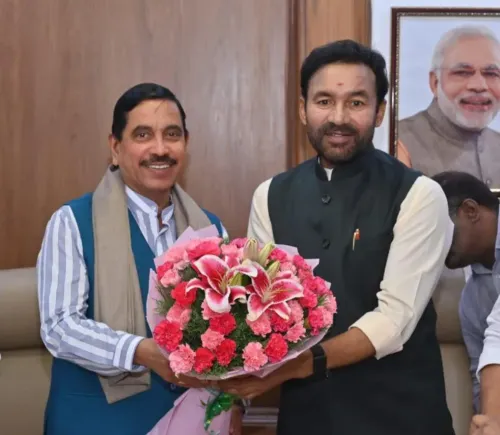
Union Consumer Affairs Minister Pralhad Joshi met Union Minister of Coal and Mines G. Kishan Reddy at Krishi Bhavan, New Delhi, on Tuesday, 27 May 2026, for discussions focused on paddy procurement, storage infrastructure, and food grain management in Telangana.
Context
Joshi confirmed the meeting on X, stating that the two ministers 'discussed issues related to paddy procurement operations, strengthening storage infrastructure and improving food grain management systems in Telangana to ensure greater support for farmers.' The bilateral reflects a pattern of inter-ministerial coordination at Krishi Bhavan, the headquarters of the Ministry of Agriculture and Farmers Welfare, where central ministers regularly align on state-level procurement challenges.
G. Kishan Reddy, a senior BJP leader representing Telangana in the Union Cabinet, has previously engaged on agricultural and infrastructure matters concerning his home state. His meeting with the minister overseeing consumer affairs and food distribution underscores the cross-portfolio nature of procurement policy.
Policy Backdrop
Telangana is one of India's leading rice-surplus states and has operated under the Decentralised Procurement Scheme since its introduction in 1997-98, which allows select states to procure paddy directly for the central pool. Its output directly affects stocks held by the Food Corporation of India (FCI) and the availability of grain under the Targeted Public Distribution System.
The Cabinet Committee on Economic Affairs has progressively raised the Minimum Support Price (MSP) for paddy every kharif season since 2014, increasing the volume of produce that farmers bring to government procurement centres. Simultaneously, FCI capacity augmentation programmes approved after 2014 have added millions of tonnes of modern storage space nationally to reduce post-harvest losses — a priority that featured explicitly in Tuesday's discussions.
Stakeholders and Impact
Paddy farmers across Telangana are the primary beneficiaries of smoother procurement operations, as delays or infrastructure gaps directly affect timely payment and grain offtake. Stronger storage capacity reduces spoilage, protecting both farmer returns and the integrity of central pool stocks that feed the public distribution network.
Food grain agencies — including state-level procurement bodies and the FCI — stand to benefit from clearer operational coordination between the consumer affairs and coal-and-mines ministries, particularly where infrastructure investment decisions intersect with storage modernisation. The broader population dependent on subsidised grain under the National Food Security Act also has a stake in efficient supply-chain management.
What's Next
Attention will now turn to the Kharif 2026 procurement calendar and whether Tuesday's meeting translates into fresh sanctions for silo or warehouse projects in Telangana under the ongoing national storage modernisation programme. Any revision to state-wise procurement targets or additional FCI allocations for Telangana would be the most direct policy outcome to watch.
The meeting signals that central coordination on food security infrastructure is being actively pursued ahead of the kharif harvest cycle, with Telangana's surplus paddy output remaining a key variable in national grain management calculations.
Point of View
Where a state-origin minister leverages his central cabinet seat to channel resources and attention toward home-state agricultural challenges. For the BJP, which has been seeking to consolidate its position in Telangana after recent electoral gains, visible action on farmer welfare — particularly paddy MSP compliance and storage — carries direct political valence. The emphasis on storage infrastructure also fits a broader Modi-era policy arc of reducing post-harvest losses through capital investment rather than just price support. Whether this meeting produces measurable outcomes before the kharif harvest will be the real test of its significance.
NationPress
11 Oct 2026
Frequently Asked Questions
Why did Pralhad Joshi and Kishan Reddy meet at Krishi Bhavan?
The two Union ministers met at Krishi Bhavan on 27 May 2026 to discuss paddy procurement operations, storage infrastructure, and food grain management in Telangana to improve support for farmers.
What is the Decentralised Procurement Scheme and how does it affect Telangana?
Introduced in 1997-98, the Decentralised Procurement Scheme allows select states, including Telangana, to procure paddy directly on behalf of the central pool, giving the state greater control over farmer payments and offtake.
What is the role of the Food Corporation of India in Telangana paddy procurement?
The Food Corporation of India is responsible for storing and distributing food grains procured from states like Telangana for the Targeted Public Distribution System, and has been expanding modern storage capacity to reduce wastage.
How does Telangana paddy output affect national food security?
As a leading rice-surplus state, Telangana's paddy output directly affects central pool stocks that supply subsidised grain to millions of beneficiaries under the National Food Security Act.
What should farmers in Telangana watch for after this meeting?
Farmers and state agencies should watch for announcements on the Kharif 2026 procurement calendar, revised state-wise procurement targets, or fresh sanctions for silo and warehouse projects in Telangana under the central storage modernisation programme.