Pralhad Joshi Reviews Telangana Paddy Procurement Plea
Synopsis
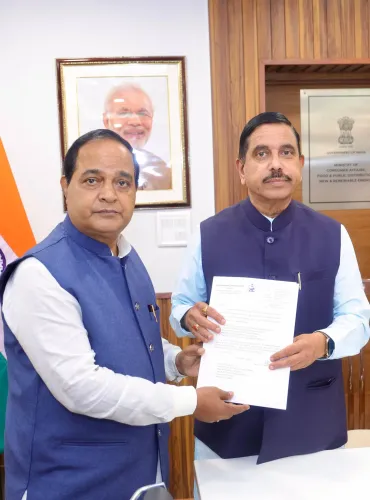
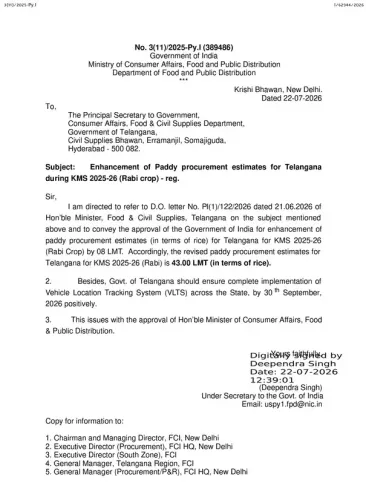
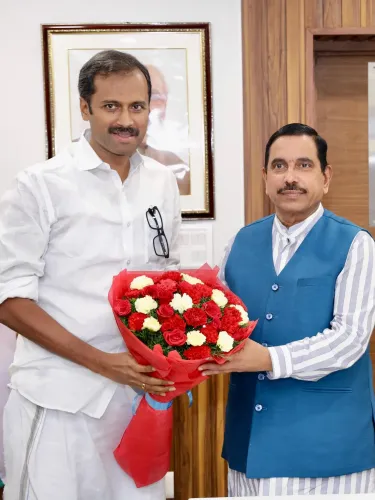
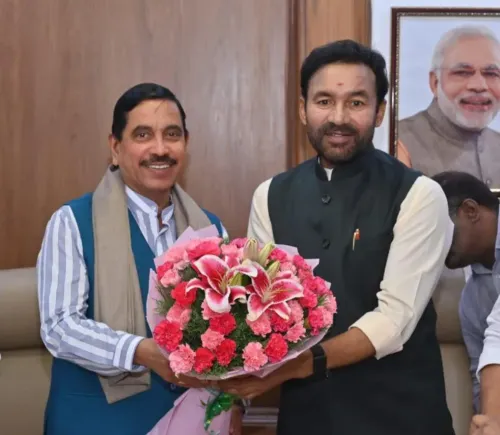
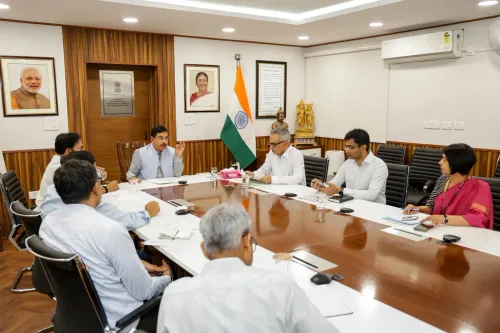
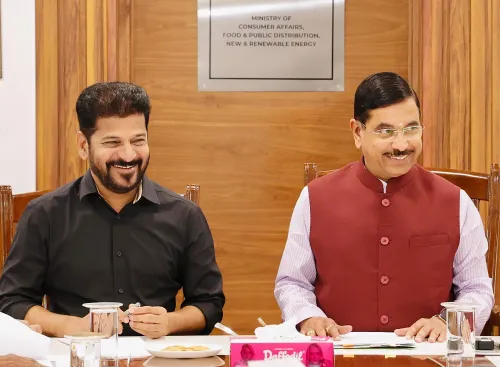
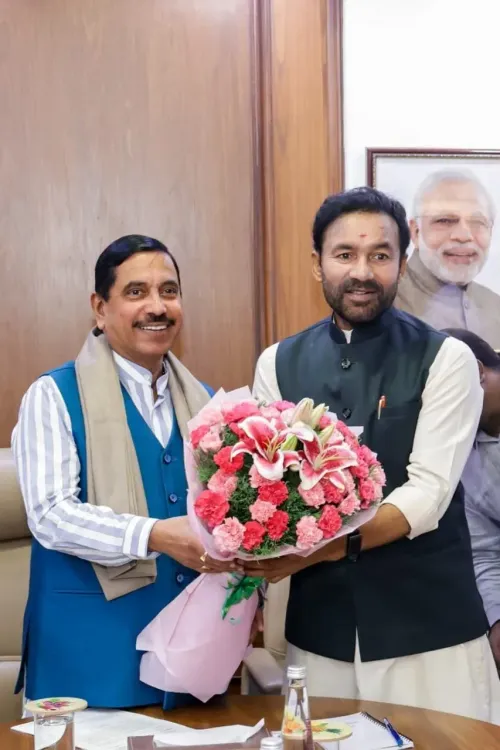
Union Consumer Affairs Minister Pralhad Joshi on 8 July 2026 received a delegation led by Coal Minister G. Kishan Reddy seeking a higher paddy procurement target for Telangana. Joshi directed his department to assess the proposal's feasibility under existing guidelines, with a decision expected before the 2026-27 kharif marketing season.
Key Takeaways
Union Consumer Affairs Minister Pralhad Joshi met a delegation led by Coal and Mines Minister G.
Kishan Reddy on 8 July 2026 to discuss Telangana's paddy procurement needs.
The delegation cited Telangana 's rising paddy production and requested an enhanced central procurement target to prevent farmer distress sales.
Joshi directed the Department of Food and Public Distribution to examine the proposal and assess its feasibility under prevailing guidelines.
Central paddy procurement operates at the Minimum Support Price (MSP) through FCI and state agencies under the Decentralised Procurement Scheme of 1997 .
Telangana has received progressively higher procurement targets since its formation in 2014 , but state leaders argue allocations lag behind actual output.
A formal departmental review will determine whether a revised target is announced ahead of the 2026-27 kharif marketing season .
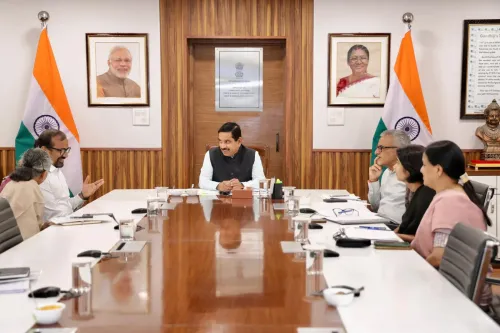
Union Consumer Affairs Minister Pralhad Joshi met a delegation led by Union Coal and Mines Minister G. Kishan Reddy on Wednesday, 8 July 2026, to discuss Telangana's request for an enhanced paddy procurement target under the central pool mechanism. Joshi said he has directed the Department of Food and Public Distribution to examine the proposal in detail and assess its feasibility against prevailing guidelines.
Context
Posting on X, Minister Joshi confirmed the meeting, writing that the delegation 'highlighted the State's rising production and sought consideration for enhancing the procurement target to ensure better support for farmers.' The delegation also acknowledged 'the Centre's consistent support to Telangana through timely policy interventions and procurement-related decisions over the years.'
The Telugu portion of the post — రాష్ట్రంలో పెరుగుతున్న ఉత్పత్తిని ఆ ప్రతినిధి బృందం ప్రముఖంగా ప్రస్తావిస్తూ ('the delegation prominently highlighted the rising production in the state') — mirrors the English text and underlines that the appeal is directed at both national and regional audiences.
Policy Backdrop
Telangana, carved out as a separate state in 2014, has steadily grown into a significant paddy-surplus region. Central procurement of paddy takes place at the Minimum Support Price (MSP) fixed annually by the Union government, with the Food Corporation of India and state agencies buying grain for the central pool that feeds the public distribution system.
Under the Decentralised Procurement Scheme introduced in 1997, states may procure foodgrains on behalf of FCI and claim reimbursement of costs. Telangana has received progressively higher procurement targets since its formation, but state authorities and local BJP leaders have argued that allocations have not kept pace with actual output, leaving some farmers exposed to distress sales in open markets.
Stakeholders and Impact
Telangana's paddy farmers stand to benefit most directly from any upward revision of the procurement target, as higher central offtake at MSP shields them from price crashes during peak harvest periods. The delegation, led by G. Kishan Reddy — a senior BJP leader from the state — signals that the party is actively channelling farmer grievances through the federal machinery ahead of the 2026-27 kharif marketing season.
For the Centre, any revision must be balanced against storage capacity, fiscal outgo, and the broader foodgrain management framework. Minister Joshi's directive to examine 'feasibility in accordance with the prevailing guidelines' indicates that a formal inter-departmental review, rather than an immediate announcement, is the next step.
What's Next
The Department of Food and Public Distribution will now evaluate Telangana's case, weighing production estimates, existing stock positions, and budgetary norms before recommending a revised target. A decision is expected to be communicated before procurement operations for the upcoming kharif season gather pace.
If the Centre approves an enhanced target, it would mark a continuation of the incremental upward adjustments Telangana has secured since 2014 — and could set a precedent for other growing surplus states seeking similar revisions in their central procurement allocations.
Point of View
Pralhad Joshi preserves fiscal discipline while signalling responsiveness — a careful balance the Centre has maintained with surplus states seeking higher MSP offtake. The episode also reflects the growing political salience of farmer income support in Telangana, where the BJP is looking to consolidate ground. How the department rules will be watched by other paddy-surplus states calibrating their own procurement requests.
NationPress
7 Oct 2026
Frequently Asked Questions
What did the Telangana delegation ask Pralhad Joshi for?
The delegation, led by Coal Minister G. Kishan Reddy, asked Consumer Affairs Minister Pralhad Joshi to enhance Telangana's central paddy procurement target, citing the state's rising production and the need to ensure better MSP-based support for farmers.
What is the MSP for paddy and who fixes it?
The Minimum Support Price (MSP) for paddy is fixed annually by the Union government on the recommendation of the Commission for Agricultural Costs and Prices (CACP). State agencies and FCI purchase paddy at this price for the central pool.
What is the Decentralised Procurement Scheme?
Introduced in 1997, the Decentralised Procurement Scheme allows state governments to procure foodgrains directly on behalf of the Food Corporation of India and claim reimbursement of procurement and distribution costs from the Centre.
Has Telangana received higher paddy procurement targets before?
Yes. Since its formation in 2014, Telangana has received progressively higher central paddy procurement targets reflecting increased output, though state leaders have repeatedly argued the allocations still fall short of actual production.
When will a decision on Telangana's paddy procurement request be taken?
Minister Joshi has asked the Department of Food and Public Distribution to examine the proposal; a decision is expected before procurement operations for the 2026-27 kharif marketing season begin.