Uttarakhand CMO Spotlights Rudrapur Youth as Job Creator

Synopsis
The Chief Minister's Office of Uttarakhand on 8 July 2026 highlighted Rudrapur resident Shashank Pandey as a symbol of the state's push to turn youth into job-creators rather than job-seekers, anchoring the message in its self-employment promotion drive across Udham Singh Nagar district.
Key Takeaways
The Chief Minister's Office of Uttarakhand shared a self-employment success story on 8 July 2026 via its official X account.
Shashank Pandey of Rudrapur, Udham Singh Nagar is presented as a model entrepreneur under the state's job-creation push.
The CMO framed enterprise creation — not job-seeking — as the identity of 'new Uttarakhand'.
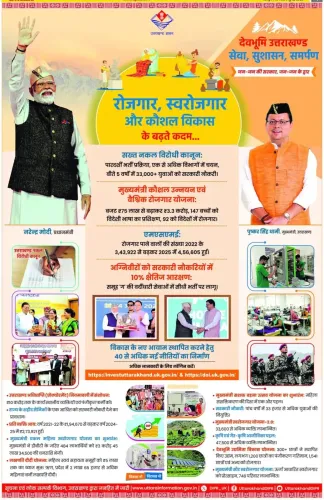
The messaging aligns with the Pradhan Mantri Mudra Yojana (2015) and national Startup India initiatives active in the state.
Udham Singh Nagar hosts industrial estates and agri-processing units, making it a relatively favourable district for micro-enterprise growth.
Uttarakhand has historically used individual success stories to promote self-employment as an alternative to out-migration for salaried work.
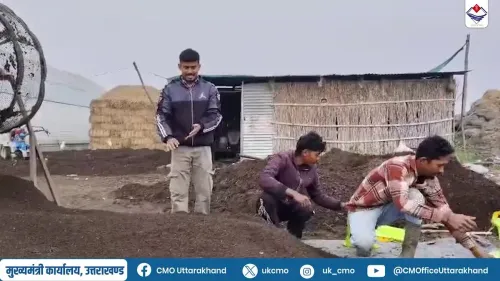
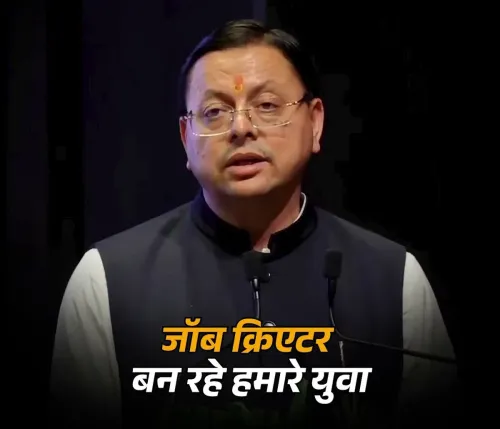
The Chief Minister's Office of Uttarakhand on Wednesday, 8 July 2026 highlighted the story of Shashank Pandey, a resident of Rudrapur in Udham Singh Nagar district, as a living example of the state government's push to transform young people from job-seekers into job-creators.
The post, shared on the official CMO handle, declared: 'Rozgar ki talash nahin, rozgar ka srijan' ('Not the search for employment, but the creation of employment') — framing this as the defining identity of a 'new Uttarakhand'. Shashank Pandey's journey is cited as a concrete illustration of that ambition.
Context
Uttarakhand, carved out of Uttar Pradesh in 2000, has long grappled with seasonal out-migration of its youth to plains cities in search of salaried work. The hill state's limited organised-sector job market has made self-employment promotion a recurring policy priority for successive governments. Spotlighting individual entrepreneurs from districts like Udham Singh Nagar is part of a deliberate communications strategy to shift the aspirational benchmark from securing a government post to building one's own enterprise.
Policy Backdrop
The state's self-employment messaging sits within a layered national policy architecture. The Pradhan Mantri Mudra Yojana, launched by the Government of India in 2015, provides collateral-free loans to micro-enterprise aspirants — a scheme that has been actively promoted across Uttarakhand's districts. Complementary initiatives under Startup India and state-level skill missions have sought to equip young people with both capital access and vocational training. Udham Singh Nagar, which hosts established industrial estates and agricultural processing units around Rudrapur, offers a relatively supportive ecosystem for small-scale enterprise compared to the more remote hill districts.
The CMO's use of a personal success story follows a pattern seen across hill states: individual narratives are deployed to make abstract policy goals tangible and to counter the perception that entrepreneurship is a fallback rather than a first choice.
Stakeholders and Impact
The primary audience for this messaging is Uttarakhand's unemployed youth and aspiring first-generation entrepreneurs, particularly those in Tier-2 towns and semi-rural areas where awareness of government-backed credit and support schemes remains uneven. For districts like Udham Singh Nagar, which straddles the Terai plains and benefits from better road and market connectivity than upper hill districts, the conditions for small-business growth are comparatively more favourable.
Broader stakeholders include district administration officials tasked with scheme outreach, financial institutions channelling Mudra loans, and civil society organisations running entrepreneurship awareness camps. A visible success story amplified by the CMO can meaningfully increase footfall at district-level scheme facilitation centres.
What's Next
Observers will watch for the release of Uttarakhand's annual self-employment scheme utilisation data and any district-level targets that may be announced in the forthcoming state budget. If the government follows the pattern of similar campaigns in other states, individual spotlights like Shashank Pandey's are likely to be followed by structured district-level entrepreneur conclaves or scheme saturation drives in Udham Singh Nagar. The broader test will be whether the narrative shift from job-seeker to job-creator is backed by measurable uptake in micro-enterprise registrations and loan disbursals across the state.
Point of View
However, will lie in district-level disbursement figures and enterprise survival rates — numbers that tend to tell a more complicated story than a single spotlight post.
NationPress
8 Jul 2026
Frequently Asked Questions
Who is Shashank Pandey from Rudrapur Uttarakhand?
Shashank Pandey is a resident of Rudrapur in Udham Singh Nagar district, Uttarakhand, who was highlighted by the Chief Minister's Office on 8 July 2026 as an example of successful self-employment and local job creation. Specific details of his enterprise have not been disclosed in the official post.
What is Uttarakhand government's self-employment scheme?
Uttarakhand promotes self-employment through a combination of national schemes such as the Pradhan Mantri Mudra Yojana, which offers collateral-free micro-enterprise loans, and state-level skill and startup missions designed to reduce youth out-migration from the hill state.
What is Pradhan Mantri Mudra Yojana and how does it help in Uttarakhand?
Pradhan Mantri Mudra Yojana, launched in 2015, provides collateral-free loans to individuals setting up or expanding micro enterprises. In Uttarakhand, it has been used to support small business owners in districts including Udham Singh Nagar, where industrial and agri-processing activity provides a market base.
Why does Uttarakhand face youth unemployment and out-migration?
Uttarakhand's mountainous terrain limits large-scale organised industry, and the state has a relatively small government job market. This has historically pushed youth to migrate to plains cities for salaried work, making self-employment promotion a key policy response.
What is Udham Singh Nagar known for in Uttarakhand?
Udham Singh Nagar is a southern district of Uttarakhand known for its industrial estates, agricultural processing units, and the city of Rudrapur. Its Terai plains location gives it better connectivity and infrastructure than the hill districts, making it one of the state's more industrially active regions.