CM Majhi marks Modi's 2-yr oath anniversary, hails 12 years of seva
Synopsis
Odisha Chief Minister Mohan Charan Majhi marked the second anniversary of PM Narendra Modi's historic third-term swearing-in, hailing 12 years of 'seva'-driven governance and reaffirming commitment to the Viksit Bharat 2047 vision.
Key Takeaways
CM Mohan Charan Majhi posted a tribute on 9 June 2026 marking two years since PM Modi 's third-term oath on 9 June 2024 .
The post was written in Odia and shared under the hashtag #12YearsOfSeva , covering Modi's full tenure since 2014 .
Five pillars were highlighted: empowerment of the poor, national security, transformative reforms, infrastructure growth, and digital revolution.
Viksit Bharat 2047 — India's roadmap to developed-nation status by independence centenary — was cited as the overarching national goal.
The post reflects coordinated BJP communication across Centre and state, with Odisha under BJP rule since 2024 .
The 'nation first' and 'last-mile delivery' framing echoes BJP's core governance narrative dating to its 2014 election campaign.
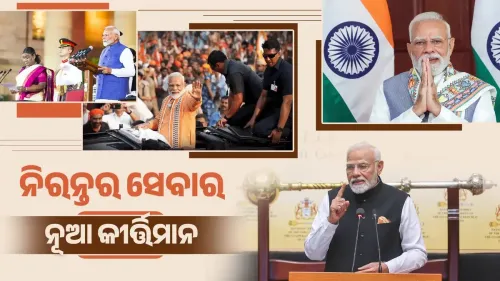
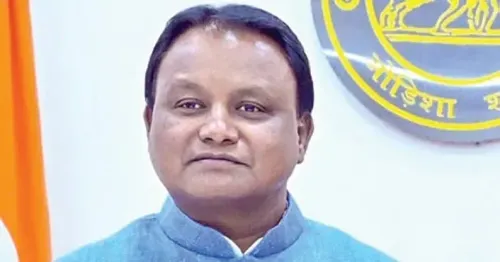
Odisha Chief Minister Mohan Charan Majhi on Tuesday, 9 June 2026 marked the second anniversary of Prime Minister Narendra Modi's swearing-in for a historic third consecutive term, calling the occasion a 'new golden chapter in the history of Indian democracy.' The post, written in Odia, was shared on X under the hashtag #12YearsOfSeva, reflecting on a decade-plus of BJP-led governance at the Centre.
Context
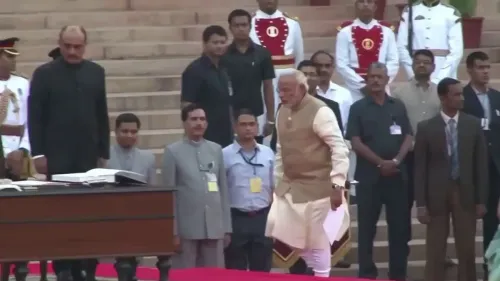
Narendra Modi was sworn in as Prime Minister for a third consecutive term on 9 June 2024, becoming the first leader since Jawaharlal Nehru to achieve that distinction. CM Majhi described that day as historic, writing — 'ଆଜିର ଏହି ଐତିହାସିକ ଦିନ' ('this historic day') — and praised Modi's 'visionary leadership' for transforming governance into 'a powerful instrument of public welfare.'
The post credits 12 years of Modi-led government with reaching welfare benefits to 'the last person in society,' a formulation that echoes the BJP's long-standing 'last-mile delivery' narrative rooted in its 2014 campaign promise of 'maximum governance, minimum government.'
Policy Backdrop
The #12YearsOfSeva framing encapsulates five pillars cited by CM Majhi: empowerment of the poor and deprived, strong national security, transformative reforms, rapid infrastructure development, and a digital revolution. These align closely with flagship Central programmes rolled out since 2014, including direct-benefit transfer schemes, national highway expansion drives, and the push for digital public infrastructure.
The post also invokes Viksit Bharat 2047, the official government vision for India to become a developed nation by the centenary of independence. First formally articulated by Prime Minister Modi in 2022-23, the roadmap has since been adopted as a common reference point across BJP-governed states, including Odisha, which came under BJP rule in 2024 under CM Majhi.
Stakeholders and Impact
The messaging is directed at a broad base: poor and marginalised citizens who are positioned as the primary beneficiaries of the 'seva' model, and state governments that are expected to serve as implementation partners for centrally sponsored schemes. For Odisha specifically, the alignment signals the state's intent to deepen convergence with Central welfare architecture.
CM Majhi's post mirrors similar oath-anniversary messaging issued by other BJP chief ministers, reinforcing centre-state ideological coherence. The 'nation first' (ରାଷ୍ଟ୍ର ପ୍ରଥମ) governance framing it invokes has been a consistent thread in BJP communication since 2014.
What's Next
With Viksit Bharat 2047 now the declared national compass, attention will turn to how Odisha translates the Central vision into state-level outcomes — particularly the rollout of centrally sponsored welfare schemes, infrastructure corridor projects, and digital inclusion drives. The 2029 general elections will test whether the 'seva' narrative translates into continued electoral consolidation for the BJP in eastern India.
For now, CM Majhi's tribute underscores that the BJP's communication machine — from New Delhi to Bhubaneswar — remains tightly synchronised around the Modi-led governance story.
Point of View
Where state leaders amplify the Central leadership narrative on symbolic dates to reinforce ideological coherence. The invocation of 'Viksit Bharat 2047' alongside '12YearsOfSeva' ties short-term anniversary messaging to a long-horizon developmental vision, giving the tribute policy weight beyond ceremonial praise. For Odisha — a state the BJP won for the first time in 2024 — such alignment also serves a local consolidation purpose, anchoring the new government's identity firmly within the Modi governance brand. The pattern signals that the BJP's 2029 campaign architecture is already being laid at the state level, one anniversary post at a time.
NationPress
22 Sept 2026
Frequently Asked Questions
Why is CM Majhi posting about Modi's oath anniversary in 2026?
9 June 2026 marks the second anniversary of PM Narendra Modi 's swearing-in for a third consecutive term on 9 June 2024 . CM Mohan Charan Majhi used the occasion to reflect on 12 years of Modi-led governance since 2014 under the hashtag #12YearsOfSeva .
What is #12YearsOfSeva?
#12YearsOfSeva is a hashtag marking 12 years of Narendra Modi 's tenure as Prime Minister, beginning in May 2014 . It frames his governance record around the motto 'seva sarvopar' — service above all — highlighting welfare delivery, infrastructure, and digital transformation.
What is Viksit Bharat 2047?
Viksit Bharat 2047 is the Indian government's official vision to make India a fully developed nation by 2047 , the centenary of independence. It was formally articulated by PM Modi in 2022-23 and has since been adopted as a guiding framework by BJP-governed states including Odisha .
When did Mohan Charan Majhi become Chief Minister of Odisha?
Mohan Charan Majhi became Chief Minister of Odisha in 2024 after the BJP won the state assembly elections, marking the party's first government in the state.
What did CM Majhi say about Modi's governance record?
CM Majhi credited PM Modi 's 'visionary leadership' over 12 years with transforming governance into a 'powerful instrument of public welfare,' reaching the 'last person in society,' and establishing India as a prosperous nation through empowerment of the poor, national security, reforms, infrastructure, and digital revolution.