CM Majhi flags orderly darshan for lakhs at Puri Jagannath Temple
Synopsis
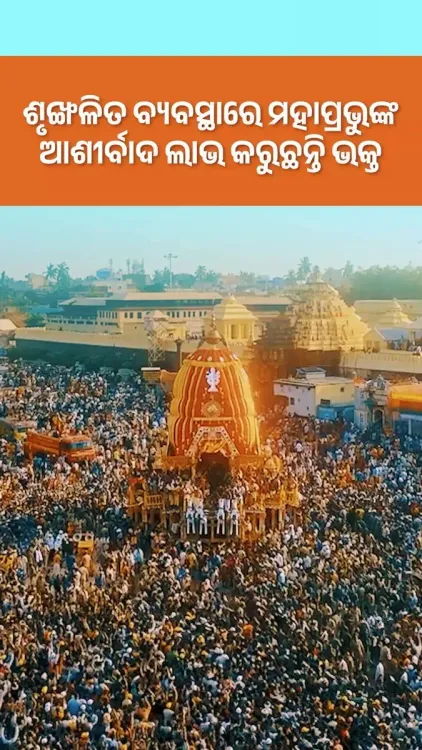
Odisha Chief Minister Mohan Charan Majhi on 24 July 2026 highlighted the peaceful gathering of lakhs of devotees at the Jagannath Temple in Puri, crediting disciplined state administration for ensuring orderly and smooth darshan at the Char Dham pilgrimage site.
Key Takeaways
CM Mohan Charan Majhi posted on 24 July 2026 about lakhs of devotees gathering at Puri Jagannath Temple for darshan.
The chief minister credited the administration for 'orderly management' enabling peaceful darshan of Lord Jagannath (referred to as Shreejiu ).
The Jagannath Temple is one of the four Char Dham pilgrimage centres and is administered under a dedicated Odisha state act.
The Shree Jagannath Temple Administration (SJTA) coordinates with state police and district authorities during high-footfall periods.
Public messaging on orderly pilgrim management at Puri is a long-standing practice of Odisha chief ministers across parties.
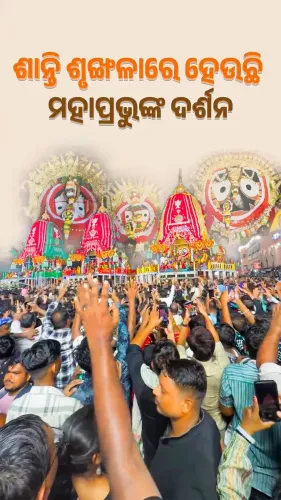
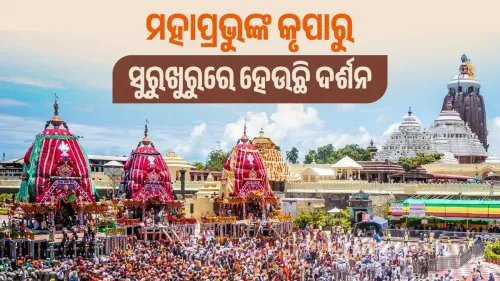
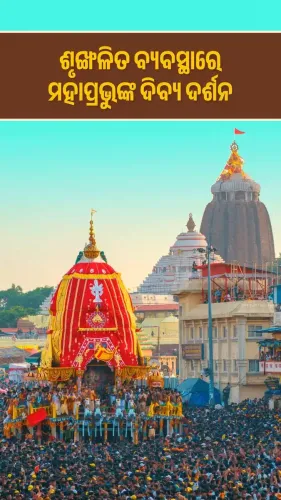
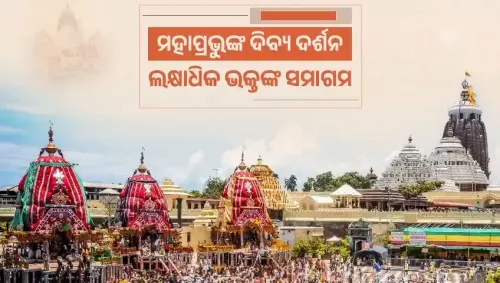
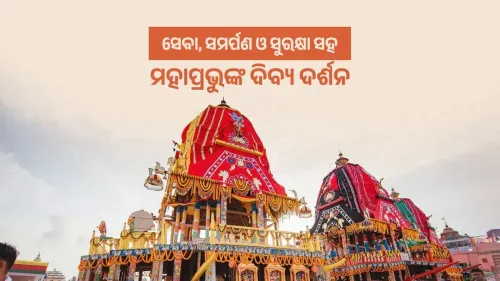
Odisha Chief Minister Mohan Charan Majhi on Friday, 24 July 2026, highlighted the peaceful and orderly congregation of lakhs of devotees at the Jagannath Temple in Puri, crediting disciplined administration for ensuring smooth darshan at one of India's most sacred pilgrimage sites.
Posting in Odia on X, CM Majhi wrote that 'lakhs of devotees have gathered at Puri Kshetra for the divine darshan of Mahaprabhu' and that 'under the orderly management of the administration, devotees are peacefully having darshan of Shreejiu.' The phrase Shreejiu — an affectionate Odia honorific for Lord Jagannath — underscores the cultural intimacy with which the state government frames its messaging around the temple.
Context
The Jagannath Temple in Puri is a 12th-century structure dedicated to Lord Jagannath, Balabhadra, and Subhadra, and is one of the four Char Dham pilgrimage centres of Hinduism. It draws millions of devotees annually, with footfall surging sharply around major festivals. The temple is administered under a dedicated state act, with rituals managed by hereditary servitors known as sevayats, while crowd management and security fall under the Shree Jagannath Temple Administration (SJTA) working alongside state police and district authorities.
Policy Backdrop
Successive Odisha governments have maintained formal crowd-control and darshan-management protocols at Puri for decades, with arrangements typically reinforced around peak festivals such as Rath Yatra. The practice of chief ministers publicly acknowledging orderly pilgrim management is well established and cuts across party lines, reflecting the temple's centrality to both the state's cultural identity and its law-and-order priorities.
The current BJP-led government under CM Majhi — who took office in June 2024 as the first BJP chief minister of Odisha — has continued and publicly emphasised these administrative arrangements, framing efficient pilgrim flow as a matter of both governance and devotee welfare.
Stakeholders and Impact
The primary beneficiaries of smooth darshan management are the lakhs of pilgrims who travel to Puri from across India and abroad. Temple servitors, local vendors, and the district administration also have a direct stake in orderly congregation management, as disruptions can affect both ritual continuity and public safety.
The SJTA and Puri district administration bear operational responsibility, coordinating queue systems, security deployment, and emergency response during high-footfall periods. CM Majhi's public acknowledgement signals state-level attention to these arrangements and serves as accountability messaging to both officials and the public.
What's Next
With major temple festivals continuing to draw surge crowds, attention will remain on any announced upgrades to queue infrastructure, digital darshan-booking systems, or expanded facilities for pilgrims at Puri. Preparations and official communications ahead of the next Rath Yatra will be closely watched as a barometer of the state government's temple-management priorities.
Point of View
Now in its second year, has a particular interest in demonstrating stewardship of the Jagannath Temple, given the shrine's outsized cultural and political weight in the state. The messaging fits a broader pattern across Indian state governments of framing temple management as a welfare and law-and-order achievement, not merely a logistical one. Whether the public communication translates into sustained infrastructure upgrades at Puri will be the longer-term test of the government's commitment.
NationPress
23 Oct 2026
Frequently Asked Questions
Why are lakhs of devotees gathering at Puri Jagannath Temple?
The Jagannath Temple in Puri is one of Hinduism's four Char Dham pilgrimage centres and regularly draws large crowds for daily darshan, with footfall rising sharply during major festivals. CM Majhi 's post on 24 July 2026 noted a particularly large congregation seeking the divine darshan of Mahaprabhu Jagannath .
Who manages crowd control at Puri Jagannath Temple?
The Shree Jagannath Temple Administration (SJTA) , a statutory body under the Odisha government, coordinates crowd control and pilgrim facilities in partnership with state police and the Puri district administration, especially during high-footfall periods.
What does 'Shreejiu' mean in the context of Jagannath Temple?
Shreejiu is an affectionate Odia honorific used by devotees to refer to Lord Jagannath . It reflects the deep cultural and devotional bond Odisha's people share with the presiding deity of the Puri temple.
What is Mohan Charan Majhi's role in Odisha?
Mohan Charan Majhi is the Chief Minister of Odisha , having taken office in June 2024 after the BJP's victory in the state assembly elections — making him the first BJP chief minister of Odisha.
What is the significance of Puri Jagannath Temple for Hindu pilgrims?
The Jagannath Temple in Puri , built in the 12th century, is dedicated to Lord Jagannath , Balabhadra , and Subhadra . It is one of the four Char Dham sites, making a pilgrimage there spiritually significant for Hindus across India and the world.