CM Majhi Highlights Smooth Darshan, Order at Puri Jagannath Temple
Synopsis
Odisha Chief Minister Mohan Charan Majhi declared on 27 July 2026 that devotee safety and smooth darshan at Puri's Jagannath Temple — one of India's four Char Dham sites — is his government's foremost priority, citing peace and order at Shrikhetra this year.
Key Takeaways
CM Mohan Charan Majhi posted in Odia on 27 July 2026 affirming his government's focus on devotee safety and orderly darshan at Puri .
He stated that pilgrims at Shrikhetra are experiencing peace, discipline, and smooth access to the Jagannath Temple this year.
The Jagannath Temple is a 12th-century shrine and one of India's four Char Dham pilgrimage sites, drawing millions of visitors annually.
The Shree Jagannath Temple Administration (SJTA) , under state oversight, manages security and visitor services at the complex.
The BJP government in Odisha has since June 2024 emphasised efficient administration of major pilgrimage sites as a governance priority.
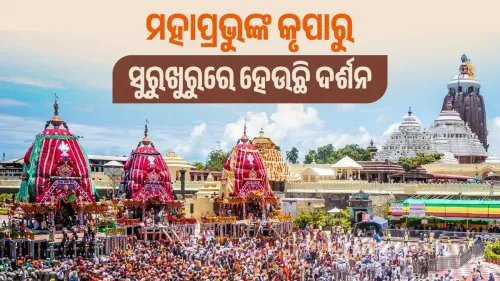
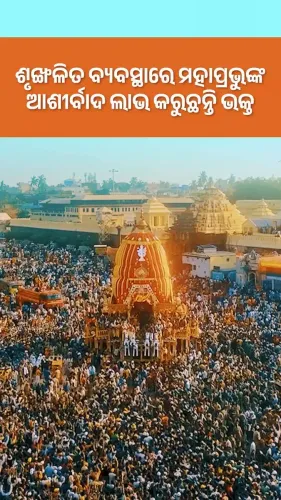
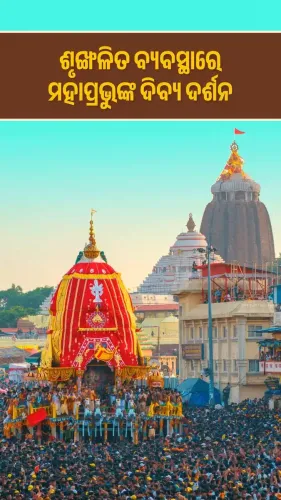
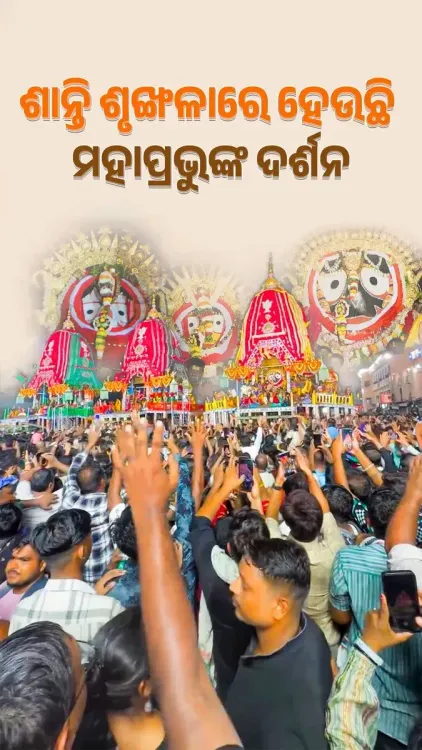
Odisha Chief Minister Mohan Charan Majhi on Monday, 27 July 2026 reaffirmed his government's commitment to the safety, convenience, and orderly darshan of devotees at Shrikhetra (Puri), stating that pilgrims are experiencing a peaceful and well-managed visit to the Jagannath Temple this year.
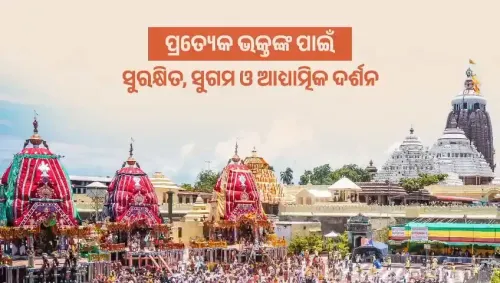
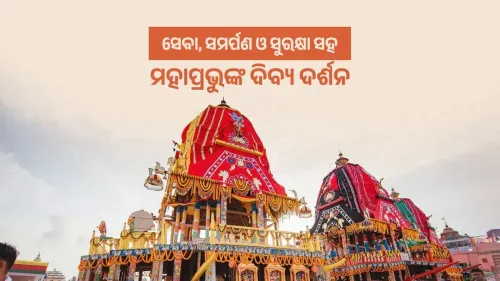
Posting in Odia, the Chief Minister wrote: 'ପ୍ରତ୍ୟେକ ଭକ୍ତଙ୍କ ସୁରକ୍ଷା, ସୁବିଧା ଓ ସୁଗମ ଦର୍ଶନ ଆମ ସରକାରର ସର୍ବୋଚ୍ଚ ପ୍ରାଥମିକତା' — 'The safety, convenience, and smooth darshan of every devotee is the highest priority of our government.' He added that with the grace of Mahaprabhu (Lord Jagannath) and the cooperation of all, devotees at Shrikhetra are experiencing divine darshan this year with peace, discipline, and order.
Context
The Jagannath Temple in Puri is one of India's four sacred Char Dham pilgrimage sites and draws millions of devotees annually, with footfall surging sharply during major festivals. Managing crowd safety, queue systems, and basic amenities at such scale is a persistent administrative challenge for the state government. CM Majhi's post comes during the active pilgrimage season at Shrikhetra.
Policy Backdrop
Successive Odisha governments have invested in crowd-management infrastructure and security arrangements at Puri, particularly around the annual Rath Yatra, with documented facility upgrades spanning 2015 to 2023. Since the BJP assumed power in Odisha in June 2024 under CM Majhi, the administration has placed visible emphasis on efficient management of Hindu pilgrimage centres. The Shree Jagannath Temple Administration (SJTA), which operates under state oversight, coordinates security, queue management, and visitor services at the 12th-century temple complex.
Across BJP-governed states, organised administration of major religious sites has become a recurring governance signal, with announcements on infrastructure, digital queue systems, and law-and-order measures at prominent temples.
Stakeholders and Impact
The primary beneficiaries of orderly darshan management are the lakhs of devotees — many from rural Odisha and neighbouring states — who travel to Puri each year. Improved crowd control directly reduces stampede risk and wait times, concerns that have historically drawn public scrutiny at high-footfall temple events across India. The temple administration, local police, and district authorities are the key implementation arms of any such arrangement.
Local traders, hospitality providers, and transport operators in Puri also have a stake in smooth pilgrim flow, as disruptions or poor management can deter repeat visitors and affect the town's pilgrimage-driven economy.
What's Next
The Odisha government is expected to continue outlining its plans for Rath Yatra cycle preparations, temple-precinct development, and any administrative reforms under the SJTA. Watchers of Odisha's religious-tourism policy will look for concrete announcements on infrastructure investment, digital facilities for devotees, and long-term crowd-management frameworks at Shrikhetra.
Point of View
Projecting administrative competence at one of Hinduism's most visited shrines. For a BJP government that came to power in Odisha in June 2024, visible stewardship of the Jagannath Temple carries both religious and political weight, particularly as the party seeks to consolidate its identity in a state where the temple holds deep cultural significance. The emphasis on 'peace, discipline, and order' echoes a broader BJP template of framing efficient temple management as a marker of good governance. How the government translates this messaging into durable infrastructure and institutional reform at Shrikhetra will determine whether it becomes a lasting policy legacy or remains a seasonal communication exercise.
NationPress
27 Jul 2026
Frequently Asked Questions
What did Odisha CM Mohan Majhi say about Jagannath Temple darshan?
CM Mohan Charan Majhi said on 27 July 2026 that the safety, convenience, and smooth darshan of every devotee is his government's highest priority, and that pilgrims at Puri's Jagannath Temple are experiencing peace and order this year.
Who manages the Jagannath Temple in Puri?
The Jagannath Temple is managed by the Shree Jagannath Temple Administration (SJTA), which operates under the oversight of the Odisha state government.
When did Mohan Charan Majhi become Chief Minister of Odisha?
Mohan Charan Majhi became Chief Minister of Odisha in June 2024 after the BJP won the state assembly elections.
What is the Rath Yatra and why is crowd management important at Puri?
The Rath Yatra is an annual chariot festival at the Jagannath Temple in Puri that draws millions of devotees, making crowd control, safety, and queue management a critical administrative responsibility for the Odisha government.