CM Majhi Maps Odisha's Economic Future with NITI Aayog
Synopsis
Odisha Chief Minister Mohan Charan Majhi met NITI Aayog and EAC-PM member Prof. K. V. Raju in New Delhi on 31 July 2026, discussing district-level GDP frameworks, the Viksit Odisha 2036 and 2047 vision documents, and proposed Special Marine and Farming Zones for coastal and agricultural development.
Key Takeaways
CM Mohan Charan Majhi met Prof.
Raju of NITI Aayog and EAC-PM in New Delhi on 31 July 2026 to discuss Odisha's long-term economic strategy.
Talks centred on the Viksit Odisha 2036 and Viksit Odisha 2047 vision documents, aligned with the national Viksit Bharat 2047 goal.
A framework for district-level GDP estimation was discussed to enable granular, evidence-based development planning across Odisha's districts.
Proposed Special Marine Zones and Special Farming Zones aim to unlock economic potential in Odisha's coastal belt and agricultural regions.
The meeting reflects a broader national pattern of state governments coordinating long-term plans with NITI Aayog since the Planning Commission was replaced in 2015 .
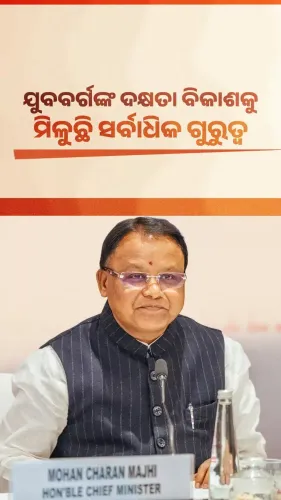
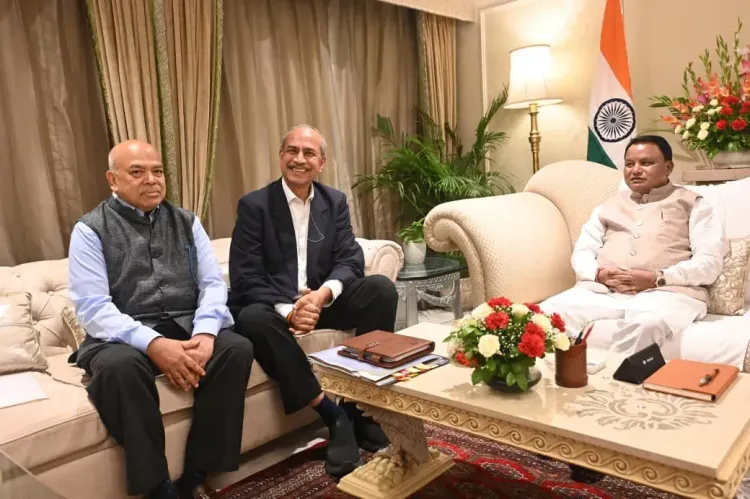
A blueprint for Odisha's next two decades took shape in New Delhi on Friday, 31 July 2026, when Odisha Chief Minister Mohan Charan Majhi sat down with Prof. K. V. Raju, a member of both NITI Aayog and the Economic Advisory Council to the Prime Minister (EAC-PM), to chart the state's long-term economic trajectory.
From Vision Documents to District GDP: What Was on the Table
The meeting covered substantial ground. At its core were the strategic priorities embedded in Viksit Odisha 2036 and Viksit Odisha 2047 — state-level vision documents designed to mirror the national Viksit Bharat 2047 framework announced by the Centre in 2023. Both documents are aimed at positioning Odisha as a developed, high-growth state by mid-century.
Equally significant was the discussion around a 'robust framework for district-level GDP estimation' — a wonky phrase that carries real weight. Right now, India's economic data is largely aggregated at the state level, masking stark disparities between districts. A granular, district-by-district GDP measure would give Odisha's planners a live map of where growth is concentrated and where it is absent — a prerequisite for genuinely targeted development spending.
Special Marine and Special Farming Zones: Unlocking the Coast and the Field
Perhaps the most structurally novel element of the talks was the exploration of Special Marine Zones and Special Farming Zones — proposed policy frameworks designed to unlock the economic potential of Odisha's 480-kilometre coastline and its vast agricultural hinterland. Odisha's coastal belt supports large fishing and aquaculture communities; its interior districts remain among the most agrarian — and economically lagging — in eastern India.
The zone concept, if formalised, would create dedicated regulatory and investment environments for these two sectors, analogous in logic to Special Economic Zones but targeted at primary-sector communities rather than industrial exporters. The CM's office described the goal as fostering 'balanced regional development' and generating 'livelihood opportunities' — language that signals the policy is aimed squarely at rural and coastal populations, not just headline investment figures.
Why This Meeting Fits a Larger National Pattern
Meetings between state chief ministers and NITI Aayog or EAC-PM members have become a defining feature of India's post-Planning Commission governance architecture. Since NITI Aayog replaced the Planning Commission in 2015, it has functioned less as a top-down allocator and more as a collaborative strategy partner — helping states build data systems, align with SDG targets, and attract investment through coherent long-term plans.
CM Majhi, who took office in June 2024 after the BJP's assembly election victory in Odisha, has been moving quickly to establish an economic identity for his administration. Aligning Odisha's vision documents with the central Viksit Bharat framework is both a policy choice and a political signal — that Odisha is plugged into the national development agenda at the highest level.
The next test is execution: whether the Viksit Odisha documents move from consultation to public release, and whether the Special Marine and Special Farming Zone proposals progress to formal pilot notifications. Those are the moments that will determine whether Friday's meeting becomes a footnote or a foundation.
Point of View
They could offer a new regulatory model for primary-sector development outside the traditional SEZ framework. The real measure of this administration's economic ambition will come when these vision documents move from discussion rooms to public consultation.
NationPress
31 Jul 2026
Frequently Asked Questions
What is Viksit Odisha 2047?
Viksit Odisha 2047 is a state-level long-term vision document that outlines Odisha's development goals aligned with the national Viksit Bharat 2047 framework, which aims for India to achieve developed-nation status by 2047.
Who is Prof. K. V. Raju and why did he meet CM Majhi?
Prof. K. V. Raju is a member of both NITI Aayog and the Economic Advisory Council to the Prime Minister. He met Odisha CM Mohan Charan Majhi on 31 July 2026 in New Delhi to discuss the state's long-term economic roadmap, district GDP frameworks, and proposed Special Marine and Farming Zones.
What are Special Marine Zones and Special Farming Zones in Odisha?
These are proposed policy frameworks discussed by the Odisha government to create dedicated regulatory and investment environments for the state's coastal fishing and aquaculture communities and its agricultural regions, with the aim of generating livelihoods and balanced regional growth.
Why is district-level GDP estimation important for Odisha?
District-level GDP data would allow Odisha's planners to identify precisely which districts are growing and which are lagging, enabling more targeted and evidence-based allocation of development spending rather than relying on aggregated state-level figures.
When did Mohan Charan Majhi become Chief Minister of Odisha?
Mohan Charan Majhi became Chief Minister of Odisha in June 2024 after the BJP won the state assembly elections.