Cabinet Clears 5,000 MW Floating Solar Push Under PM Surya Sarovar Yojana
Synopsis
The Union Cabinet has approved 5,000 MW of floating solar projects with integrated energy storage on reservoirs across India under the PM Surya Sarovar Yojana, advancing the country's 500 GW non-fossil energy target for 2030.
Key Takeaways
The Union Cabinet approved 5,000 MW of floating solar capacity under the Pradhan Mantri Surya Sarovar Yojana .
Projects will be installed on reservoirs across the country, avoiding land acquisition conflicts that plague ground-mounted solar.
Each project will include energy storage systems, making the power dispatchable and reducing dependence on fossil-fuel backup plants.
The move supports India's target of 500 GW of non-fossil electricity capacity by 2030 .
The Ministry of New and Renewable Energy will handle tendering and reservoir-selection criteria; environmental clearances will be a key watch point.
India's reservoirs are about to pull double duty. The Union Cabinet has approved the establishment of 5,000 megawatts of floating solar capacity across water bodies nationwide under the Pradhan Mantri Surya Sarovar Yojana — and crucially, the projects will come bundled with energy storage systems to deliver power that is clean, reliable, and continuous.
Union Culture and Tourism Minister Gajendra Singh Shekhawat shared the Cabinet decision on Friday, July 31, 2026, writing: 'Under the Pradhan Mantri Surya Sarovar Yojana, floating solar projects of 5,000 MW capacity will be set up on reservoirs across the country. These will also have energy storage arrangements, marking a major step towards providing clean, reliable and sustainable electricity.'
Why Reservoirs, and Why Now
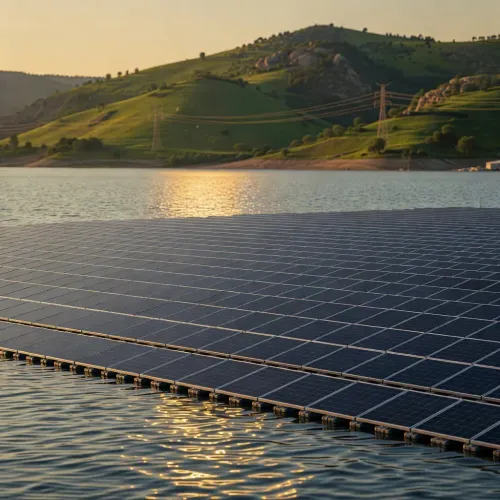
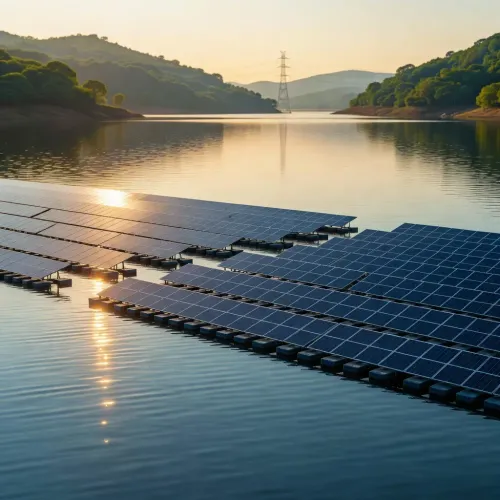
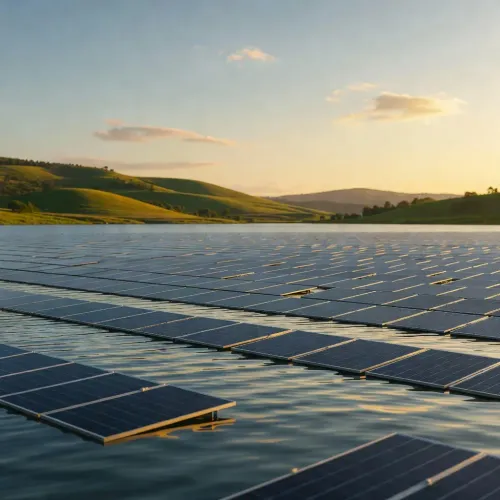
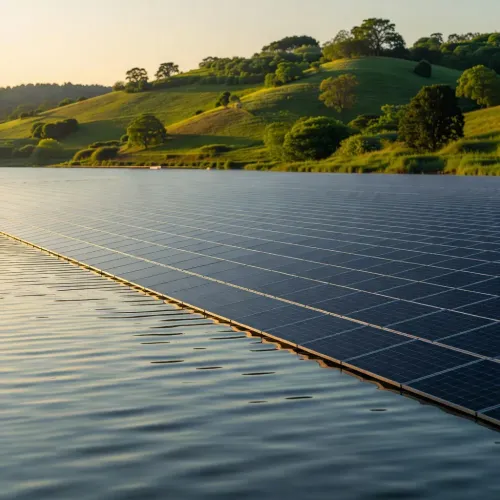
Floating solar on reservoirs solves one of India's sharpest renewable-energy headaches: land. Ground-mounted solar farms require vast tracts, triggering acquisition disputes and ecological objections. Water bodies, already owned by the state and largely idle as energy surfaces, sidestep that conflict entirely. They also reduce water evaporation — a quiet bonus in a country where reservoir management is a perennial political flashpoint.
The integrated energy storage component is the harder engineering piece and the more consequential policy signal. Solar generation peaks at noon; demand peaks in the evening. Without storage, utilities must still keep fossil-fuel plants on standby. Mandating storage at the project level rather than retrofitting it later reflects a maturing approach to grid planning.
Where This Sits in India's Renewable Arc
India has committed to 500 GW of non-fossil electricity capacity by 2030 — a target that Prime Minister Narendra Modi has anchored as a centrepiece of the country's climate diplomacy. The 5,000 MW announced today, if fully executed, would represent a meaningful slice of the remaining gap. The Ministry of New and Renewable Energy is expected to issue tender notifications and define reservoir-selection criteria; parliamentary questions on timelines and environmental clearances will be the next pressure points to watch.
India's floating solar ambitions are not new — pilot installations on irrigation canals and reservoirs date back several years — but a Cabinet-level scheme with an explicit storage mandate at this scale is a step change. The move also aligns with a global pattern: countries from China to the Netherlands have found that floating panels generate marginally more power than equivalent ground-mounted arrays because water keeps panel temperatures lower.
The Storage Mandate Changes the Calculus
Bundling storage with generation is the detail that separates this announcement from earlier capacity-addition orders. State power utilities, which have historically resisted purchasing solar power because of its intermittency, now receive a product that behaves more like dispatchable power. That shift in the commercial relationship between generator and distributor could accelerate offtake agreements and reduce the project-stalling that has plagued earlier renewable tenders.
Renewable energy developers will be watching the tendering structure closely — specifically whether storage costs are built into tariffs or treated as a separate regulated asset. The answer will determine whether the 5,000 MW target attracts the private capital needed to move from Cabinet paper to spinning turbines.
Five thousand megawatts, floating on India's reservoirs, storing sunlight for the evening rush — the Cabinet has drawn the blueprint. The execution clock starts now.
Point of View
Directly addressing the grid-reliability objection that has slowed solar offtake by state utilities. Floating installations on government-owned reservoirs also represent a political calculation — they sidestep the land-acquisition battles that have derailed several large ground-mounted projects. The scheme's success will hinge on how the Ministry of New and Renewable Energy structures storage costs in tariffs; if developers find the economics unworkable, the 5,000 MW target risks joining a long list of ambitious renewable announcements that underdelivered on execution.
NationPress
31 Jul 2026
Frequently Asked Questions
What is the Pradhan Mantri Surya Sarovar Yojana?
The Pradhan Mantri Surya Sarovar Yojana is a Cabinet-approved scheme under which floating solar projects totalling 5,000 MW will be set up on reservoirs across India, each integrated with energy storage to supply clean and reliable electricity.
What is floating solar power and how does it work?
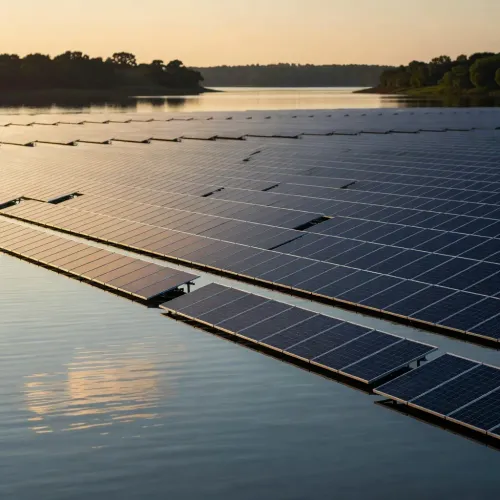
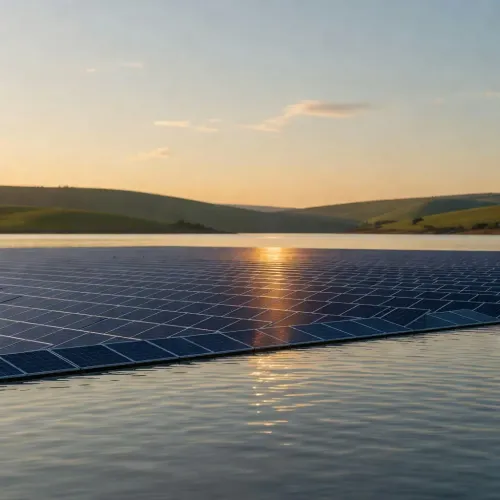
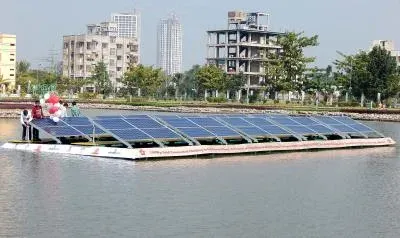
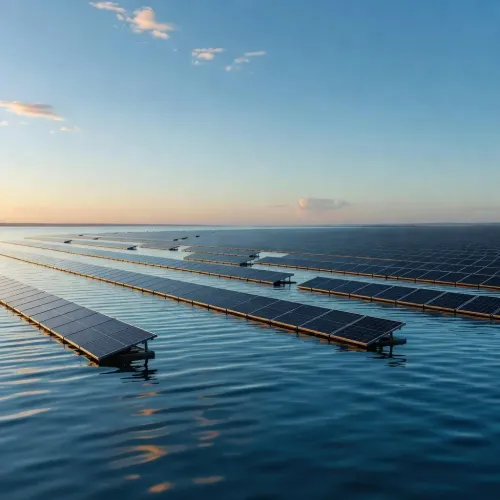
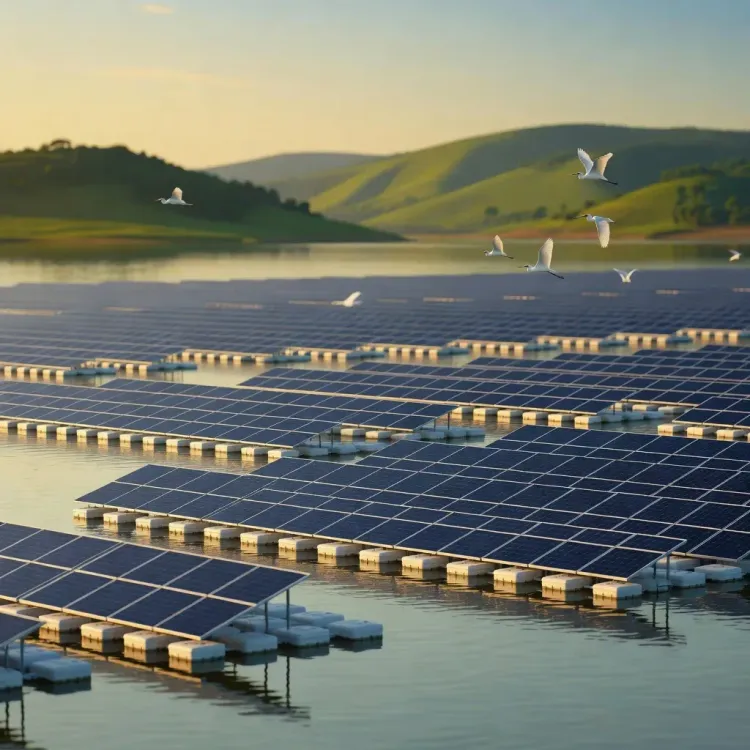
Floating solar involves mounting photovoltaic panels on buoyant structures placed on water bodies such as reservoirs and lakes. The water surface keeps panels cooler than ground-mounted arrays, slightly improving efficiency, while also reducing water evaporation from the reservoir.
Why is energy storage included in these floating solar projects?
Solar generation peaks at midday but electricity demand peaks in the evening. Integrating battery or other storage systems allows the projects to supply power when it is actually needed, making them dispatchable and reducing the need for fossil-fuel backup plants.
Which ministry will implement the PM Surya Sarovar Yojana?
The Ministry of New and Renewable Energy is expected to handle tendering, reservoir selection, and execution of the scheme, with environmental clearances forming a key regulatory step.
How does this scheme relate to India's 2030 renewable energy target?
India has committed to 500 GW of non-fossil electricity capacity by 2030 . The 5,000 MW of floating solar approved under this scheme contributes directly to closing the gap between current installed capacity and that national target.