CM Majhi Marks 2 Years of Education Reforms in Odisha
Synopsis
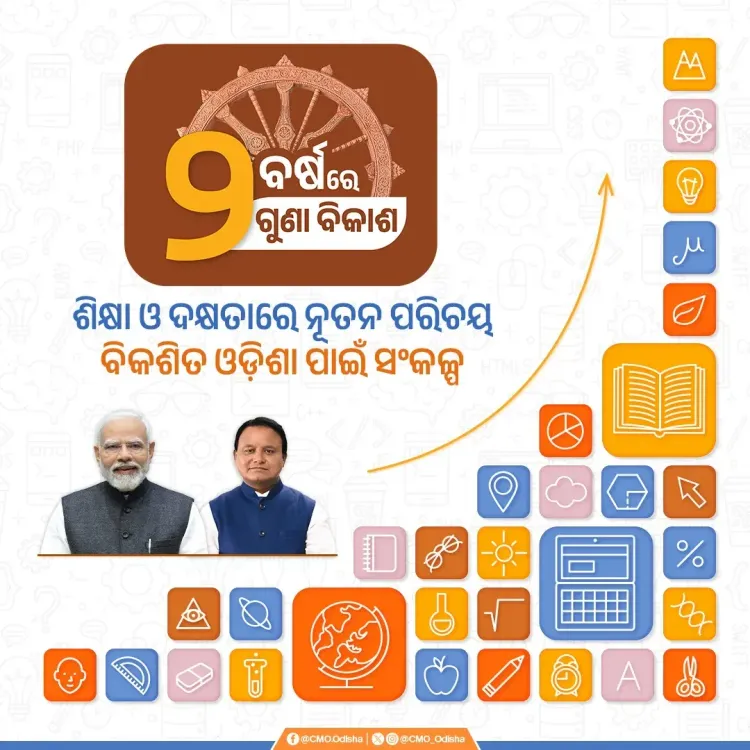
The Chief Minister's Office of Odisha marked two years of the Majhi government on 23 June 2026 by declaring a new era of education and skill development, framing continuous youth-focused reforms as central to the 'Bikashita Odisha' vision.
Key Takeaways
The Chief Minister's Office of Odisha posted on 23 June 2026 marking two years of the BJP-led government under CM Mohan Charan Majhi .
The post declared a 'new era of education and skill development' in Odisha, crediting two years of 'continuous effort and firm resolve'.
The government framed its youth-empowerment push as creating 'new possibilities and global recognition' for Odia youth.
The communication is anchored to the ' Bikashita Odisha ' (Developed Odisha) vision and the hashtag #2YearsOfShikshaSanskara .
Odisha's education reforms align with the national NEP 2020 framework emphasising skills and employability.
Measurable outcomes on youth employment and migration will be the key test of the government's claims.
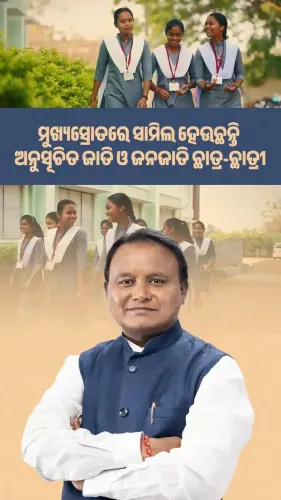
The Chief Minister's Office of Odisha on Tuesday, 23 June 2026 highlighted a new era of education and skill development in the state under the leadership of Chief Minister Mohan Charan Majhi, marking two years of the BJP-led government's focused push on youth empowerment.
Posting in Odia, the official handle of the Chief Minister's Office declared that 'ଶିକ୍ଷା ଓ ଦକ୍ଷତା ବିକାଶର ଏକ ନୂଆ ଯୁଗ' — 'a new era of education and skill development' — has begun in Odisha. The post credited two years of 'continuous effort and firm resolve' with creating 'new possibilities and global recognition' for the state's youth, anchoring the message to the government's overarching 'Bikashita Odisha' (Developed Odisha) vision.
Context
Chief Minister Majhi assumed office in June 2024 after the Bharatiya Janata Party ended the long-running Biju Janata Dal government in Odisha. Youth employment, skill development, and educational reform were central planks of the incoming administration's agenda. The two-year milestone being celebrated on 23 June 2026 coincides with the hashtags #2YearsofLokankaSarakar (Two Years of the People's Government) and #2YearsOfShikshaSanskara (Two Years of Education Reform), signalling a deliberate government communication exercise to consolidate its record on human capital development.Policy Backdrop
Odisha's education push sits within the broader national framework of the National Education Policy (NEP) 2020, which calls on states to overhaul school and higher education with an emphasis on skills, multidisciplinary learning, and employability. Several Indian states have been accelerating skill-development programmes to address youth unemployment and improve global competitiveness in the years following NEP 2020's adoption. Odisha, with a significant young population and historical patterns of out-migration for work, has particular stakes in translating education reform into on-the-ground employment outcomes. The government's framing of its efforts as creating 'world-class recognition' for Odia youth points to ambitions that extend beyond domestic benchmarks.Stakeholders and Impact
The primary beneficiaries identified in the government's communication are Odisha's youth — students in school, higher education, and vocational training pipelines. The state's push for skill development carries implications for reducing dependence on out-migration, a persistent socioeconomic challenge in eastern India. If the administration's claims of new possibilities and global-level recognition translate into verifiable placement and skilling numbers, it would mark a structural shift for one of India's younger workforce states. Stakeholders watching closely include students, educational institutions, industry partners seeking skilled labour, and civil society groups tracking equity in access to these reforms.What's Next
The government's own framing — 'the People's Government continuously moving forward' — suggests further announcements tied to the two-year milestone are likely. The rollout of state-specific education and skill schemes, and their measurable outcomes on youth employment and migration patterns, will be the real test of the 'Bikashita Odisha' promise. Independent tracking of enrolment, skilling certification, and placement data in the months ahead will determine whether the communication milestone translates into a policy one.Point of View
A domain where its predecessor had a long record. By invoking 'global recognition' for Odia youth, the administration is raising the bar for itself, moving beyond domestic welfare optics toward a competitiveness narrative. This aligns with a broader BJP-governed-state pattern of framing skilling and NEP 2020 implementation as electoral assets. The real political risk lies in the gap between anniversary communication and verifiable data — if concrete numbers on placements and skilling certifications do not follow, the milestone messaging could become a liability.
NationPress
23 Jun 2026
Frequently Asked Questions
What is the 'Bikashita Odisha' vision?
'Bikashita Odisha' means 'Developed Odisha' and is the overarching development vision of the BJP-led Odisha government under CM Mohan Charan Majhi, with education and skill development as key pillars.
When did Mohan Majhi become Chief Minister of Odisha?
Mohan Charan Majhi became Chief Minister of Odisha in June 2024 after the BJP won the state assembly elections, ending over two decades of Biju Janata Dal rule.
What is the #2YearsOfShikshaSanskara hashtag about?
#2YearsOfShikshaSanskara translates to 'Two Years of Education Reform' and was used by the Odisha government on 23 June 2026 to mark two years of its education and skill development initiatives.
How does NEP 2020 relate to Odisha's education reforms?
The National Education Policy 2020 provides the national framework that states including Odisha are using to overhaul school and higher education, with a focus on skills, multidisciplinary learning, and employability.
What are the key challenges for Odisha's youth skill development?
Odisha faces persistent youth out-migration for employment, making effective skill development and local job creation critical goals for the state government's education reform agenda.