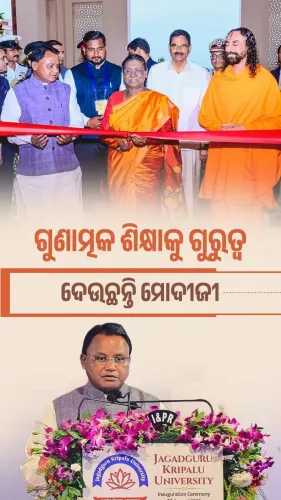
CM Majhi Pushes Education Reforms for Odisha's Future
Synopsis
Odisha Chief Minister Mohan Charan Majhi on June 1, 2026 reaffirmed his government's commitment to education reforms, stressing inclusive schooling and equal opportunity as pillars for building a strong and prosperous Odisha under the BJP administration's second year in office.
Key Takeaways
CM Mohan Charan Majhi posted on June 1, 2026 reaffirming the Odisha government's focus on education sector reforms.
The post, written in Odia , emphasises 'inclusive education, equal opportunity, and building a bright future' for Odisha.
The BJP government in Odisha has been aligning state education policy with the National Education Policy 2020 since taking office in June 2024 .
Key stakeholders include students, teachers, and communities in rural and tribal districts who stand to benefit from expanded access.
Upcoming state budget allocations and assembly sessions will reveal the fiscal commitment behind the government's stated education priorities.
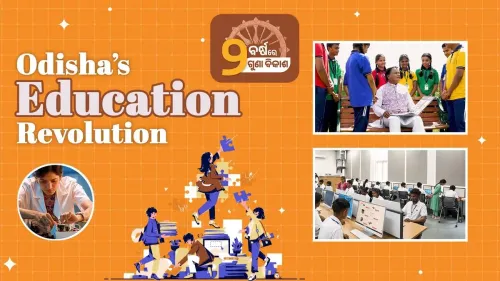
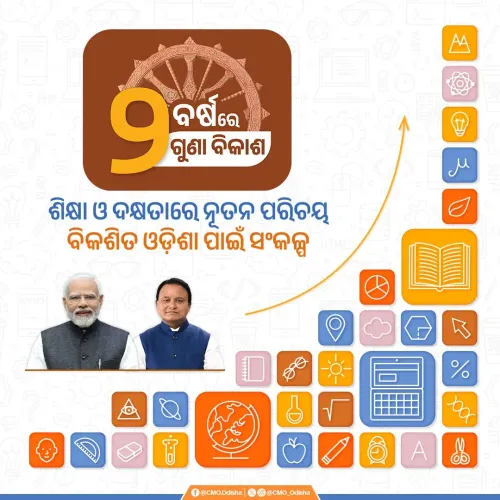
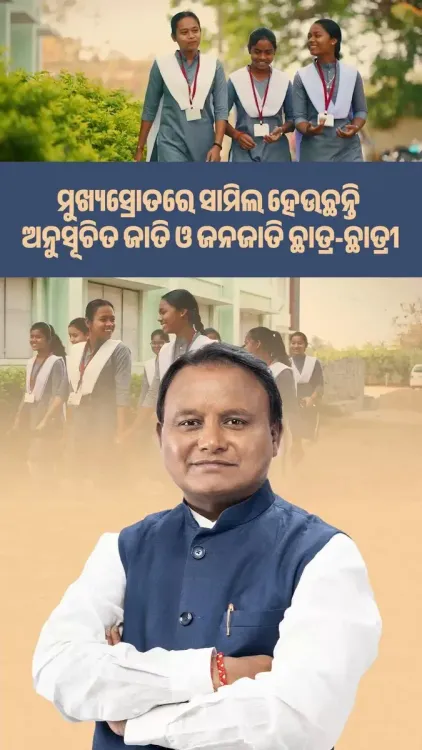
Odisha Chief Minister Mohan Charan Majhi on Monday, June 1, 2026, reaffirmed his government's commitment to sweeping education reforms, stating that the state is taking firm steps toward inclusive schooling, equal opportunity, and a brighter future for all citizens of Odisha.
Posting in Odia on X, CM Majhi wrote: 'ଶିକ୍ଷା କ୍ଷେତ୍ରରେ ସଂସ୍କାର ଓ ସୁଯୋଗ ସୃଷ୍ଟି ଦିଗରେ ଲୋକଙ୍କ ସରକାରର ଦୃଢ଼ ପଦକ୍ଷେପ ନେଉଛନ୍ତି' — 'The people's government is taking firm steps towards reforms and creation of opportunities in the education sector. Through inclusive education, equal opportunity and building a bright future, a strong and glorious Odisha is being built.'
Context
Mohan Charan Majhi became Odisha's Chief Minister in June 2024 after the BJP ended the long-running BJD government in the state assembly elections. Education emerged as one of the new administration's stated priorities from its early days in office. The post signals that the government continues to position schooling and skill development as central to its governance narrative heading into its second year.
Policy Backdrop
Odisha has been aligning its school and higher education structures with the National Education Policy (NEP) 2020, which emphasises vocational training, regional language instruction, and restructured curricula. The BJP's national platform has consistently pushed state governments under its leadership to accelerate NEP 2020 implementation. CM Majhi's messaging around 'inclusive education' and 'equal opportunity' mirrors the policy language embedded in NEP 2020's foundational goals of equitable access across socioeconomic groups.
Odisha has in recent years invested in school infrastructure upgrades and district-level skill programmes, building a base that the current administration has indicated it intends to expand. The emphasis on samaveshi shiksha (inclusive education) points toward outreach to tribal, rural, and economically weaker communities who make up a significant share of the state's population.
Stakeholders and Impact
The primary beneficiaries of any expanded education push would be Odisha's student population, particularly those in underserved districts where access to quality schooling has historically lagged. Teachers, school administrators, and vocational training institutions are also key stakeholders, as curriculum reforms and infrastructure investments directly affect their working conditions and mandates. For the state's youth, improved educational outcomes carry long-term implications for employment and economic mobility.
The post's reference to a 'strong and glorious Odisha' (sashakta o yashasvi Odisha) frames education not merely as a welfare measure but as a state-building instrument — a framing consistent with the BJP's broader development discourse at the national level.
What's Next
Attention will now turn to the state's upcoming budget session and assembly proceedings, where concrete allocations for education — including school construction, teacher recruitment, and scholarship schemes — will indicate how far the government's stated commitment translates into fiscal priority. Any new scheme announcements or policy orders in the coming weeks will be closely watched by educators, civil society groups, and opposition benches alike. The trajectory of Odisha's education spending relative to its overall budget will serve as the clearest measure of this administration's resolve.
Point of View
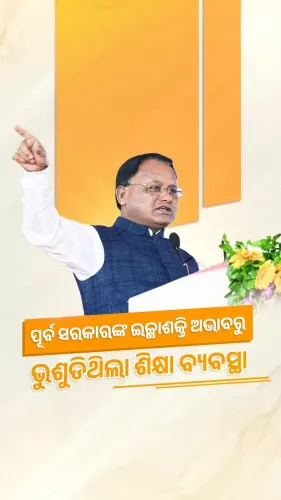
Arriving in the BJP government's second year when it must demonstrate delivery beyond electoral promises. The framing of 'people's government' taking 'firm steps' is designed to contrast with the previous administration's legacy and reinforce the BJP's reformist identity in a state where it is still consolidating power. The invocation of inclusive education aligns Odisha's state narrative tightly with the Centre's NEP 2020 agenda, making it easier to claim credit for centrally-driven outcomes. Analysts will watch whether this rhetoric is backed by measurable budget commitments in the next assembly session.
NationPress
16 Oct 2026
Frequently Asked Questions
What did Odisha CM Mohan Majhi say about education reforms?
CM Mohan Charan Majhi stated on June 1, 2026 that his government is taking firm steps toward education reforms, inclusive schooling, and equal opportunity to build a strong and glorious Odisha.
What is the BJP government's education policy in Odisha?
The BJP government in Odisha has been implementing the National Education Policy 2020, focusing on vocational training, regional language instruction, and equitable access to quality education across the state.
When did Mohan Charan Majhi become Chief Minister of Odisha?
Mohan Charan Majhi became Chief Minister of Odisha in June 2024 after the BJP won the state assembly elections, ending the long tenure of the BJD government.
What does inclusive education mean in the Odisha context?
In Odisha's context, inclusive education refers to expanding quality schooling access to tribal, rural, and economically weaker communities who have historically had limited access to educational resources.
What should we watch for next on Odisha education policy?
Key indicators will be the state's upcoming budget allocations for education, new scheme announcements, and policy orders related to school infrastructure, teacher recruitment, and student scholarships.