Modi-Iran meet at SCO sends strong signal against Mecca Pact alliances: M J Akbar
Synopsis
At the SCO Summit in Bishkek, PM Modi's first bilateral — with Iran's President — was itself a geopolitical signal against the Mecca Pact. With Chabahar port revived, trade on the table despite US sanctions, and NSA Doval's Beijing reset in play, India is running a multi-front diplomatic offensive that mainstream coverage has largely underplayed.
Key Takeaways
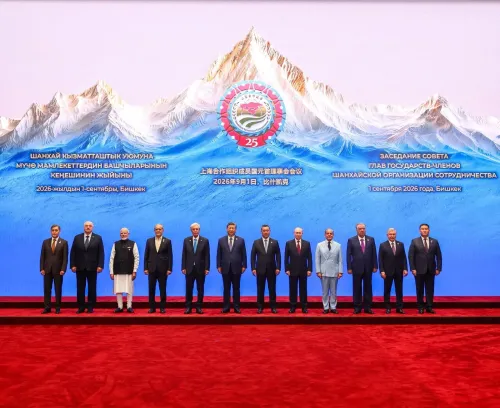
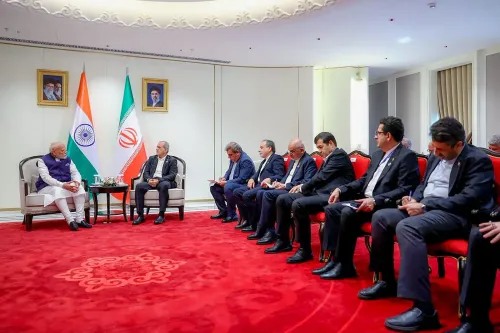
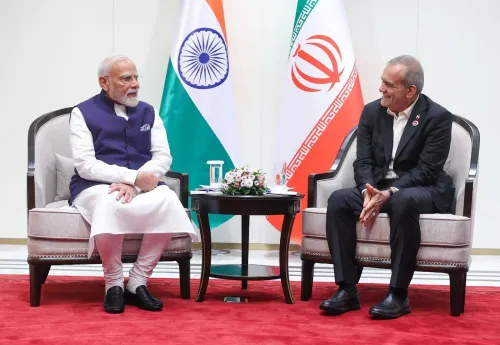
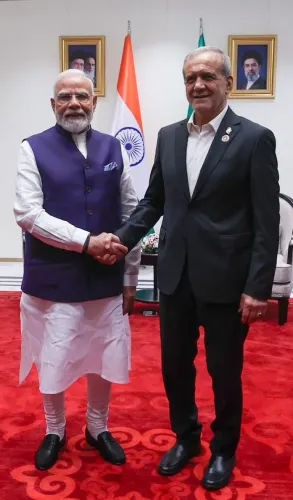
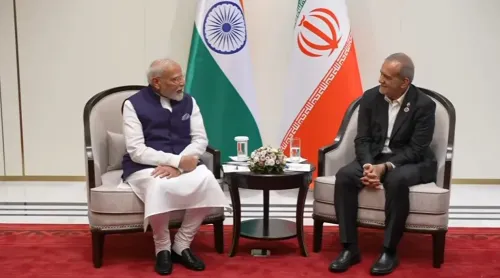
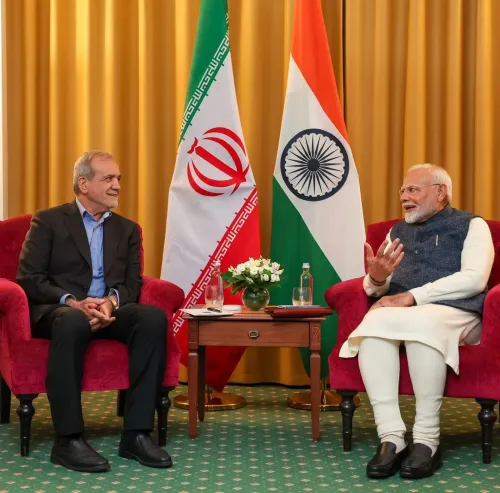
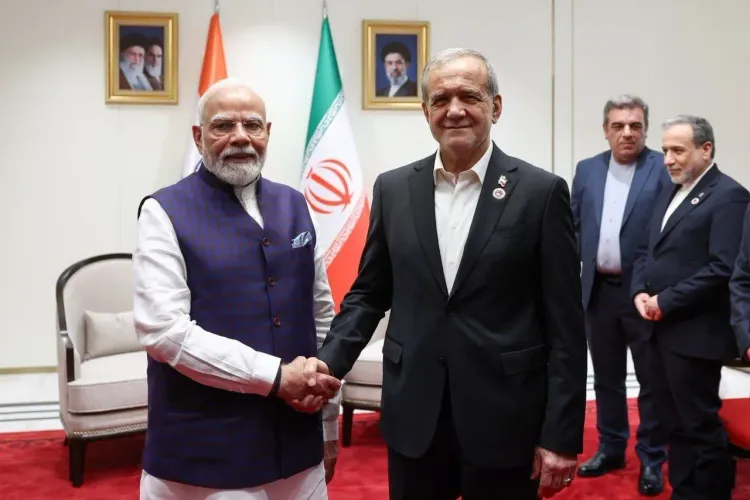
PM Modi met Iran President Masoud Pezeshkian at the SCO Summit in Bishkek on Monday, 1 September .
Former MoS M J Akbar called it the most important meeting on Modi's SCO agenda, saying it sent a 'very powerful message' against the Mecca Pact signed by Saudi Arabia , Turkey , and Pakistan .
Chabahar port was described as the single most critical bilateral element, with Akbar calling its revival 'extremely good news for both countries.' NSA Ajit Doval 's recent visit to Beijing was assessed as having an 'extraordinarily salutary effect' on India-China relations.
President Xi Jinping is scheduled to visit New Delhi for the BRICS Summit , with both sides reportedly working toward a substantive bilateral meeting with PM Modi .
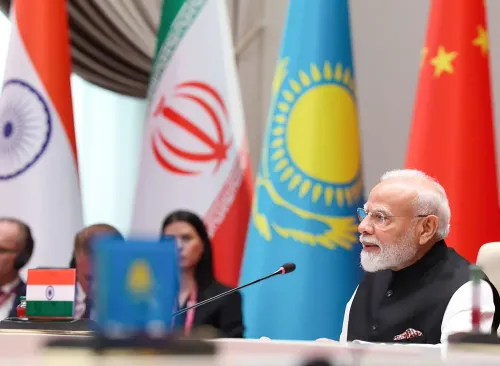
Prime Minister Narendra Modi's bilateral meeting with Iran President Masoud Pezeshkian on the sidelines of the SCO Summit in Bishkek has sent a 'very powerful message' to the signatories of the Mecca Pact — the recent trilateral agreement between Saudi Arabia, Turkey, and Pakistan — according to noted journalist and former Minister of State for External Affairs, M J Akbar. Speaking in an interview on Tuesday, 1 September, Akbar described the meeting as the most consequential on Modi's SCO agenda.
Why the Modi-Pezeshkian Meeting Mattered
The two leaders held extensive discussions in the Kyrgyzstan capital Bishkek on Monday, covering bilateral ties and the evolving West Asia conflict. Akbar argued that the meeting itself was a diplomatic statement. 'By the very meeting, they sent a very powerful message because the meeting itself was against the background of the Mecca Pact. The meeting itself actually sent the message that war and war alliances are not the solution to problems,' he said. 'The solution to problems lies in negotiation and what Prime Minister Modi has identified as the nub of his policy, which is peace, is the answer to the future.'
During the talks, PM Modi expressed concern over the escalation of tensions in the region and reiterated India's consistent position that all issues must be resolved through dialogue and diplomacy.
Trade, Chabahar Port and Flexible Realism
Akbar highlighted that trade formed a critical part of the bilateral discussions, particularly in the context of US-imposed sanctions and tariffs on Iran. 'Iran and India have used what in diplomacy is known as flexible realism in order to find a new rapport,' he said. He also underscored the strategic importance of keeping the Hormuz Strait open for shipping — a point Modi reportedly stressed during the meeting.
The former minister identified the Chabahar port as the single most important bilateral element of the talks. 'That port has taken on an extremely critical importance in the present crisis. This port has been part of the Indo-Iran agenda for a long while, but really came to fruition in the first five years of Prime Minister Modi's tenure in office. The fact that it has revived is extremely good news for both countries,' Akbar emphasised. Both nations are, he noted, civilisational states that recognise the value of bilateral bonds over war-oriented pacts.
NSA Doval's Beijing Visit and India-China Reset
Akbar also assessed National Security Advisor (NSA) Ajit Doval's recent visit to Beijing as having an 'extraordinarily salutary effect' on India-China equations. He traced the roots of the bilateral friction to the 1962 war, describing it as 'a very major watershed' after which the border became the persistent fault line for both militaries and diplomats.
He noted that the 1988 border agreement had established a foundational understanding — what he characterised as 'the resolution lies in non-resolution' — whereby both sides accept ground realities and seek cooperation through other avenues. Akbar added, with a caveat, that there is 'speculation' that a prominent military hawk within the Chinese supreme command has been recently dropped, though he acknowledged the Chinese system 'remains opaque.'
Xi Jinping's Delhi Visit and the BRICS Bilateral
Looking ahead, Akbar highlighted the significance of Chinese President Xi Jinping's scheduled visit to New Delhi for the BRICS Summit. 'Both sides are making every effort to see that this visit — although it will be under the umbrella of BRICS — will have a very strong bilateral element to it,' he said. He expressed hope that the substantive meeting between Modi and Xi would 'settle existing turbulence and pave the way for cooperation within the foreseeable future.'
The convergence of India's diplomatic outreach — from Bishkek to Beijing — signals a concerted effort to stabilise its strategic neighbourhood ahead of a high-stakes multilateral season.
Point of View
Not consensus foreign-policy assessment. The Modi-Pezeshkian meeting does carry symbolic weight against the Mecca Pact's war-alliance optics, but India's 'flexible realism' with Iran is constrained by real limits — US secondary sanctions remain a structural ceiling on Chabahar's commercial potential. Meanwhile, the optimism around Doval's Beijing visit and Xi's BRICS trip deserves scrutiny: India-China border talks have produced process agreements before without durable de-escalation. Whether this round is different will be tested on the ground, not in summit communiqués.
NationPress
1 Sept 2026
Frequently Asked Questions
What message did the Modi-Pezeshkian meeting send at the SCO Summit?
According to former Minister of State M J Akbar, the bilateral meeting between PM Modi and Iran President Pezeshkian in Bishkek sent a 'very powerful message' that war and war alliances are not solutions — a signal directed at signatories of the Mecca Pact between Saudi Arabia, Turkey, and Pakistan. Akbar described it as the most important meeting on Modi's SCO agenda.
What is the Mecca Pact and why is it significant?
The Mecca Pact is a recent trilateral agreement signed between Saudi Arabia, Turkey, and Pakistan. It has been viewed in diplomatic circles as a regional alliance with security dimensions, prompting India to signal its own strategic partnerships — including with Iran — as an alternative framework built on dialogue rather than military alliances.
Why is the Chabahar port important for India and Iran?
Chabahar port gives India a maritime and overland trade route to Afghanistan and Central Asia that bypasses Pakistan. M J Akbar called it the most critical bilateral element of the Modi-Pezeshkian talks, noting it came to fruition during Modi's first term and has gained renewed strategic importance amid the current West Asia crisis.
What was the outcome of NSA Ajit Doval's visit to Beijing?
Akbar assessed NSA Doval's Beijing visit as having an 'extraordinarily salutary effect' on India-China relations, reinforcing the understanding that border disputes are best managed through a framework of non-resolution — accepting ground realities while expanding cooperation in other areas. He also noted, with caveats, speculation about a shift in Chinese military leadership.
What is expected from the Modi-Xi meeting at the BRICS Summit in New Delhi?
Chinese President Xi Jinping is scheduled to visit New Delhi for the BRICS Summit, and both sides are reportedly working to include a substantive bilateral meeting with PM Modi. Akbar expressed hope that the talks would 'settle existing turbulence and pave the way for cooperation within the foreseeable future.'