Modi speaks with Iran's Pezeshkian, backs West Asia ceasefire understanding
Synopsis
Modi's third call with Iran's Pezeshkian in under four months signals that India is not a passive observer in West Asia — it is actively positioning itself as a diplomatic bridge. With Chabahar's future tied to US sanctions and the ceasefire's durability uncertain, New Delhi's balancing act is entering a critical phase.
Key Takeaways
PM Narendra Modi spoke with Iranian President Masoud Pezeshkian on 30 June , welcoming the West Asia ceasefire understanding.
Modi reiterated India's position that all issues must be resolved through dialogue and diplomacy , and stressed the need for freedom of navigation and commerce .
This was the third call between the two leaders in recent months, following conversations on 12 March and 21 March .
Iranian FM Seyed Abbas Aragchi last month called Chabahar Port a 'golden gate' for India's access to Central Asia, the Caucasus, and Europe, while noting US sanctions have slowed its development.
India has maintained a consistent diplomatic posture across all engagements — prioritising civilian protection, maritime security, and peaceful resolution.
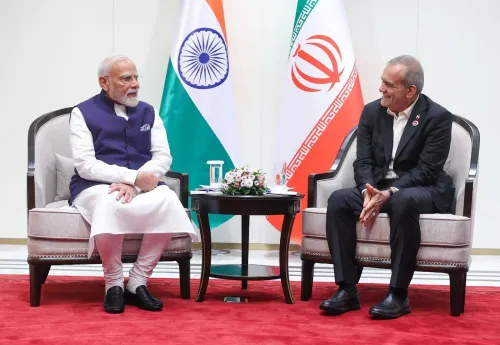
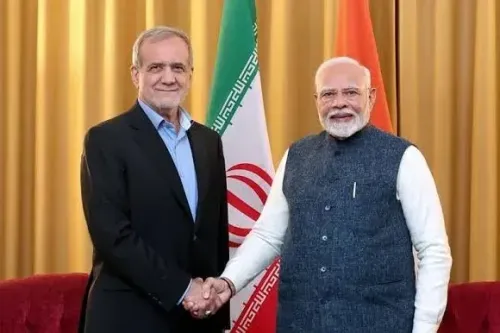
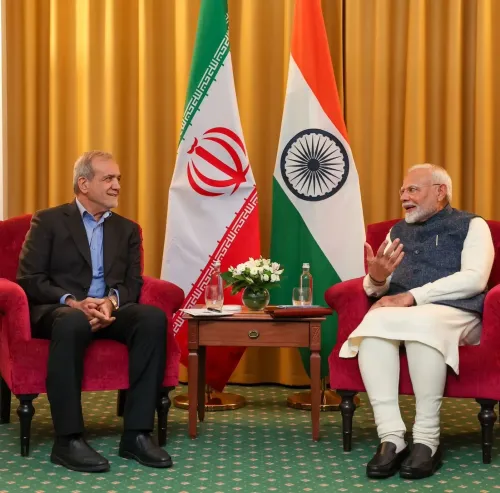
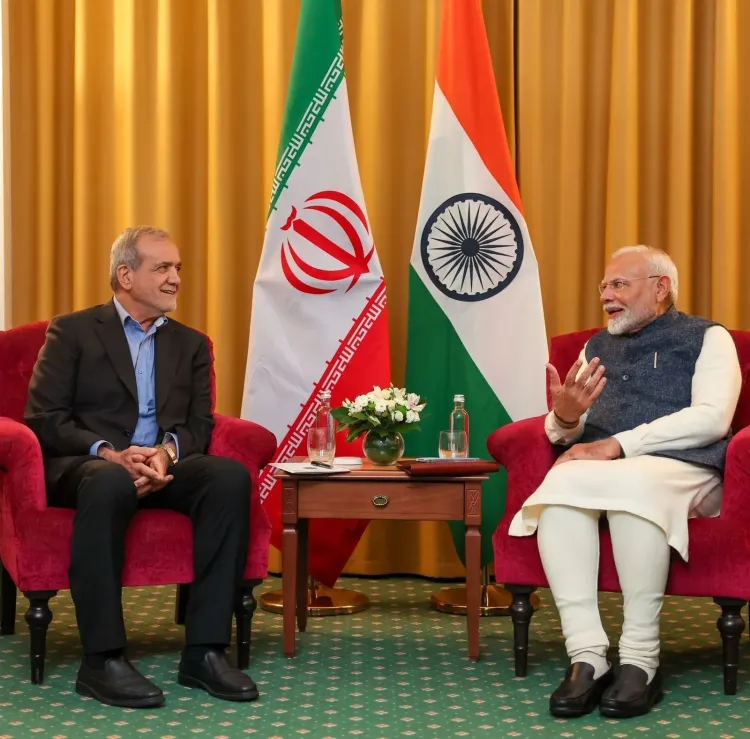
Prime Minister Narendra Modi on Tuesday, 30 June held a telephone conversation with Iranian President Masoud Pezeshkian, during which he welcomed the recent understanding reached to end hostilities in the West Asia conflict. The call underscores India's sustained diplomatic engagement with Tehran at a moment of fragile regional de-escalation.
Key Developments from the Call
President Pezeshkian briefed Prime Minister Modi on the latest developments in the region and outlined the path forward as envisioned by Tehran. Modi, in turn, welcomed the ceasefire understanding and reiterated India's consistent position that all disputes must be resolved through dialogue and diplomacy — not military force.
The Prime Minister also stressed the importance of safeguarding freedom of navigation and commerce in the region's critical waterways, a concern he has raised in every recent engagement with Iranian leadership.
A Pattern of Sustained Diplomatic Contact
Tuesday's call is the third high-level conversation between the two leaders in recent months, reflecting the depth of India-Iran engagement as the region navigates an uncertain peace. The two leaders had previously spoken on 21 March, during which Modi condemned attacks on critical infrastructure and emphasised keeping shipping lanes open and secure.
In an even earlier call on 12 March, Modi had voiced concern over escalating tensions, specifically pointing to the loss of civilian lives and damage to infrastructure across the region. Notably, India has maintained consistent messaging across all three calls — prioritising dialogue, civilian protection, and maritime security.
Chabahar Port and the Broader Strategic Picture
The bilateral relationship extends well beyond crisis diplomacy. Last month, Iranian Foreign Minister Seyed Abbas Aragchi, during his visit to New Delhi for the BRICS Foreign Ministers Meeting, described Chabahar Port as 'one of the symbols of cooperation between Iran and India.'
Aragchi expressed confidence that the India-developed port would serve as a 'golden gate for India to access Central Asia, the Caucasus and then Europe through this transit route.' He acknowledged that development has 'slowed down because of US sanctions' but called on India to continue its work at the port.
'India with its good reputation can play a greater role in this region to help diplomacy, to help peace, and to promote peace and security,' Aragchi said, adding that India is 'a friend to almost all countries in the Persian Gulf.'
India's Position in the West Asia Equation
India's approach to the West Asia conflict has been characterised by studied neutrality — maintaining ties with Iran, Israel, Arab Gulf states, and Western powers simultaneously. This balancing act gives New Delhi unusual diplomatic reach but also limits how explicitly it can back any single party's narrative on the conflict's resolution.
With the ceasefire understanding now in place, India's focus is expected to shift toward consolidating economic corridors — particularly Chabahar — and ensuring that regional stability translates into uninterrupted energy supplies and trade flows, both of which are critical to India's economic interests.
What Comes Next
The durability of the West Asia ceasefire understanding remains to be tested. India is expected to continue its diplomatic outreach across the region, with Chabahar's development trajectory and freedom of navigation in the Persian Gulf likely to remain central to its engagement with Tehran in the months ahead.
Point of View
From Chabahar's viability to Persian Gulf shipping lanes that carry a large share of its energy imports. Yet India's studied neutrality, while diplomatically valuable, also means it cannot publicly pressure either side in ways that might actually accelerate a durable settlement. The Chabahar dimension is the real undercurrent here: US sanctions have already slowed a project India spent years building, and any renewed regional instability could set it back further. Modi's consistent messaging on freedom of navigation is less abstract principle and more economic self-interest — and Tehran knows it.
NationPress
29 Sept 2026
Frequently Asked Questions
Why did PM Modi call Iranian President Pezeshkian on 30 June?
PM Modi called President Pezeshkian to welcome the recent understanding reached to end the West Asia conflict and to reiterate India's position that all disputes must be resolved through dialogue and diplomacy. The call was also an opportunity to discuss the regional situation and the path forward as outlined by Tehran.
How many times have Modi and Pezeshkian spoken recently?
Tuesday's call was their third conversation in recent months. They had previously spoken on 21 March — when Modi condemned attacks on critical infrastructure — and on 12 March, when he expressed concern over civilian casualties and escalating tensions.
What is India's stated position on the West Asia conflict?
India has consistently called for all issues to be resolved through dialogue and diplomacy, condemned attacks on civilian infrastructure, and stressed the importance of keeping shipping lanes and freedom of navigation secure. New Delhi has not publicly backed any single party in the conflict.
What is the significance of Chabahar Port in India-Iran relations?
Chabahar Port, developed with significant Indian involvement, is seen as a strategic gateway for India to access Central Asia, the Caucasus, and Europe via Iran. Iranian FM Aragchi described it as a 'golden gate' but acknowledged that US sanctions have slowed its development, making its future a key variable in bilateral ties.
What did Iranian FM Aragchi say about India's role in the region?
During his visit to New Delhi for the BRICS Foreign Ministers Meeting last month, Aragchi said India has a 'good reputation' and can 'play a greater role in this region to help diplomacy, to help peace, and to promote peace and security,' describing India as a friend to countries across the Persian Gulf.