Iran's Pezeshkian hails Modi's role in regional peace in phone call
Synopsis
In a phone call on 30 June, Iranian President Pezeshkian personally praised PM Modi's role in regional peace — and used the moment to push for deeper India-Iran ties through BRICS, transit corridors, and a shared multilateral agenda. With a regional ceasefire fragile and Tehran seeking reliable partners, New Delhi's centrality to Iran's diplomatic outreach has rarely been more explicit.
Key Takeaways
Iranian President Masoud Pezeshkian praised PM Narendra Modi's personal role in supporting regional peace and stability on 30 June .
Pezeshkian expressed satisfaction with India's hosting of the BRICS Energy Ministers' Meeting .
Iran stressed its commitment to a recently reached regional agreement to end hostilities, urging the other side to honour it 'in good faith.' Both leaders identified convergence on multilateral issues, with BRICS cited as a key platform for expanding cooperation.
The call signals Tehran's intent to deepen political, economic, commercial, and transit ties with New Delhi .
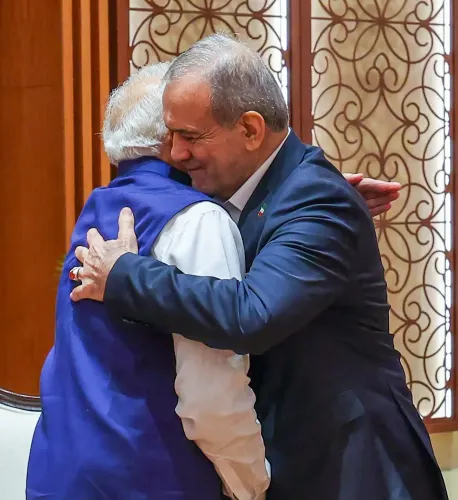
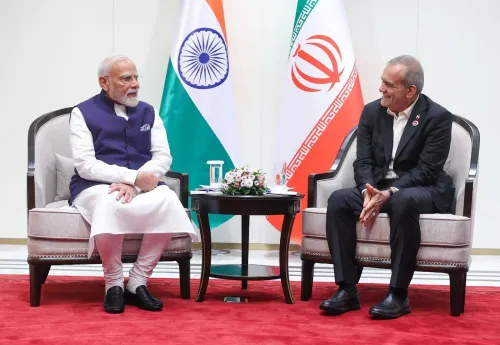
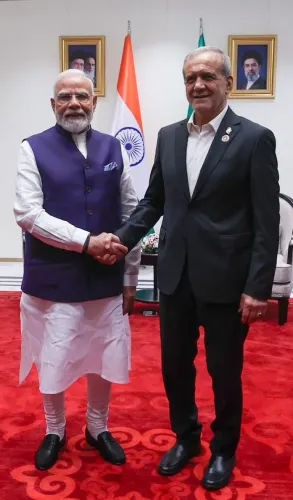
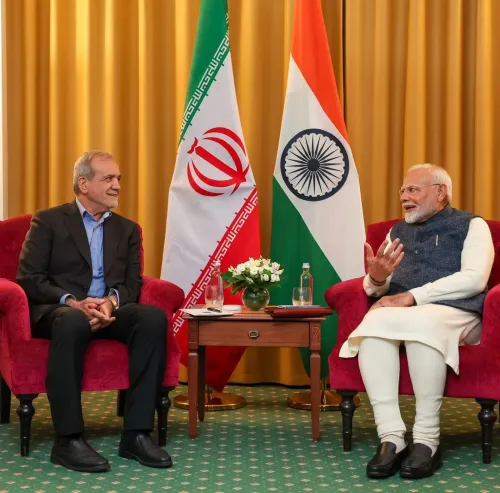
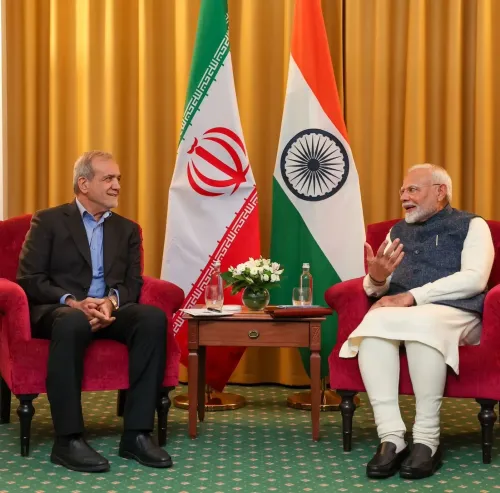
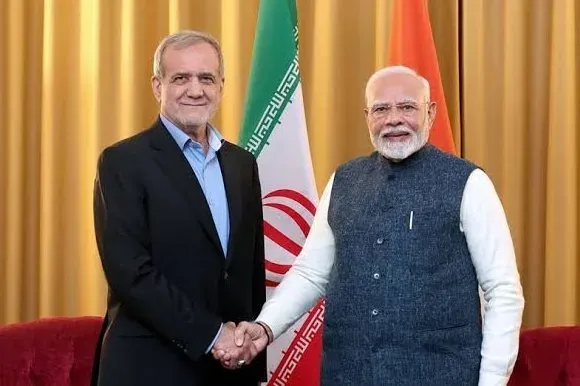
Iranian President Masoud Pezeshkian on Tuesday, 30 June commended Prime Minister Narendra Modi for his personal contribution to fostering peace, stability, and regional cooperation, during a telephonic conversation between the two leaders. The remarks, relayed by the Embassy of Iran in India via its official channel on social media platform X, signal a deliberate effort by Tehran to reinforce diplomatic ties with New Delhi at a sensitive moment in regional geopolitics.
BRICS and Multilateral Cooperation
President Pezeshkian expressed satisfaction over India's successful planning and hosting of the BRICS Energy Ministers' Meeting, describing it as a positive milestone in bilateral engagement. He voiced hope that cooperation between Iran and India within multilateral frameworks — particularly BRICS — would continue to deepen and expand in the months ahead.
What Pezeshkian Said on Bilateral Relations
Emphasising Iran's commitment to strengthening ties, President Pezeshkian stated: 'The relations between our two countries are founded on a long-standing historical legacy and mutual respect. There is tremendous potential to enhance cooperation in political, economic, commercial, transit, and international affairs. It is therefore essential to establish greater coordination and make full use of existing capacities in order to define and implement new avenues for the expansion of bilateral relations,' according to the Embassy of Iran.
This framing underscores Tehran's interest in leveraging historical goodwill — the two civilisations share millennia of cultural and trade links — to build a more structured and contemporary partnership.
Iran's Position on Regional Peace Agreement
In a significant portion of the call, President Pezeshkian referred to a recently reached agreement to end hostilities in the region, stressing that 'the Islamic Republic of Iran remains committed to its obligations and hopes that the other side will also implement the terms of the agreement in good faith and with a sense of responsibility, so that the conditions for lasting peace, stability, and security in the region may be established.' He further called on the international community to consolidate this process and ensure that 'aggression and the use of force have no place in international relations.'
Strategic Convergence Between Tehran and New Delhi
Pezeshkian also highlighted what he described as a convergence of views between Tehran and New Delhi on several regional and international issues, especially within multilateral organisations and forums. He argued that this common ground could serve as a foundation for strengthening strategic cooperation and broadening comprehensive relations between the two countries.
Notably, this call comes at a time when India has been navigating complex relationships across West Asia, balancing ties with both Iran and Gulf states, while maintaining its longstanding policy of strategic autonomy. India's engagement with Iran through platforms like BRICS adds a multilateral dimension to a bilateral relationship that has historically been shaped by energy trade and the Chabahar Port project.
What Comes Next
Both sides appear keen to translate diplomatic warmth into tangible outcomes across political, economic, and transit corridors. The emphasis on multilateral frameworks suggests that BRICS may increasingly serve as the institutional vehicle for advancing India-Iran cooperation, particularly as both nations seek alternatives to Western-dominated financial and trade systems. Further high-level engagement is expected as both governments work to operationalise the areas of cooperation outlined during the call.
Point of View
The region, and the West. Tehran's invocation of BRICS as the preferred multilateral vehicle reflects a broader Iranian strategy to build institutional legitimacy outside Western frameworks, and India is central to that design. What mainstream coverage underplays is the implicit ask: by stressing that 'the other side' must honour the ceasefire in good faith, Pezeshkian is quietly enlisting India's moral weight as a potential guarantor or interlocutor. Whether New Delhi is willing to play that role — given its careful balancing act across West Asia — is the real question this call raises.
NationPress
29 Sept 2026
Frequently Asked Questions
What did Iranian President Pezeshkian say about PM Modi in their phone call?
President Pezeshkian praised PM Modi's personal role in supporting peace, stability, and regional cooperation during a telephonic conversation on 30 June. He also highlighted the long-standing historical legacy underpinning India-Iran relations and called for expanded bilateral cooperation across political, economic, and transit domains.
What is the significance of Iran's praise for India's BRICS hosting?
Pezeshkian specifically commended India's planning and hosting of the BRICS Energy Ministers' Meeting, signalling Iran's intent to use the BRICS platform as a key vehicle for deepening ties with India. Both countries view multilateral frameworks as an avenue to advance cooperation outside Western-dominated institutions.
What did Pezeshkian say about the regional ceasefire agreement?
The Iranian President stated that the Islamic Republic of Iran remains committed to its obligations under a recently reached agreement to end regional hostilities, and called on the other party to implement the terms in good faith. He also urged the international community to ensure that aggression and force have no place in international relations.
How do India and Iran view their bilateral relationship?
According to the Embassy of Iran, both sides see their relationship as rooted in a long-standing historical legacy and mutual respect, with significant untapped potential in political, economic, commercial, transit, and international cooperation. A convergence of views on multilateral issues was also cited as a foundation for deeper strategic cooperation.
What areas of cooperation are India and Iran looking to expand?
The two sides are looking to enhance engagement across political, economic, commercial, transit, and international affairs, with BRICS identified as a key multilateral platform. Historical cooperation on the Chabahar Port and energy trade also forms part of the broader bilateral framework under discussion.