PM Modi Meets Iran's President Pezeshkian in Bishkek
Synopsis
Prime Minister Narendra Modi met Iranian President Masoud Pezeshkian in Bishkek on 31 August 2026, reaffirming India's commitment to its long-standing friendship with Iran and pledging to expand and diversify bilateral trade, with Chabahar Port connectivity central to the relationship's strategic logic.
Key Takeaways
PM Modi met Iranian President Masoud Pezeshkian in Bishkek on 31 August 2026 on the sidelines of a multilateral summit.
Both leaders reaffirmed commitment to strengthening India-Iran ties 'across diverse sectors.' Modi signalled intent to 'expand and diversify' the bilateral trade basket going forward.
Chabahar Port , developed under a 2016 India-Iran agreement , remains the flagship connectivity project linking the two countries.
The two leaders also discussed 'the prevailing situation' in the region, details of which were not disclosed.
SCO summits in Bishkek have repeatedly served as a platform for India-Iran bilateral conversations.
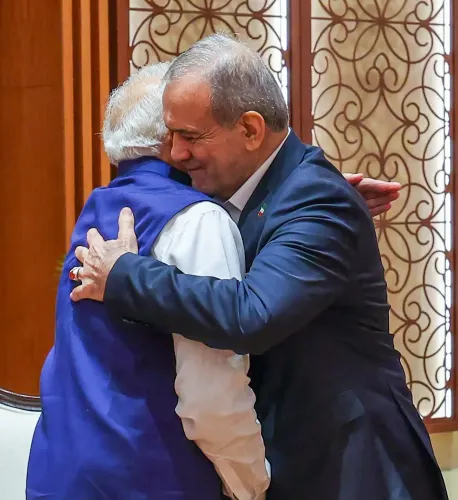
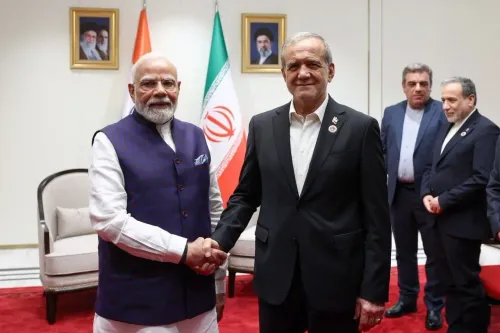
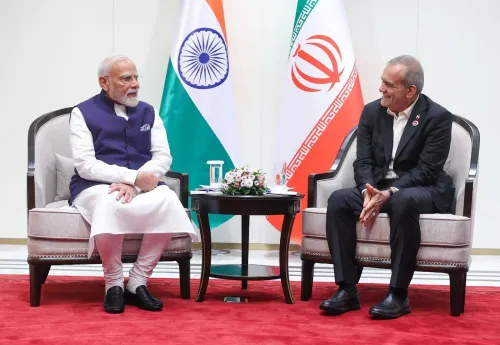
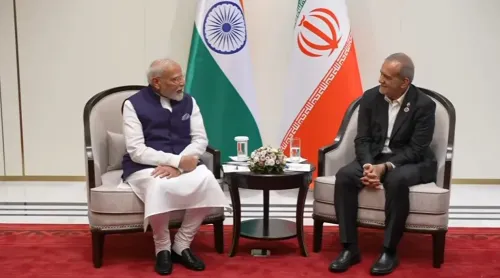
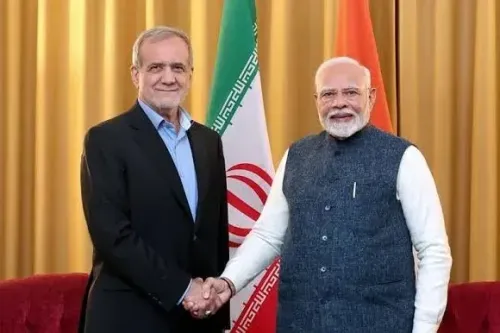
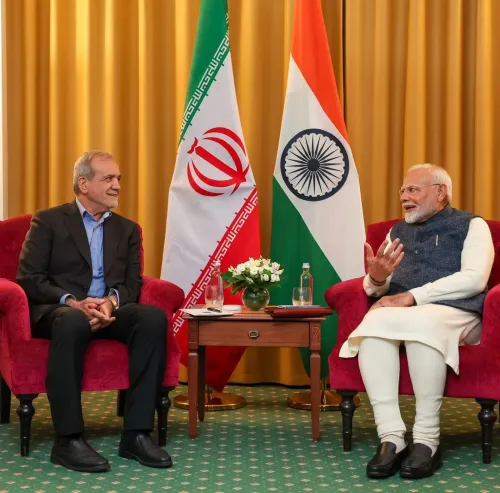
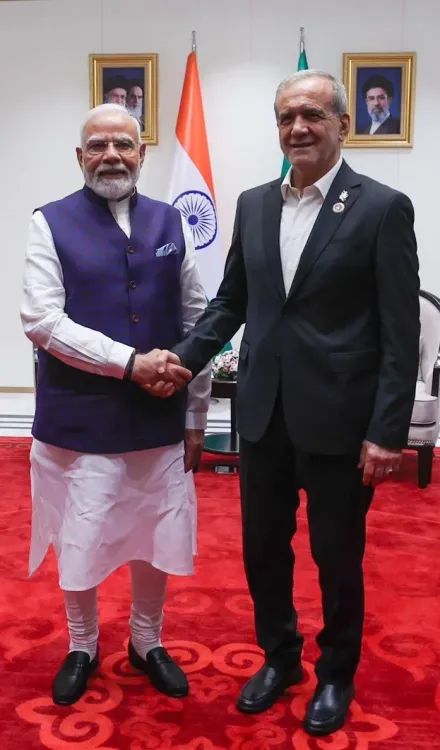
On the sidelines of a multilateral summit in Bishkek, Prime Minister Narendra Modi sat down with Iranian President Masoud Pezeshkian on Monday, 31 August 2026 — a meeting that signals India's determination to keep one of its most strategically complex friendships alive and growing.
A friendship rooted in centuries, tested by sanctions
India and Iran share civilisational ties that long predate modern diplomacy, but the relationship has spent years navigating the hard edges of international sanctions on Tehran. Modi's Bishkek meeting — a bilateral carved out on the margins of a larger forum — is itself a familiar diplomatic instrument: SCO summits have repeatedly served as a venue for India-Iran conversations that might be harder to schedule in a more formal bilateral setting.
Modi said both sides 'reiterated commitment to strengthening India's long-standing friendship with Iran across diverse sectors,' adding that the two countries 'want to expand and diversify the trade basket in the times to come.' The language is deliberate — 'diversify' signals an intent to move beyond any single commodity or corridor.
Chabahar and the connectivity thread
The single most concrete symbol of the India-Iran economic relationship is Chabahar Port, the Iranian deep-water facility on the Gulf of Oman that India has invested in since a landmark 2016 agreement. For New Delhi, Chabahar is not just a port — it is a bypass around Pakistan that opens a land corridor to Afghanistan and onward to Central Asia. Any expansion of the trade basket Modi referenced almost certainly runs through Chabahar's berths and the road-and-rail links that feed them.
Indian exporters and energy importers are the two communities watching this relationship most closely. Iran holds some of the world's largest proven hydrocarbon reserves, and India was once one of its biggest crude oil customers before sanctions sharply curtailed purchases.
The unfinished sentence — and the regional situation
Modi's post notes that the two leaders also 'had a discussion on the prevailing situation' — a sentence the original post leaves incomplete, with a link that trails off. The research does not verify what specific regional development was under discussion, and NationPress will not speculate. What is clear is that the broader West Asian environment — marked by ongoing turbulence — gives any India-Iran conversation a dimension well beyond trade ledgers.
Bishkek's role as a neutral multilateral stage makes it an ideal venue for exactly this kind of quiet, consequential exchange: no formal joint statement required, no grand ceremony, just two leaders in a room working through a relationship that both sides have an interest in keeping functional.
The real test of Monday's meeting will come in the weeks that follow — whether 'diversify the trade basket' translates into a fresh protocol, a new commodity line, or a Chabahar update that moves a decade-old promise closer to its full potential.
Point of View
Reducing dependence on any single sector — most likely energy — that has historically made the partnership vulnerable to external pressure. With Chabahar still short of its full potential a decade after the 2016 agreement, this meeting is as much about momentum as it is about new announcements.
NationPress
17 Oct 2026
Frequently Asked Questions
Why did PM Modi meet Iran's President in Bishkek?
PM Modi met Iranian President Masoud Pezeshkian in Bishkek on 31 August 2026 on the sidelines of a multilateral summit. Bishkek, the capital of Kyrgyzstan, frequently hosts SCO summits and has served as a venue for India-Iran bilateral conversations in previous years.
What is the current state of India-Iran relations?
India and Iran maintain longstanding civilisational and economic ties. The relationship is centred on trade, energy, and the Chabahar Port connectivity project, though it operates under constraints imposed by international sanctions on Iran.
What is Chabahar Port and why does it matter to India?
Chabahar Port is an Iranian deep-water port on the Gulf of Oman developed with Indian investment under a 2016 agreement. It gives India a route to Afghanistan and Central Asia that bypasses Pakistan, making it a key piece of India's regional connectivity strategy.
What did Modi mean by 'diversify the trade basket' with Iran?
Modi's phrase signals India's intent to move beyond any single commodity — most likely crude oil — and broaden the range of goods and services traded with Iran, reducing vulnerability to sanctions-related disruptions in any one sector.
What 'prevailing situation' did Modi and Pezeshkian discuss?
Modi's post references a discussion on 'the prevailing situation' but does not specify the subject. Given the broader regional context in West Asia, it is understood to relate to ongoing geopolitical developments, though no official details have been confirmed.