PM Modi meets Armenia's Pashinyan at SCO Summit in Bishkek
Synopsis
Prime Minister Narendra Modi met Armenian PM Nikol Pashinyan on the sidelines of the SCO Summit in Bishkek on 31 August 2026, flagging defence, IT, space, education, pharmaceuticals, and trade as priority areas for expanded India-Armenia cooperation.
Key Takeaways
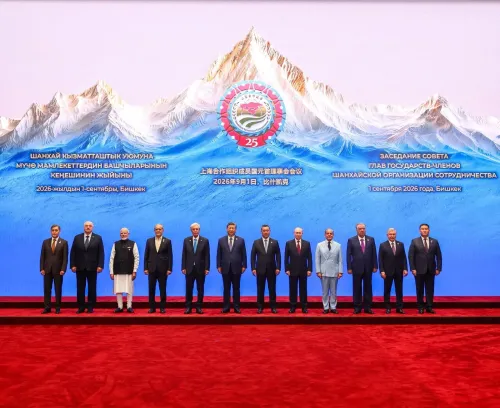
PM Modi held a bilateral meeting with Armenian PM Nikol Pashinyan on 31 August 2026 at the SCO Summit in Bishkek .
Sectors identified for deeper cooperation include defence, IT, space, education, pharmaceuticals , and trade.
India has been a full member of the Shanghai Cooperation Organisation since 2017 , using its summits as a platform for bilateral engagements.
India and Armenia have maintained diplomatic relations since 1992 , with defence supply ties accelerating in the early 2020s.
The meeting reflects India's broader strategy of diversifying economic and security partnerships across Eurasia and the South Caucasus.
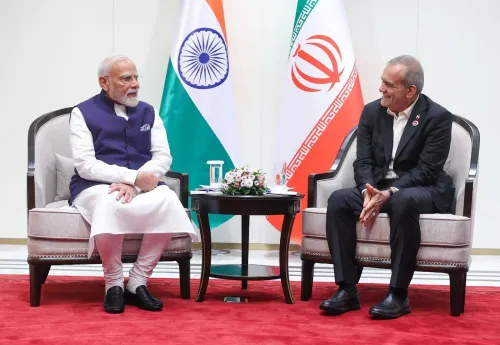
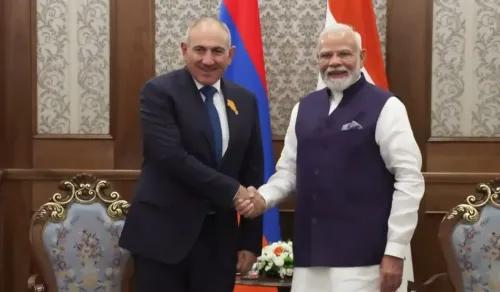
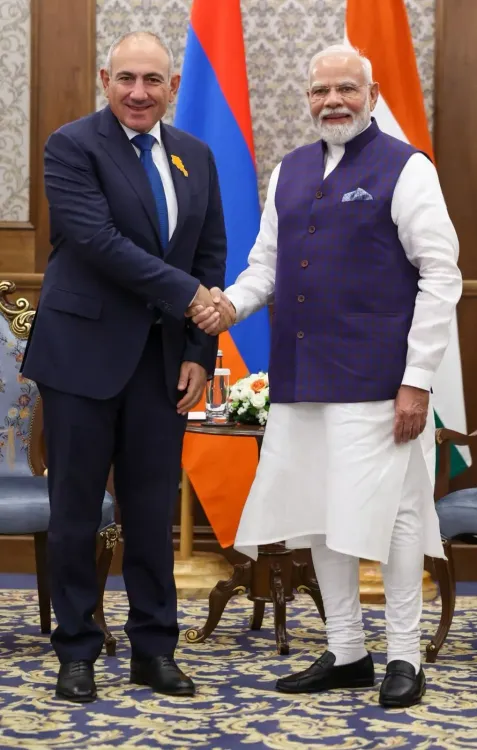
On the sidelines of the SCO Summit in Bishkek, Prime Minister Narendra Modi held a bilateral meeting with Armenian Prime Minister Nikol Pashinyan on Monday, 31 August 2026 — a meeting that signals India's intent to deepen ties across a strategically significant arc of Eurasia.
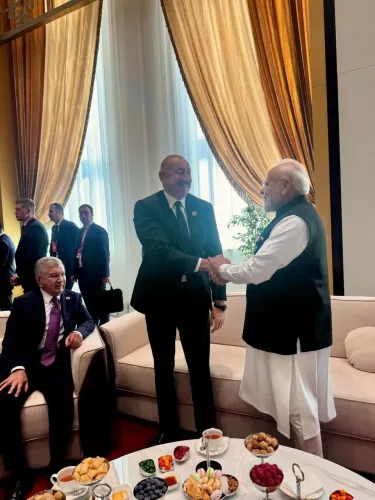
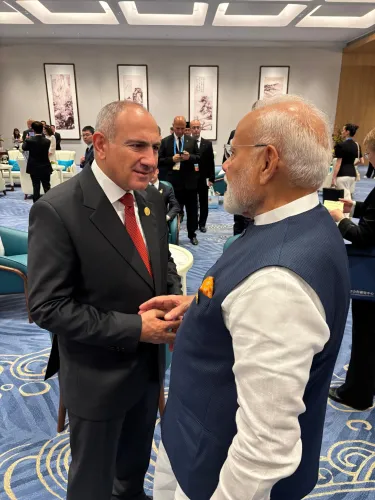
Modi described the meeting as 'wonderful', flagging cooperation across defence, IT, space, education, pharmaceuticals, and trade as areas primed for expansion. The post was accompanied by two images from the meeting, offering a rare visual of the two leaders in direct dialogue.
Why Bishkek, and why it matters
The Shanghai Cooperation Organisation, which India joined as a full member in 2017, has become a reliable diplomatic theatre for New Delhi to engage partners well beyond the SCO's core membership. Bishkek, the capital of Kyrgyzstan, has hosted multiple SCO gatherings and has emerged as a neutral venue where India can pursue bilateral agendas on the margins of multilateral summits.
Meeting Pashinyan — who has led Armenia since 2018 through a period of intense regional pressure and political transition — on these sidelines is a deliberate diplomatic choice. It signals sustained engagement without requiring a standalone bilateral visit.
Defence and technology: the growing India-Armenia thread
India and Armenia established diplomatic relations in 1992, but the relationship gained real momentum in the early 2020s, when defence supply ties began to deepen. India's defence export ambitions have found a receptive partner in Yerevan, a country actively diversifying its security partnerships.
The sectors Modi flagged — IT, space, and pharmaceuticals — mirror India's broader template for economic diplomacy: export Indian technological and industrial strengths into markets hungry for alternatives. For Armenia, India offers both hardware and high-skill services. For India, Armenia opens a foothold in the South Caucasus.
Trade diversification as strategic intent
Modi's reference to deepening trade fits a pattern that has defined Indian foreign economic policy in recent years: systematically widening the circle of commercial partners beyond traditional Western and Gulf markets. The South Caucasus, sitting at the crossroads of Europe, Russia, and the Middle East, carries connectivity value that pure trade numbers do not fully capture.
Watch for follow-up joint working groups on defence production and potential memoranda of understanding during future high-level exchanges. Whether Armenia formalises any observer or partner status within SCO structures will also shape the rhythm of future engagement.
A sideline meeting that spanned multiple sectors and two images shared with the world — India's message to Yerevan is clear: this partnership is moving from promise to programme.
Point of View
A region where traditional power equations are being actively redrawn. Armenia's drive to diversify security partnerships since the early 2020s has made it receptive to Indian defence exports, giving New Delhi rare strategic traction in a neighbourhood dominated by larger powers. By anchoring this engagement within the SCO framework, India signals that it can operate across multilateral architectures without being bound by any single bloc's alignment. The breadth of sectors Modi flagged — from space to pharmaceuticals — suggests this is a relationship being designed for scale, not symbolism.
NationPress
15 Oct 2026
Frequently Asked Questions
What did PM Modi and Armenian PM Pashinyan discuss at the SCO Summit?
PM Narendra Modi and Armenian PM Nikol Pashinyan met on the sidelines of the SCO Summit in Bishkek on 31 August 2026 and discussed expanding cooperation in defence, IT, space, education, pharmaceuticals , and bilateral trade.
Where was the SCO Summit 2026 held?
The SCO Summit 2026 was held in Bishkek , the capital of Kyrgyzstan , which has served as a recurring venue for major SCO gatherings.
When did India join the Shanghai Cooperation Organisation?
India became a full member of the Shanghai Cooperation Organisation (SCO) in 2017 , which opened regular channels for diplomatic engagement with Eurasian and Central Asian partners.
What is the history of India-Armenia relations?
India and Armenia established diplomatic relations in 1992 . Ties have grown steadily, with defence supply relationships gaining particular momentum in the early 2020s as Armenia sought to diversify its security partnerships.
Why is India expanding ties with Armenia?
India's engagement with Armenia fits its broader strategy of diversifying economic and security partnerships. Armenia offers India a strategic foothold in the South Caucasus , while India provides defence hardware, IT services, pharmaceuticals, and space technology that Armenia is actively seeking.