Modi returns to Delhi after SCO Summit 2025 in Bishkek, Kyrgyzstan
Synopsis
Modi's Bishkek visit wasn't just a multilateral photo-op — it was a diplomatic sprint. Six bilateral meetings in two days, interactions with Putin and Xi Jinping, and a stop at the World Nomad Games signal India's intent to stay central to SCO's evolving agenda at a time of heightened global realignments.
Key Takeaways
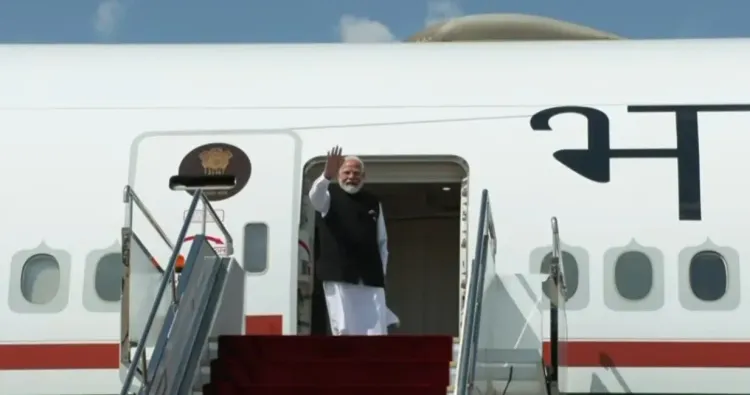
PM Modi departed Bishkek for New Delhi on 1 September after concluding the 26th SCO Summit .
He held bilateral talks with leaders of Russia , Iran , Tajikistan , Laos , Kyrgyzstan , and Armenia on the summit sidelines.
Modi interacted with Chinese President Xi Jinping and Russian President Vladimir Putin ahead of the leaders' group photograph.
The SCO now has 10 member states , 2 observer states , and 15 dialogue partners .
The Uzbekistan leg included talks with President Shavkat Mirziyoyev and visits to the Shastri Memorial and Mahatma Gandhi Centre in Tashkent.
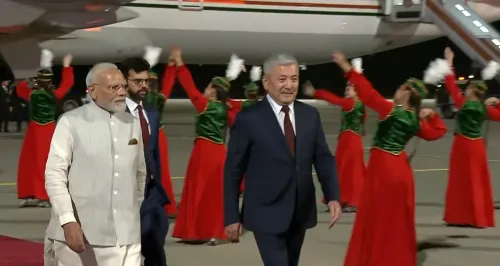
Prime Minister Narendra Modi on Tuesday, 1 September departed Bishkek for New Delhi, wrapping up a packed two-nation tour that included the 26th Shanghai Cooperation Organisation (SCO) Summit hosted under Kyrgyzstan's chairmanship. The visit saw Modi engage in a series of high-stakes bilateral meetings on the sidelines of the multilateral gathering.
Key Meetings at the SCO Summit
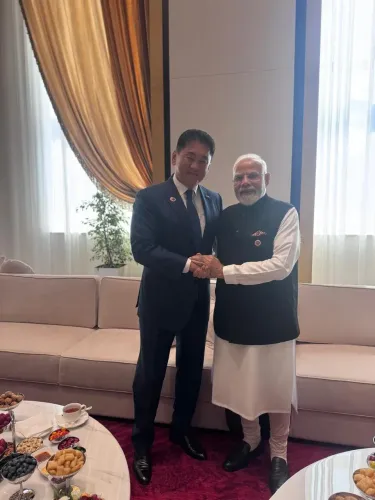
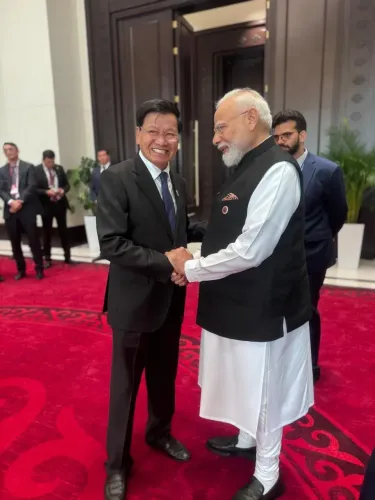
On the summit's sidelines, Modi held discussions with Tajikistan President Emomali Rahmon, with India expressing readiness to deepen cooperation across multiple sectors. He also met Laos President Thongloun Sisoulith, focusing on strengthening bilateral linkages. 'Met Mr. Thongloun Sisoulith, President of Lao PDR on the sidelines of the SCO Summit in Bishkek. Had a great conversation on boosting bilateral linkages between our nations,' Modi said.
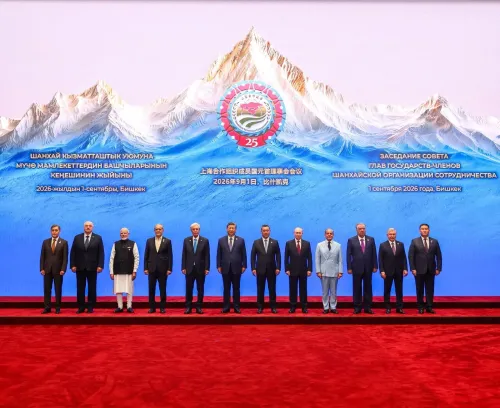
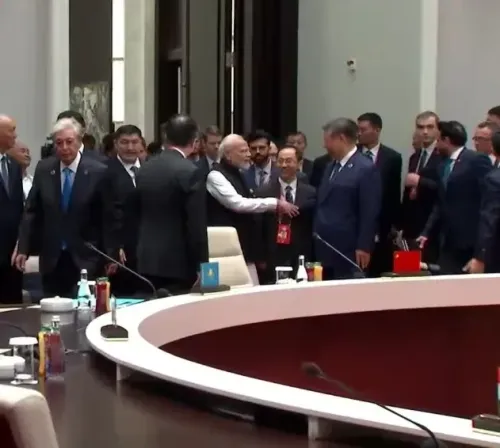
Ahead of the formal summit proceedings, Modi interacted with Chinese President Xi Jinping and Russian President Vladimir Putin before the leaders posed for the traditional group photograph — a moment that underscored the geopolitical weight of the gathering.
Monday's Engagements in Bishkek
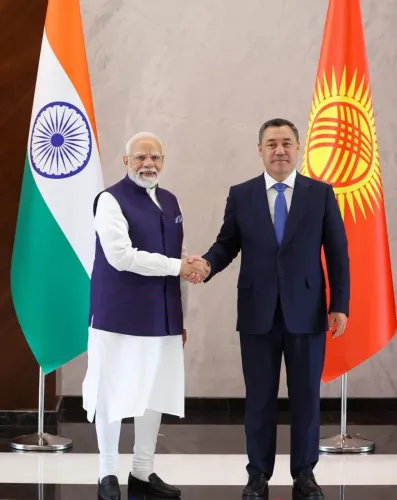
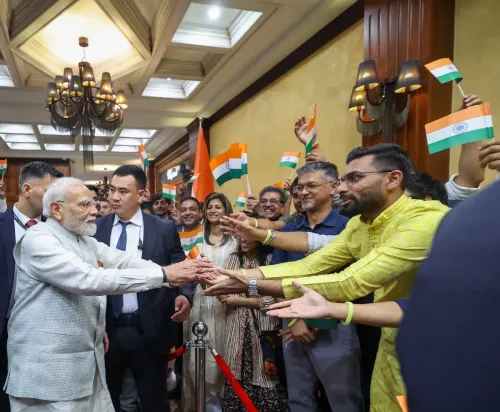
A day earlier, on Monday, Modi held bilateral meetings with Iranian President Masoud Pezeshkian, Kyrgyz President Sadyr Zhaparov, Russian President Vladimir Putin, and Armenian Prime Minister Nikol Pashinyan. He also paid tribute to Mahatma Gandhi at his memorial in Bishkek and met members of the Indian community who had gathered to receive him.
On Monday evening, Modi attended the opening ceremony of the World Nomad Games in Bishkek and extended his wishes to the participating Indian contingent.
Uzbekistan Leg of the Tour
Modi had arrived in Bishkek on Sunday after completing his engagements in Uzbekistan. There, he held talks with Uzbekistan President Shavkat Mirziyoyev, paid tribute to former Prime Minister Lal Bahadur Shastri at the Shastri Memorial, and visited the Mahatma Gandhi Centre at the Tashkent State University of Oriental Studies.
About the SCO
The SCO currently comprises 10 member states — Belarus, India, Iran, Kazakhstan, China, Kyrgyzstan, Pakistan, Russia, Tajikistan, and Uzbekistan. It has two observer states — Azerbaijan and Armenia — and 15 dialogue partners including Egypt, Qatar, Saudi Arabia, Turkey, the UAE, and Sri Lanka, among others. India's active participation reflects its strategic interest in shaping the bloc's agenda on connectivity, counter-terrorism, and regional trade.
What Comes Next
The outcomes of Modi's bilateral meetings — particularly with Putin and Pezeshkian — are expected to feed into ongoing diplomatic frameworks on energy, defence, and regional security. Formal joint statements and follow-up diplomatic communications are anticipated in the coming days.
Point of View
Iran under sanctions pressure, and China amid an unresolved border standoff. The real question mainstream coverage underplays is what concrete deliverables, if any, emerged from these sideline conversations — particularly with Putin and Pezeshkian. Optics of engagement are easy; binding outcomes are harder, and India's SCO record on translating summitry into measurable policy shifts remains uneven.
NationPress
16 Oct 2026
Frequently Asked Questions
What was PM Modi doing at the SCO Summit in Bishkek?
PM Modi attended the 26th SCO Summit in Bishkek on 1 September 2025, held under Kyrgyzstan's chairmanship. He participated in the plenary session and held multiple bilateral meetings with leaders including Russian President Vladimir Putin, Iranian President Masoud Pezeshkian, and others on the summit's sidelines.
Which leaders did PM Modi meet at the Bishkek SCO Summit?
Modi met Russian President Vladimir Putin, Iranian President Masoud Pezeshkian, Kyrgyz President Sadyr Zhaparov, Armenian Prime Minister Nikol Pashinyan, Tajikistan President Emomali Rahmon, and Laos President Thongloun Sisoulith. He also interacted with Chinese President Xi Jinping before the group photograph.
What was the Uzbekistan leg of Modi's tour about?
Before Bishkek, Modi visited Uzbekistan where he held talks with President Shavkat Mirziyoyev, paid tribute to former PM Lal Bahadur Shastri at the Shastri Memorial, and visited the Mahatma Gandhi Centre at the Tashkent State University of Oriental Studies.
How many countries are members of the SCO?
The SCO has 10 member states: Belarus, India, Iran, Kazakhstan, China, Kyrgyzstan, Pakistan, Russia, Tajikistan, and Uzbekistan. It also has 2 observer states — Azerbaijan and Armenia — and 15 dialogue partners including Saudi Arabia, Turkey, the UAE, and Sri Lanka.
What did PM Modi say about his meeting with the Laos President?
Modi said he 'had a great conversation on boosting bilateral linkages' with Laos President Thongloun Sisoulith on the sidelines of the SCO Summit in Bishkek, emphasising the strengthening of ties between India and Laos.