SCO Summit Bishkek: Modi says sideline meetings will yield substantive gains for India
Synopsis
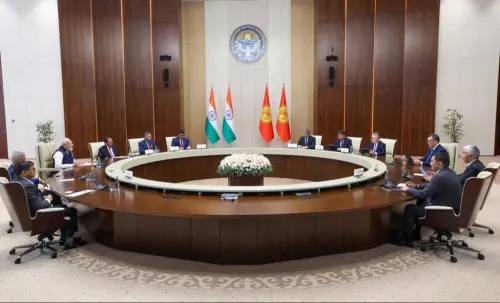
At the 26th SCO Summit in Bishkek, PM Modi held back-to-back bilaterals with leaders from Togo, Mongolia, Azerbaijan, Tajikistan, Laos, Iran, Russia, and Armenia — an unusually dense diplomatic sprint that he says will yield 'substantive benefits' for India. The meetings also coincided with the SCO's forward-planning exercise for the next 25 years, positioning India as an active shaper of the grouping's long-term agenda.
Key Takeaways
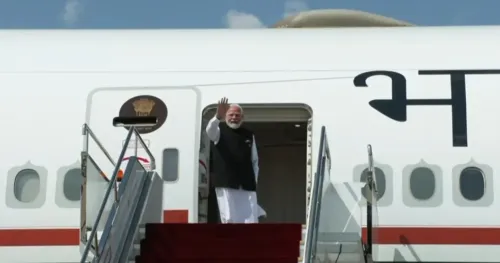
PM Narendra Modi attended the 26th SCO Summit in Bishkek, Kyrgyzstan on 1 September .
Modi held bilateral meetings with leaders of Togo, Mongolia, Azerbaijan, Tajikistan, and Laos on the summit's sidelines.
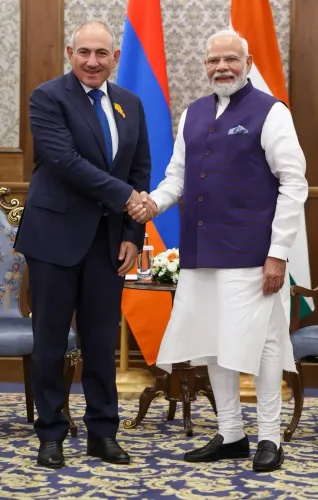
On Monday , he met the presidents of Iran, Russia, and Kyrgyzstan , and Armenian PM Nikol Pashinyan .
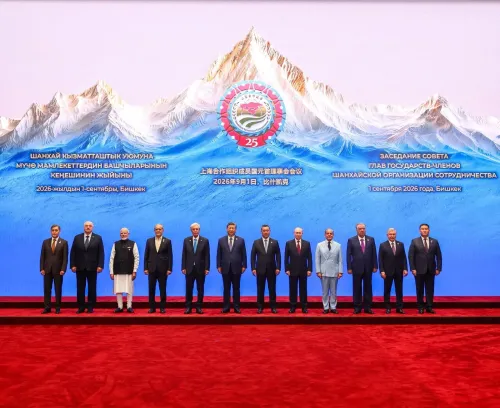
Modi interacted with Xi Jinping and Vladimir Putin before the SCO leaders' group photograph.
He paid homage to Mahatma Gandhi at his Bishkek memorial and attended the opening of the World Nomad Games .
The SCO now comprises 10 member states , 2 observer states , and 15 dialogue partners .
Prime Minister Narendra Modi on Tuesday, 1 September expressed confidence that the bilateral and multilateral meetings held on the sidelines of the 26th Shanghai Cooperation Organisation (SCO) Summit in Bishkek, Kyrgyzstan, will translate into substantive benefits for India. Modi described his visit as 'productive' and thanked Kyrgyzstan President Sadyr Zhaparov and the people of the country for their hospitality.
Modi's Message from Bishkek
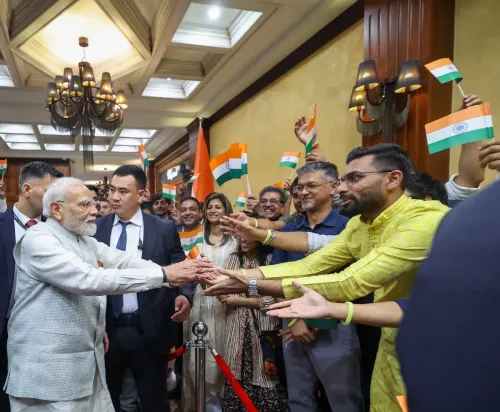
Posting on X, Prime Minister Modi wrote: 'The various meetings on the sidelines of SCO Summit will lead to substantive benefits for India. At the same time, shared a roadmap for the time ahead as the SCO plans for the next 25 years.' He also noted a 'delightful interaction' with members of the Kyrgyz Republic who have ties with India, and paid homage to Mahatma Gandhi at his memorial in Bishkek.
Key Bilateral Meetings on the Sidelines
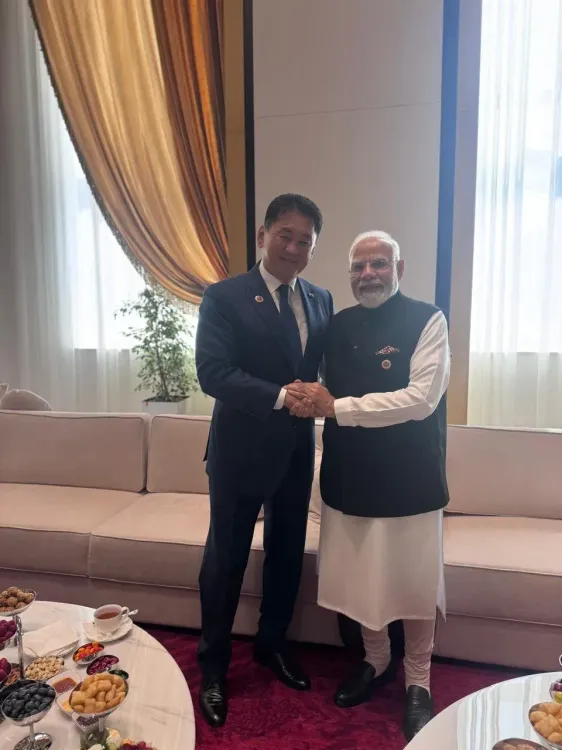
Modi held a series of bilateral engagements with world leaders on the summit's margins. He met Togo President Faure Essozimna Gnassingbe, exchanging perspectives on bilateral subjects. He also held discussions with Mongolia President Ukhnaa Khurelsukh, covering the breadth of India-Mongolia friendship and a range of bilateral issues.
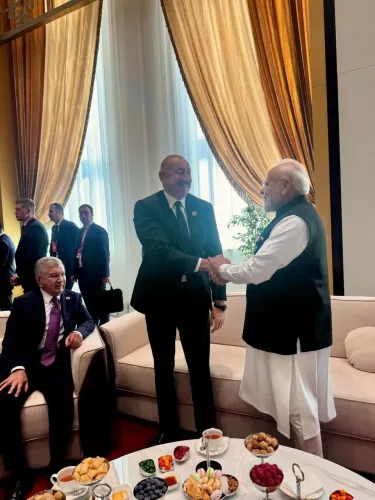
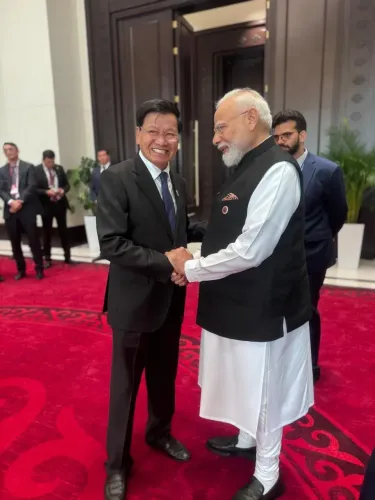
Modi met Azerbaijan President Ilham Aliyev and Tajikistan President Emomali Rahmon, with the latter meeting centred on India's readiness to deepen cooperation across multiple sectors. He also met Laos President Thongloun Sisoulith, focusing on strengthening bilateral linkages between the two nations.
On the previous day, Monday, Modi had held bilateral meetings with Iranian President Masoud Pezeshkian, Russian President Vladimir Putin, and Armenian Prime Minister Nikol Pashinyan, in addition to his talks with President Zhaparov.
Modi at the SCO Plenary and Group Photo
Modi attended the SCO Summit held under Kyrgyzstan's chairmanship in Bishkek. Prior to the formal session, he interacted with Chinese President Xi Jinping and Russian President Vladimir Putin before SCO leaders posed for the traditional group photograph. The summit brought together all 10 SCO member states — Belarus, India, Iran, Kazakhstan, China, Kyrgyzstan, Pakistan, Russia, Tajikistan, and Uzbekistan — along with two observer states and 15 dialogue partners.
Cultural Engagements and Community Outreach
Beyond the diplomatic calendar, Modi paid tribute to Mahatma Gandhi at his memorial in Bishkek and interacted with Indian community members who gathered to receive him. On Monday evening, he attended the opening ceremony of the World Nomad Games in Bishkek and extended his wishes to the Indian contingent participating in the event.
What the SCO Engagement Signals
This is the 26th edition of the SCO Summit, and India's engagement comes at a time when the grouping is actively charting its roadmap for the next quarter-century. Modi's emphasis on 'substantive benefits' and a 'roadmap for the time ahead' suggests New Delhi is looking to leverage the multilateral platform for concrete deliverables — trade, connectivity, and security cooperation chief among them. The breadth of bilateral meetings, spanning Africa, Central Asia, Southeast Asia, and the post-Soviet space, underscores India's intent to use SCO margins as a compact but high-yield diplomatic sprint.
Point of View
Particularly with nations where standalone summits are logistically difficult. What is less clear is the concrete deliverable trail: 'substantive benefits' is a holding phrase, and the test will be whether any of these meetings produces a signed agreement, a trade corridor milestone, or a security protocol. The SCO's own credibility is also under strain, given the divergent geopolitical pulls among its members; India's ability to extract bilateral value without being drawn into bloc politics will define the real return on this summit.
NationPress
17 Oct 2026
Frequently Asked Questions
What did PM Modi say about the SCO Summit in Bishkek?
PM Modi said the meetings held on the sidelines of the 26th SCO Summit in Bishkek will lead to 'substantive benefits' for India. He described his visit as productive and thanked Kyrgyzstan President Sadyr Zhaparov for the warm reception.
Which world leaders did PM Modi meet at the SCO Summit?
Modi met the presidents of Togo, Mongolia, Azerbaijan, Tajikistan, Laos, Iran, Russia, and Kyrgyzstan, as well as Armenian Prime Minister Nikol Pashinyan. He also briefly interacted with Chinese President Xi Jinping and Russian President Vladimir Putin before the group photograph.
What is the SCO and which countries are members?
The Shanghai Cooperation Organisation (SCO) is a Eurasian political, economic, and security alliance. Its 10 member states are Belarus, India, Iran, Kazakhstan, China, Kyrgyzstan, Pakistan, Russia, Tajikistan, and Uzbekistan, along with 2 observer states and 15 dialogue partners.
What else did PM Modi do during his Kyrgyzstan visit?
Beyond the summit, Modi paid homage to Mahatma Gandhi at his memorial in Bishkek, interacted with Indian community members, and attended the opening ceremony of the World Nomad Games on Monday evening, extending his wishes to the Indian contingent.
What is the significance of the 26th SCO Summit?
The 26th SCO Summit, held under Kyrgyzstan's chairmanship in Bishkek, also served as a forward-planning exercise for the grouping's next 25 years. India's participation and Modi's emphasis on a shared 'roadmap for the time ahead' signal New Delhi's intent to shape the SCO's long-term agenda.