PM Modi Welcomes US-Iran Understanding on West Asia Conflict
Synopsis
Prime Minister Narendra Modi welcomed a reported US-Iran understanding on June 15, 2026, citing serious global economic disruption and loss of life. India, which imports over half its crude oil from West Asia and hosts millions of expatriates there, has consistently urged de-escalation in the region as part of its multi-alignment foreign policy.
Key Takeaways
PM Modi on June 15, 2026 welcomed a reported US-Iran understanding aimed at ending the West Asia conflict.
Modi cited 'serious economic disruption across the world and loss of life in many countries' caused by the conflict.
India imports over 50 per cent of its crude oil from West Asia , giving it a direct economic stake in regional stability.
An estimated 9 million members of the Indian diaspora reside in West Asia , adding a humanitarian dimension to India's concern.
India's multi-alignment foreign policy keeps it engaged with both Washington and Tehran , consistent with its support for the 2015 JCPOA .
India's Chabahar Port agreement with Iran stands to benefit from any normalisation of Iran's international standing.
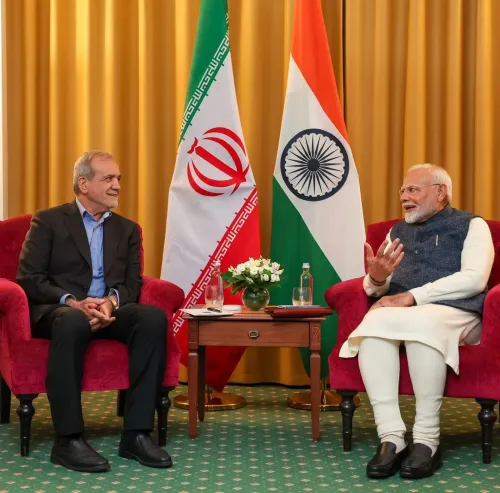
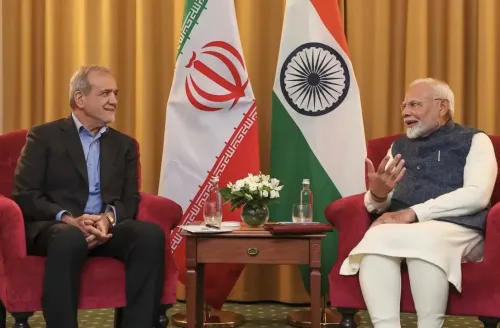
Prime Minister Narendra Modi on Monday, June 15, 2026, welcomed a reported understanding reached between the United States and Iran on ending the conflict in West Asia, calling it a step toward resolving a crisis that has caused 'serious economic disruption across the world and led to loss of life in many countries.'
Context
Modi posted on X expressing India's hope that 'the implementation of this understanding' would hold, signalling New Delhi's keen interest in a durable resolution. The statement comes amid prolonged instability in West Asia that has disrupted global shipping lanes, including the Strait of Hormuz and Red Sea corridors critical to international trade. India has consistently called for restraint and dialogue during each escalation cycle involving Iran and US-aligned actors in the region.
Policy Backdrop
India imports over 50 per cent of its crude oil from West Asia, making regional stability a direct economic imperative. New Delhi supported the landmark 2015 Joint Comprehensive Plan of Action (JCPOA) between Iran and world powers, viewing multilateral diplomacy as the preferred instrument for managing Tehran's nuclear ambitions. When tensions spiked in 2019-2020 following the killing of Iranian commander Qasem Soleimani, India publicly urged all sides to exercise restraint — a posture consistent with Monday's statement.
Modi's foreign policy rests on a multi-alignment framework that keeps channels open with Washington, Tehran, and Gulf Arab capitals simultaneously. This allows India to advocate de-escalation without being drawn into any bloc's orbit, a stance that has broadly served New Delhi's energy and diaspora interests.
Stakeholders and Impact
An estimated 9 million members of the Indian diaspora live and work across West Asia, making the region's security a humanitarian concern as much as a geopolitical one. Disruptions to shipping through the Red Sea and Persian Gulf have added freight costs and inflationary pressure to India's import bill in recent months. A lasting US-Iran understanding, if implemented, could ease crude oil supply constraints and stabilise prices for Indian refiners and consumers.
Beyond energy, India maintains the Chabahar Port agreement with Iran as a strategic connectivity corridor to Afghanistan and Central Asia. Any normalisation of Iran's international standing could accelerate investment and trade flows through that route, benefiting Indian commercial interests.
What's Next
Attention will now turn to the specific implementation mechanisms underpinning the US-Iran understanding and whether they hold under domestic political pressures in both countries. India is expected to follow up through United Nations channels and bilateral diplomatic engagement with Gulf capitals to reinforce its support for the process. A sustained de-escalation could also prompt New Delhi to revisit energy import diversification strategies and accelerate infrastructure projects tied to Iranian connectivity. The trajectory of global crude prices in the coming weeks will serve as an early indicator of whether markets view the understanding as credible and durable.
Point of View
Diaspora welfare, and connectivity ambitions simultaneously. By welcoming the US-Iran understanding without endorsing either party's position, New Delhi reinforces its multi-alignment credentials at a moment when global powers are watching fence-sitters closely. The reference to 'implementation' rather than the understanding itself is telling — India is signalling cautious optimism while reserving judgement on whether the deal holds. This fits a broader pattern in which Modi's foreign policy team uses reactive statements on West Asia crises to quietly advance India's positioning as a responsible, non-partisan stakeholder in global stability.
NationPress
20 Sept 2026
Frequently Asked Questions
What did PM Modi say about the US-Iran understanding?
PM Modi said he welcomes the understanding reached between the United States and Iran on ending the conflict in West Asia, noting it has caused serious economic disruption and loss of life globally. He expressed hope that the implementation of the understanding would hold.
Why does India care about the US-Iran conflict in West Asia?
India imports over 50 per cent of its crude oil from West Asia, making regional stability critical to its energy security. Additionally, around 9 million Indians live and work in the region, and disruptions to shipping lanes like the Strait of Hormuz directly raise India's import costs.
What is India's foreign policy stance on Iran?
India follows a multi-alignment approach, maintaining diplomatic and economic ties with both the United States and Iran. New Delhi supported the 2015 JCPOA nuclear agreement and has repeatedly called for dialogue and restraint during US-Iran tensions, including during the 2019-2020 escalation.
How does the West Asia conflict affect India economically?
Conflict in West Asia disrupts oil supply chains and raises freight costs on Red Sea and Persian Gulf shipping routes, contributing to inflation in India. A resolution could ease crude oil prices and benefit Indian refiners and consumers.
What is India's Chabahar Port and how is it linked to Iran?
Chabahar Port is an Indian-developed port on Iran's southern coast that gives India a strategic trade and connectivity route to Afghanistan and Central Asia, bypassing Pakistan. Any normalisation of Iran's international status could accelerate investment and trade through this corridor.