CM Majhi Marks 2 Years With Odisha Education Push
Synopsis
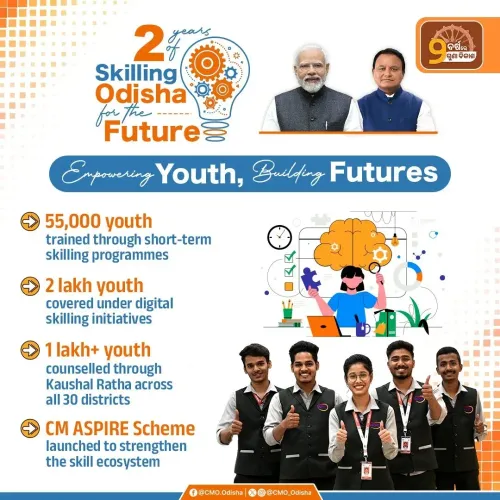
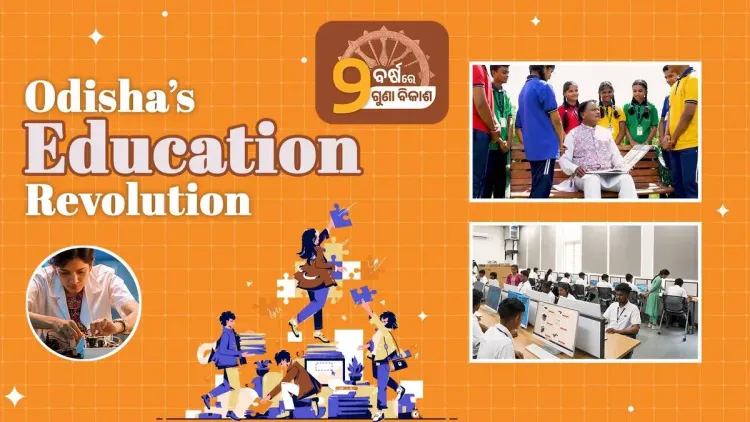
Odisha CM Mohan Charan Majhi, marking two years in office, announced a multi-pronged education push covering smart classrooms, AI literacy in schools, ITI modernisation, and apprenticeship-linked higher education — framing youth skill development as the foundation of the state's growth agenda.
Key Takeaways
CM Mohan Charan Majhi posted on June 23, 2026 , marking the second anniversary of the BJP-led government in Odisha.
The government claims to be introducing smart learning in schools and expanding AI literacy programmes statewide.
Higher education is being linked to real-world apprenticeships in line with the National Apprenticeship Promotion Scheme .
Industrial Training Institutes (ITIs) are being modernised to deliver industry-relevant vocational skills.
Women and youth are explicitly named as priority beneficiaries of advanced skill programmes.
The initiatives align with the National Education Policy 2020 and the Skill India Mission launched in 2015.
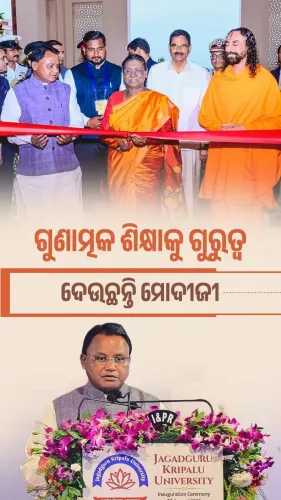
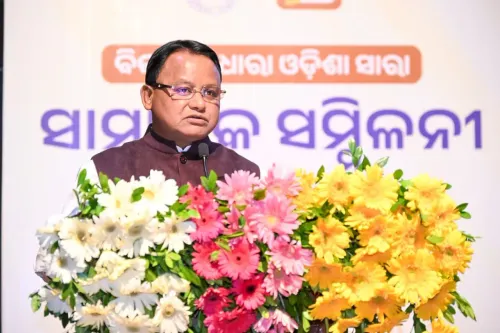
Odisha Chief Minister Mohan Charan Majhi on Tuesday, June 23, 2026, outlined his government's education agenda on the occasion of two years in office, citing advances in smart learning, AI literacy, ITI modernisation, and apprenticeship-linked higher education as cornerstones of the state's development drive.
Context
The post marks the second anniversary of the BJP-led government in Odisha, celebrated under the hashtag #2YearsofLokankaSarakar ('Two Years of People's Government'). CM Majhi used the occasion to enumerate education and skill-development milestones, framing them under the twin themes of #BikasharaDharaOdishaSara ('Development for all of Odisha') and #2YearsOfShikshaSanskara ('Two Years of Education Reform').
In the post, Majhi stated: 'Investing in our youth is investing in the future of Odisha. We are transforming our educational landscape by bringing smart learning to schools, expanding AI literacy, and linking higher education with real-world apprenticeships.'
Policy Backdrop
The initiatives referenced by CM Majhi align with the National Education Policy (NEP) 2020, which replaced the 1986 framework and mandated technology integration, multidisciplinary learning, and stronger industry linkages across school and higher education. The Skill India Mission, launched in 2015, and the revised National Apprenticeship Promotion Scheme (2016) together provide the central architecture within which state-level ITI upgrades and apprenticeship programmes operate.
Odisha's BJP government, in office since 2024, has consistently framed education reform as part of a broader 'Bikash' (development) narrative that ties schooling and vocational training directly to employment and industrialisation goals. The emphasis on AI literacy in schools and modernised ITIs reflects a pattern visible across several BJP-governed states implementing NEP 2020 at scale.
Stakeholders and Impact
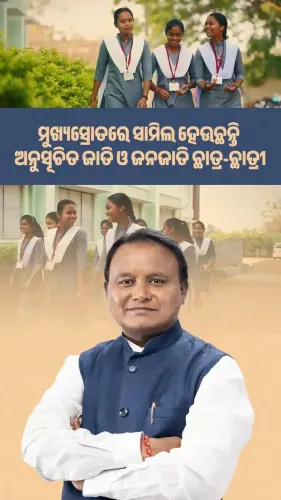
The groups identified as primary beneficiaries in the Chief Minister's statement are school students, higher education enrollees, ITI trainees, and women seeking advanced skill certification. By explicitly naming women alongside youth, the government signals an intent to close gender gaps in vocational and technical training — a persistent challenge in eastern Indian states.
Industry linkages through apprenticeships are positioned as the bridge between classroom learning and employment, a model that requires active participation from private sector employers across Odisha's growing industrial corridors.
What's Next
Observers will watch for concrete budget allocations toward ITI upgrades, the rollout of AI curriculum modules in government schools, and annual apprenticeship placement data that would validate the claims made in the anniversary statement. School enrollment metrics under the new smart-learning infrastructure will also serve as key indicators of on-ground progress.
As Odisha positions itself as a skills-economy destination, the government's ability to publish transparent outcome data — placement rates, certification numbers, and gender-disaggregated enrolment figures — will determine how the education reform narrative translates into measurable public benefit.
Point of View
Using education reform as the most publicly resonant metric of governance delivery. By foregrounding AI literacy and women's skilling, the BJP government in Odisha is consciously positioning itself within the national party's 'Viksit Bharat' development vocabulary. The apprenticeship-higher education linkage, if implemented at scale, could meaningfully shift Odisha's youth employment trajectory — but the absence of verifiable outcome data leaves the narrative aspirational for now. The real test will come when placement and enrollment figures are placed in the public domain.
NationPress
22 Sept 2026
Frequently Asked Questions
What education reforms has CM Mohan Majhi announced for Odisha?
CM Majhi has outlined reforms including smart classrooms in schools, AI literacy programmes, modernisation of ITIs, and linking higher education with apprenticeships to improve employment outcomes for Odisha's youth and women.
What is the significance of the hashtag 2YearsofLokankaSarakar?
The hashtag translates to 'Two Years of People's Government' and marks the second anniversary of the BJP-led government in Odisha under CM Mohan Charan Majhi, which came to power in 2024.
How does Odisha's education push relate to the National Education Policy 2020?
Odisha's focus on technology integration in schools, multidisciplinary learning, and apprenticeship linkages directly mirrors the priorities set out in the National Education Policy 2020, which mandated these changes at the national level.
Which groups benefit from Odisha's skill development programmes?
CM Majhi specifically identified school students, higher education enrollees, ITI trainees, and women as the primary beneficiaries of the state's expanded skill and education programmes.
What are Industrial Training Institutes and why is their modernisation important?
ITIs are government-run vocational training centres that equip students with trade-specific skills. Modernising them to align with current industry requirements is seen as critical to improving youth employability across states like Odisha.