CM Majhi meets Singapore envoy, eyes Odisha-Singapore tie-up
Synopsis
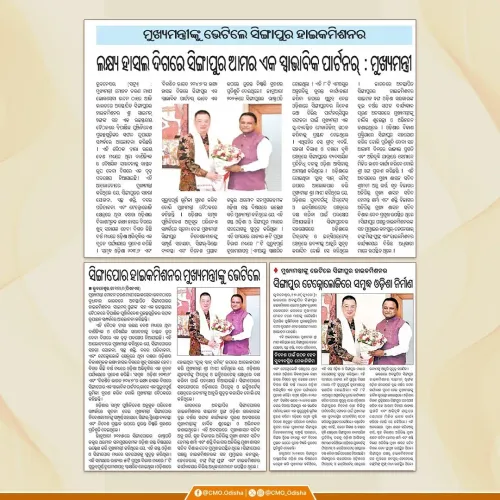
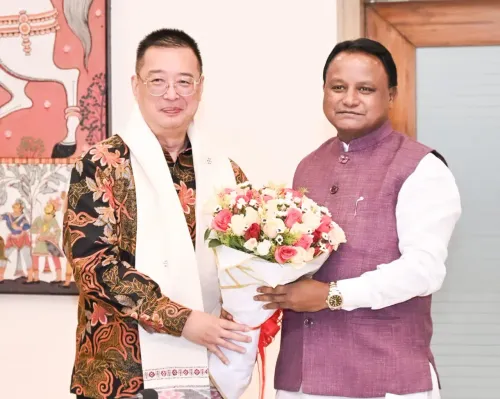
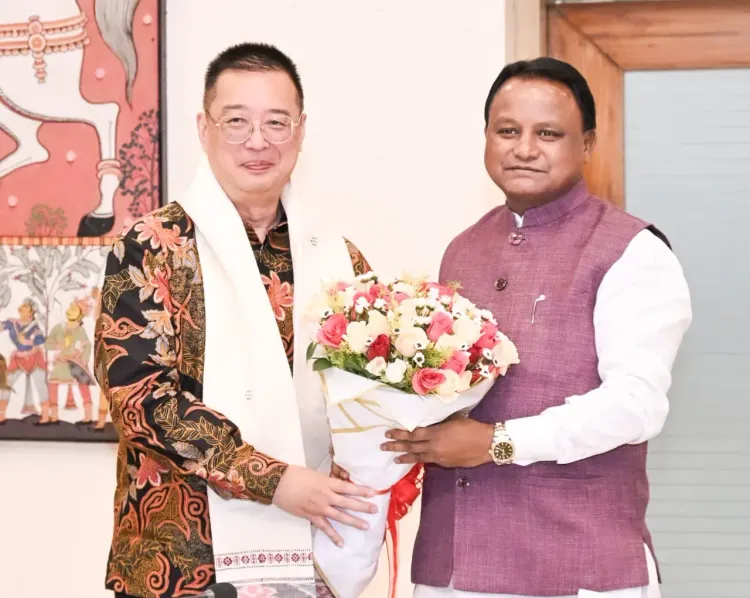
Odisha Chief Minister Mohan Charan Majhi met Singapore High Commissioner Simon Wong on 17 June 2026, discussing MoU implementation from President Tharman's Odisha visit and a structured engagement mechanism spanning ports, green energy, urban development and skill building.
Key Takeaways
CM Mohan Charan Majhi held talks with Singapore High Commissioner Simon Wong on 17 June 2026 on broadening Odisha-Singapore ties.
Discussions covered urban development, green energy, port infrastructure, technology, innovation and skill development .
Both sides reviewed the 'expeditious implementation' of MoUs signed during Singapore President Tharman Shanmugaratnam's visit to Odisha.
A structured engagement mechanism to facilitate investments and institutional collaboration is being proposed.
The engagement is anchored in Odisha's Samruddha Odisha 2036 vision and India's national Viksit Bharat 2047 goal.
The outreach aligns with India's Act East Policy and the India-Singapore Comprehensive Economic Cooperation Agreement framework established in 2005 .
Odisha Chief Minister Mohan Charan Majhi met Singapore High Commissioner to India Simon Wong on Wednesday, 17 June 2026, for a wide-ranging discussion on deepening bilateral cooperation across urban development, green energy, port infrastructure, technology, innovation and skill development.
Context
The meeting follows a state visit to Odisha by Singapore President Tharman Shanmugaratnam, during which both sides signed a set of memoranda of understanding covering key development sectors. CM Majhi said the two sides discussed the 'expeditious implementation' of those MoUs and the establishment of a 'structured engagement mechanism' to facilitate investments and deepen institutional collaboration.
Majhi framed the engagement within Odisha's long-term development blueprint, stating that Singapore 'remains a valued and natural partner in our development journey' as the state advances toward the vision of Samruddha Odisha 2036 (Prosperous Odisha 2036) and contributes to the national goal of Viksit Bharat 2047 (Developed India 2047).
Policy Backdrop
India and Singapore have maintained a robust economic partnership since the India-Singapore Comprehensive Economic Cooperation Agreement of 2005, which laid the groundwork for trade, investment and technical collaboration now being extended to state-level projects. Odisha, with major ports at Paradip and Dhamra, is a natural fit for Singapore's recognised expertise in port management, smart urbanisation and green energy systems.
The outreach is consistent with India's Act East Policy, under which coastal states have increasingly forged direct institutional links with Singapore for smart city planning, port logistics and sustainability frameworks. Odisha's current engagement mirrors similar efforts by other eastern and coastal states seeking to translate national foreign-policy priorities into concrete state-level investment pipelines.
Stakeholders and Impact
Odisha's infrastructure agencies and skill development institutions stand to benefit most directly if the proposed structured engagement mechanism translates into active project pipelines. Singapore investors and technical institutions, in turn, gain a channel into one of India's fastest-growing eastern states, which has positioned itself as a hub for green hydrogen, industrial corridors and port-led economic zones.
The skill development dimension is particularly significant: Odisha has been expanding vocational training capacity, and Singapore's technical education model is widely regarded as a benchmark in the region. A formalised collaboration could accelerate workforce readiness for the state's growing industrial base.
What's Next
Attention will now turn to the operationalisation of the structured engagement mechanism that both sides discussed, and to specific timelines for projects emerging from the MoUs signed during President Tharman's Odisha visit. Progress on port modernisation and green energy initiatives will be the clearest early indicators of whether the diplomatic momentum translates into on-ground investment.
As Odisha accelerates its push toward 2036 targets, the pace of MoU implementation and the depth of institutional collaboration with Singapore will be closely watched by investors and development planners across the region.
Point of View
Majhi is positioning Odisha as a proactive sub-national actor in India's Act East foreign policy rather than a passive recipient of central directives. The emphasis on a 'structured engagement mechanism' is noteworthy: it suggests both sides recognise that goodwill MoUs without institutional follow-through have a poor conversion record. If operationalised, such a mechanism could set a template for how other Indian states formalise sub-national ties with Singapore beyond one-off summits.
NationPress
24 Sept 2026
Frequently Asked Questions
Why did Odisha CM Mohan Majhi meet Singapore's High Commissioner?
CM Mohan Charan Majhi met Singapore High Commissioner Simon Wong on 17 June 2026 to discuss advancing cooperation in urban development, green energy, port infrastructure, technology and skill development, and to review the implementation of MoUs signed during Singapore President Tharman Shanmugaratnam's visit to Odisha.
What is Samruddha Odisha 2036?
Samruddha Odisha 2036 is Odisha's long-term development vision aimed at achieving prosperity across infrastructure, industry and human development by the year 2036, aligned with India's broader Viksit Bharat 2047 national goal.
What MoUs were signed between Odisha and Singapore?
Multiple memoranda of understanding covering key development sectors were signed during Singapore President Tharman Shanmugaratnam's visit to Odisha; however, the exact titles and implementation timelines of these MoUs have not been officially detailed in public record as yet.
What is the structured engagement mechanism Odisha and Singapore discussed?
The structured engagement mechanism is a proposed institutional framework between Odisha and Singapore designed to systematically facilitate investments, coordinate project implementation and deepen collaboration between government agencies and institutions of both sides.
How does Odisha's Singapore outreach connect to India's Act East Policy?
India's Act East Policy encourages stronger economic and institutional ties with ASEAN nations including Singapore; Odisha's direct engagement with Singapore on ports, green energy and urban development is a state-level expression of this national foreign-policy priority.