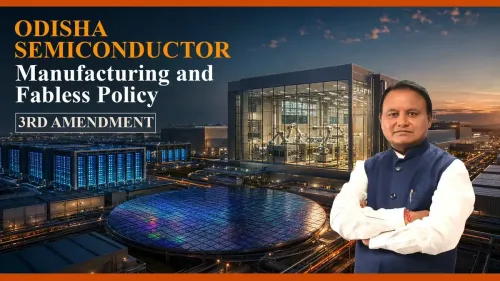
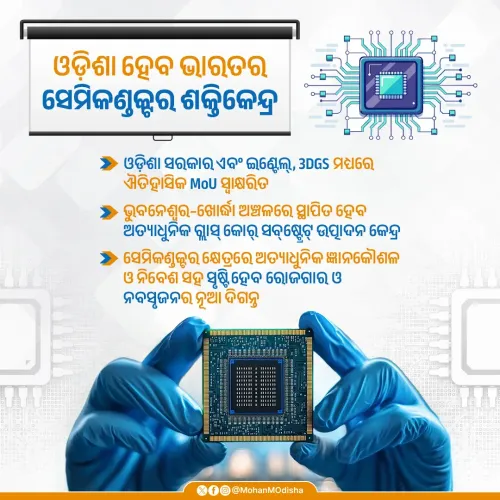
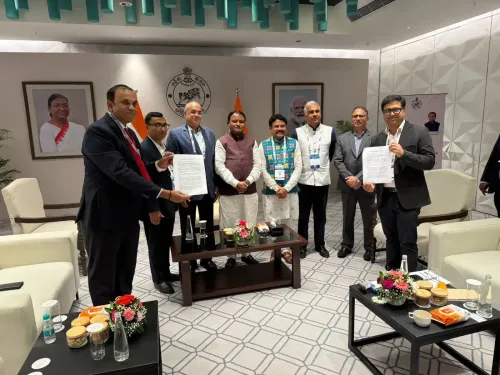
CM Majhi: Odisha bets ₹23,600 cr on semiconductor future
Synopsis
Odisha CM Mohan Charan Majhi announced ₹23,600 crore in semiconductor investment proposals, an 870-acre Silicon Valley zone, and QuadQuantum's SiC wafer initiative — positioning Odisha as a serious node in India's chip self-reliance push with 6,100 potential jobs.
Key Takeaways
₹23,600 crore in semiconductor investment proposals have been announced for Odisha, signalling a major industrial pivot for the eastern state.
An 870-acre Silicon Valley cluster is earmarked as a dedicated semiconductor zone within the state.
QuadQuantum is leading a silicon carbide (SiC) wafer manufacturing initiative — a high-value, strategically critical technology for EVs and power electronics.
The projects carry the potential to generate 6,100 jobs across direct and ancillary roles.
The push aligns with the India Semiconductor Mission (launched 2021), placing Odisha inside the national chip self-reliance framework.
Conversion of proposals into active projects depends on central government approvals and disbursement of incentives.
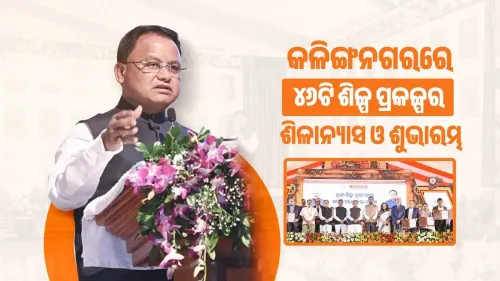
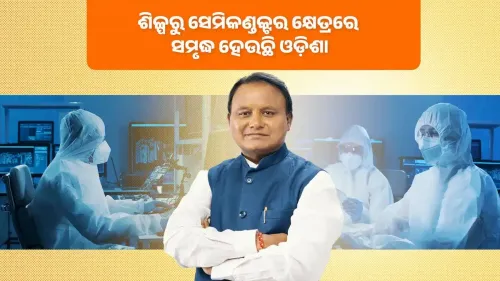
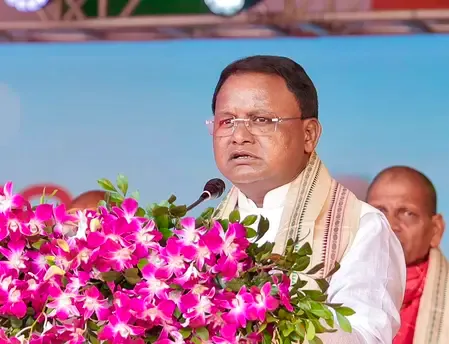
Odisha is staking a claim to India's chip-making future — and it is doing so at scale. Chief Minister Mohan Charan Majhi announced on Monday, 19 October 2026 that the eastern state has attracted ₹23,600 crore in semiconductor investment proposals, anchored by an 870-acre 'Silicon Valley' cluster and a silicon carbide wafer manufacturing initiative by QuadQuantum, with the potential to generate 6,100 jobs.
What Odisha's semiconductor pitch actually looks like
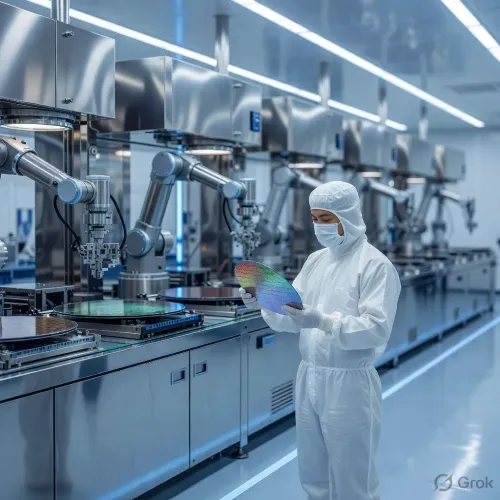
The announcement centres on three interlocking moves: a massive land parcel earmarked as a dedicated semiconductor zone, a specific advanced-materials play in SiC wafer fabrication, and a headline investment figure designed to signal Odisha is no longer just a mining and steel economy. Silicon carbide wafers are a high-value substrate used in power electronics and electric vehicles — sectors where global supply chains are being actively rewired away from single-country dependence.
QuadQuantum's SiC wafer manufacturing initiative is the sharpest edge of the announcement. SiC-based chips command premium pricing and are considered strategically critical for next-generation power grids and EV drivetrains, making the choice of this technology a pointed signal about where Odisha's industrial planners see the demand curve heading.
Odisha inside India's national chip race
The state's push fits squarely inside a broader national framework. The India Semiconductor Mission, approved by the central government in 2021, created financial incentives for fabrication units and the surrounding design and packaging ecosystem. That policy triggered a wave of state-level competition — Gujarat, Karnataka, and Telangana among others have each positioned clusters — and Odisha is now aggressively entering that race.
What gives Odisha a credible pitch is geography and infrastructure: the state sits close to major port facilities, has surplus power generation capacity from its thermal fleet, and has been rolling out industrial land banks as part of a broader diversification push since CM Majhi took office in 2024. The 870-acre Silicon Valley footprint, if developed as announced, would rank among the larger dedicated semiconductor zones proposed at state level.
Jobs, self-reliance, and what comes next
The 6,100 jobs figure spans direct manufacturing roles and the wider supplier ecosystem — a meaningful number for a state that has historically exported labour to other industrial centres. Chief Minister Majhi framed the investment explicitly in terms of India's technological self-reliance, language that echoes the central government's 'Atmanirbhar Bharat' agenda and positions Odisha as a contributor to national strategic depth, not merely a recipient of it.
The critical next milestone is straightforward: whether the investment proposals convert into formal approvals, whether central government incentives under the India Semiconductor Mission are activated for Odisha-based units, and whether QuadQuantum's SiC facility moves from announcement to ground-breaking. Proposals at this scale routinely face a long arc between headline and hardware.
Still, the direction is unmistakable. A state once defined by iron ore exports is now competing for a place in the global supply chain for chips that will power the next generation of clean energy hardware and connected devices. That is not a small pivot.
Point of View
Landing a SiC wafer project is tactically shrewd — advanced-materials fabrication is harder to replicate than assembly, giving the state a more defensible position in the supply chain. The ₹23,600 crore headline also serves a domestic political purpose: it reframes Odisha's economic identity ahead of future investment summits. The real test, as with every semiconductor proposal in India, is the speed of central approvals and the gap between MoU and machinery.
NationPress
19 Oct 2026
Frequently Asked Questions
What semiconductor investments has Odisha announced?
Odisha has announced ₹23,600 crore in semiconductor investment proposals, including an 870-acre Silicon Valley cluster and a silicon carbide wafer manufacturing initiative by QuadQuantum, with the potential to create 6,100 jobs.
What is QuadQuantum's role in Odisha's semiconductor push?
QuadQuantum is driving a silicon carbide (SiC) wafer manufacturing initiative as part of Odisha's semiconductor cluster — SiC wafers are used in power electronics and electric vehicle drivetrains and are considered strategically high-value.
How does Odisha's semiconductor plan connect to the India Semiconductor Mission?
The India Semiconductor Mission, launched by the central government in 2021, provides financial incentives for fabrication and packaging units across India. Odisha's projects are positioned to benefit from this national framework, pending central approvals.
How many jobs could Odisha's semiconductor cluster create?
The semiconductor proposals are projected to create a potential of 6,100 jobs, spanning direct manufacturing roles and the wider supplier ecosystem.
Why is Odisha entering the semiconductor sector now?
Under CM Mohan Charan Majhi, who took office in 2024, Odisha has been diversifying beyond mining and steel. India's national push for technological self-reliance and state-level competition triggered by the India Semiconductor Mission have created the policy and investment climate for this entry.