CM Majhi: ODRAF Rescues Elderly Couple, Grandson Ahead of Cyclone Akvan
Synopsis
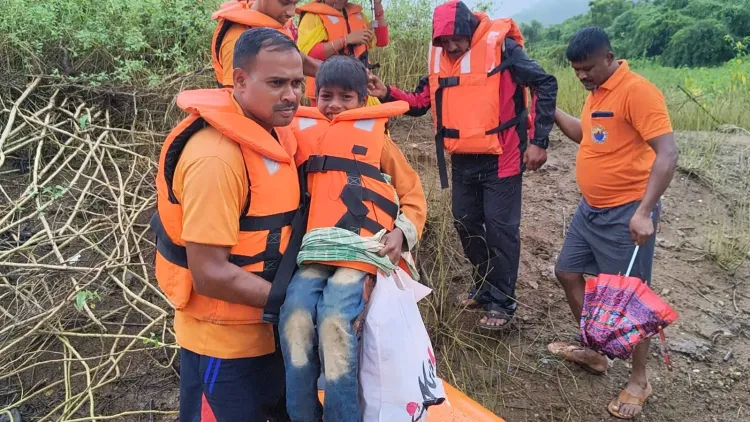
Ahead of Cyclone Akvan, an ODRAF team evacuated an elderly couple and their 11-year-old grandson from vulnerable farmland near Baghalati Reservoir in Patrapur Block, Ganjam. CM Mohan Majhi confirmed all three were safely shifted to a cyclone shelter, underscoring Odisha's doctrine of preemptive rescue.
Key Takeaways
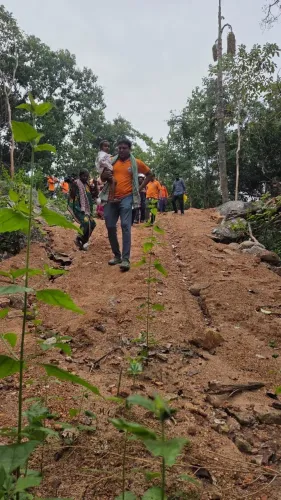
An ODRAF team and rescue personnel evacuated an elderly couple and their 11-year-old grandson from Elagala village, Ankuli Panchayat, Patrapur Block ahead of Cyclone Akvan .
The family was living on farmland beside Baghalati Reservoir — a doubly flood-prone location during cyclone conditions.
Patrapur Block falls in Ganjam district , one of Odisha's most cyclone-exposed coastal areas.
Odisha built its rapid-evacuation infrastructure following the devastating 1999 super cyclone , which killed an estimated 10,000 people.
ODRAF units are pre-positioned before cyclone landfall rather than dispatched after, embodying the state's preemptive rescue doctrine.
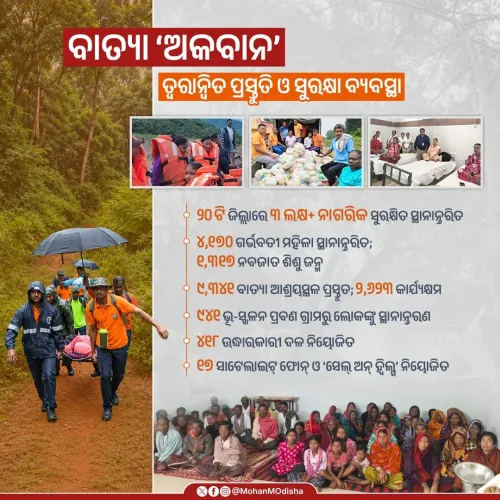
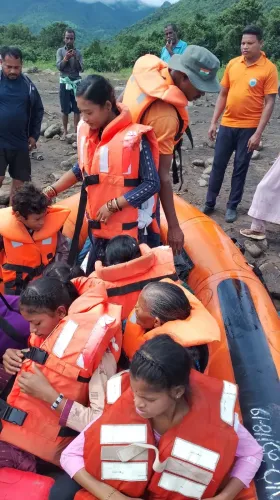
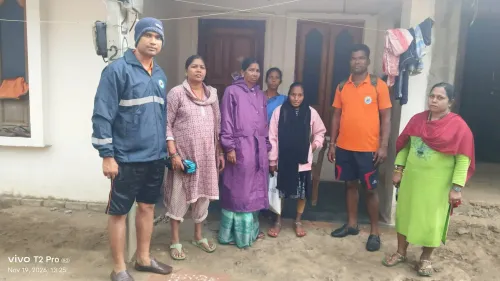
CM Mohan Charan Majhi posted four field images, signalling active administrative oversight as Cyclone Akvan approaches.
Before Cyclone Akvan could reach the coast, Odisha Chief Minister Mohan Charan Majhi shared on Friday, 20 November 2026 that a targeted evacuation had already pulled three vulnerable residents to safety — proof that the state's disaster machinery moves before the storm does.
An ODRAF (Odisha Disaster Rapid Action Force) team and rescue personnel evacuated an elderly couple and their 11-year-old grandson from Elagala village in Ankuli Panchayat, Patrapur Block. The family had been living in a particularly exposed position — farmland adjacent to the Baghalati Reservoir, where rising water levels during a cyclone can turn fields lethal within hours. All three were safely shifted to a designated cyclone shelter.
Why a Reservoir-Side Farm Is the Wrong Place to Be
The detail that makes this rescue notable is the location. Farmland near a reservoir sits at the intersection of two separate flood threats: direct rainfall and the controlled or uncontrolled release of stored water. When a cyclone makes landfall, both can hit simultaneously. An elderly couple with a child, without the mobility to leave quickly, represents exactly the scenario Odisha's preparedness doctrine is built to address first.
Patrapur Block lies in Ganjam district, a coastal stretch that sits squarely in the Bay of Bengal's cyclone corridor. The district has been in the path of multiple storms over the decades, and local administration here tends to run evacuation drills with more institutional muscle memory than most.
ODRAF: Born from the 1999 Catastrophe
Odisha did not always have this reflex. The 1999 super cyclone killed an estimated 10,000 people and devastated the coastline in what remains one of independent India's worst natural disasters. Out of that devastation, the state built something: a dedicated rapid-response force, improved early-warning networks, and a culture of preemptive mass evacuation that subsequent governments — across party lines — have continued to invest in.
ODRAF is the operational face of that investment. Specially trained for swift water rescues, structural collapse, and cyclone response, its teams are pre-positioned ahead of storms rather than deployed after them. The rescue of three people from a single farm may seem small in scale; in doctrine, it is the whole point.
Akvan Approaches: What Comes Next
Chief Minister Majhi's post, with four images, signals that the administration is in active communication mode — using real, human stories from the field to signal both public reassurance and operational seriousness. As Cyclone Akvan tracks toward Odisha's coast, the state's machinery will be measured by how many more such rescues it completes before landfall, and how quickly relief flows after.
Odisha has repeatedly shown that early evacuation saves lives. The only question now is whether the full scale of Akvan's approach demands a response to match the state's hard-earned reputation.
Point of View
CM Majhi is doing double duty: directing real operations and signalling accountability to a public primed to judge governments on storm readiness. The focus on the elderly and a child is not incidental; Odisha's protocols explicitly prioritise mobility-impaired and young residents first. If Cyclone Akvan proves severe, how well this pre-landfall momentum translates into post-landfall relief will define the political and human verdict on the response.
NationPress
20 Nov 2026
Frequently Asked Questions
What is Cyclone Akvan and where is it headed?
Cyclone Akvan is an approaching Bay of Bengal storm tracking toward the Odisha coast. The state government has activated disaster response teams, including ODRAF, ahead of its expected landfall.
What is ODRAF and what does it do?
ODRAF stands for Odisha Disaster Rapid Action Force — a state-level specialised unit trained for swift water rescues, cyclone response, and disaster evacuations. It was established after the catastrophic 1999 super cyclone.
Who was rescued ahead of Cyclone Akvan in Patrapur Block?
An elderly couple and their 11-year-old grandson from Elagala village, Ankuli Panchayat, Patrapur Block were evacuated from farmland near Baghalati Reservoir and shifted to a cyclone shelter.
Why is living near a reservoir dangerous during a cyclone?
Reservoir-adjacent farmland faces two simultaneous flood risks during a cyclone: heavy rainfall directly and potential water release from the reservoir, which can rapidly inundate low-lying fields with little warning.
How has Odisha improved its cyclone preparedness over the years?
Following the 1999 super cyclone that killed an estimated 10,000 people, Odisha built ODRAF, strengthened early-warning systems, and institutionalised preemptive mass evacuations — widely regarded as one of India's most effective disaster-management models.