CM Majhi Orders Cyclone Alert; 302 Teams on Standby
Synopsis
Chief Minister Mohan Charan Majhi has ordered 302 rescue teams on standby, closed schools in five southern Odisha districts on October 28-29, and directed all engineering departments to prepare for rapid post-cyclone restoration as a potential storm approaches the Bay of Bengal coast.
Key Takeaways
Schools, colleges, and anganwadis in Ganjam, Gajapati, Rayagada, Koraput, and Malkangiri will be closed on October 28 and 29 .
302 rescue and relief teams have been pre-positioned across vulnerable zones ahead of the potential cyclone.
Low-lying residents are to be evacuated to safe shelters; pregnant women and patients are priority transfers to health facilities.
Health centres have been directed to stock anti-snake venom, essential medicines, and medical kits in affected areas.
All engineering departments are on standby for immediate road clearance, power restoration, and drinking water resumption post-storm.
CM Majhi invoked a 'Whole of Government Approach' and ordered crop protection measures for farmers to be built into the recovery plan.
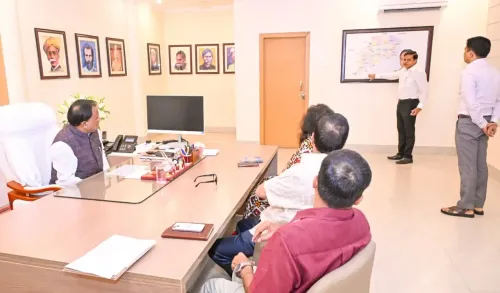
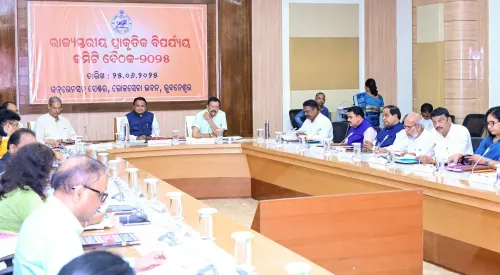
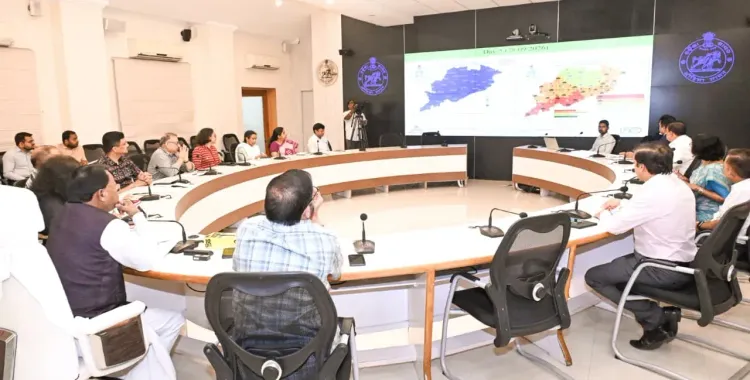
With a potential cyclone bearing down on Odisha's southern coast, Chief Minister Mohan Charan Majhi chaired a high-level emergency review at Lok Seva Bhavan, Bhubaneswar, on Saturday, October 24, 2026 — issuing a sweeping set of directives to put the state on full war footing before landfall.
Schools shut, five districts on high alert
The most immediate impact for ordinary Odhias: all schools, colleges, and anganwadi centres in Ganjam, Gajapati, Rayagada, Koraput, and Malkangiri districts will remain closed on October 28 and 29. These five southern districts sit squarely in the Bay of Bengal's cyclone corridor — Ganjam alone has faced the brunt of multiple major storms over the past two decades. For the remaining districts, the Chief Minister's Office directed respective District Collectors to assess local conditions and announce institutional closures at their discretion.
302 rescue teams and a medical supply chain built for the worst
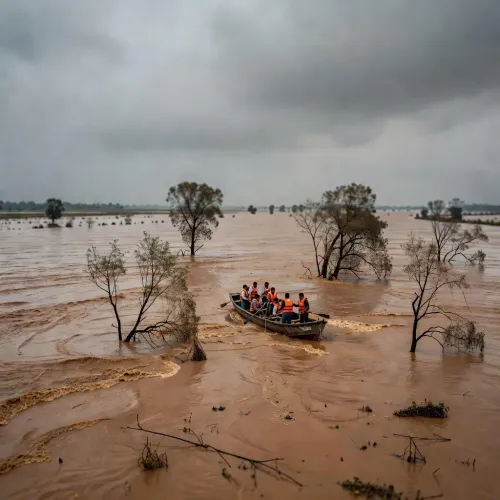
The state has pre-positioned 302 rescue and relief teams across vulnerable zones — a number that reflects the scale of the threat being anticipated. Authorities have been ordered to begin evacuating residents from low-lying areas to designated safe shelters immediately, without waiting for conditions to deteriorate. Pregnant women and patients are to be transferred to health facilities as a priority.
Health centres in potentially affected areas have been specifically directed to stock anti-snake venom injections, essential medicines, and medical kits — a detail that signals how granular Odisha's cyclone playbook has become. Flooding routinely drives snakes into human habitation, making anti-venom a frontline necessity in post-cyclone medical response.
Odisha's 'Whole of Government' model kicks in
CM Majhi explicitly invoked a 'Whole of Government Approach' — directing every engineering department to remain on standby for rapid road clearance, restoration of electricity supply, and resumption of drinking water services the moment the storm passes. The instruction to treat post-cyclone recovery on a 'yuddhakaalin bhitti' (war footing) basis underscores the urgency.
Odisha's institutional muscle for exactly this moment was built the hard way. After the catastrophic 1999 Super Cyclone, the state established the Odisha State Disaster Management Authority (OSDMA) — one of India's first dedicated state-level disaster bodies. Annual cyclone-season reviews, pre-positioned teams, and inter-department coordination protocols have since become a template other Indian coastal states have sought to replicate. The five districts named in Monday's closure order have featured in virtually every cyclone-response activation since then.
Farmers in the region face a particularly acute risk: late-October coincides with the kharif harvest window, and crop damage from a cyclone at this stage can be devastating. The Chief Minister's directive specifically called for crop protection measures to be integrated into the recovery plan from day one.
As the India Meteorological Department tracks the developing system and District Collectors sharpen their local orders, Odisha is not waiting to react — it is already moving.
Point of View
Chairing a high-profile review at Lok Seva Bhavan and explicitly invoking a 'Whole of Government' framework is also a political signal: his BJP-led administration, in power since mid-2024, is keen to demonstrate institutional command over a domain where Odisha's reputation is hard-won. The granular detail — anti-snake venom stocks, farmer crop protection, district collector discretion — suggests the state's OSDMA-era protocols are being executed rather than improvised. The real test, as always, will be the speed and equity of post-landfall restoration, particularly for the farming communities whose kharif harvest sits directly in the storm's path.
NationPress
24 Oct 2026
Frequently Asked Questions
Which districts in Odisha will have schools closed due to the cyclone?
Schools, colleges, and anganwadi centres in Ganjam, Gajapati, Rayagada, Koraput, and Malkangiri districts will remain closed on October 28 and 29. District Collectors in other districts will decide on closures based on local conditions.
How many rescue teams has Odisha deployed for the cyclone?
Odisha has pre-positioned 302 rescue and relief teams across vulnerable zones as part of CM Majhi's cyclone preparedness directives issued on October 24, 2026.
What is the 'Whole of Government Approach' CM Majhi mentioned?
It is a coordinated framework requiring all government departments — engineering, health, revenue, and others — to work in sync rather than in silos, ensuring faster rescue, restoration, and recovery after a disaster.
Why does Odisha stock anti-snake venom during cyclones?
Cyclone flooding drives snakes out of their habitats and into human settlements, making snakebite a significant post-cyclone medical emergency. Odisha's protocol mandates anti-venom stocks at health centres in affected areas as a precautionary measure.
What is OSDMA and how does it help Odisha during cyclones?
The Odisha State Disaster Management Authority (OSDMA) was established in 1999 after the Super Cyclone to coordinate preparedness and response. It has made Odisha one of India's most disaster-resilient states through pre-positioned teams, early evacuation protocols, and inter-department coordination.