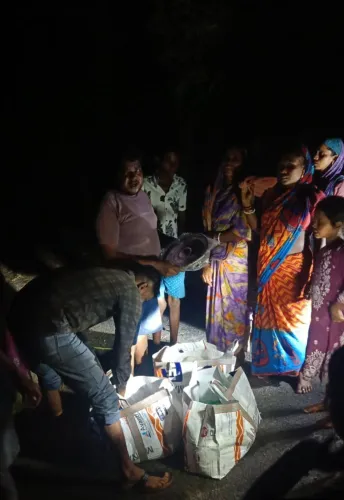
CM Majhi Releases ₹19 Crore Relief for 8 Cyclone-Hit Odisha Districts
Synopsis
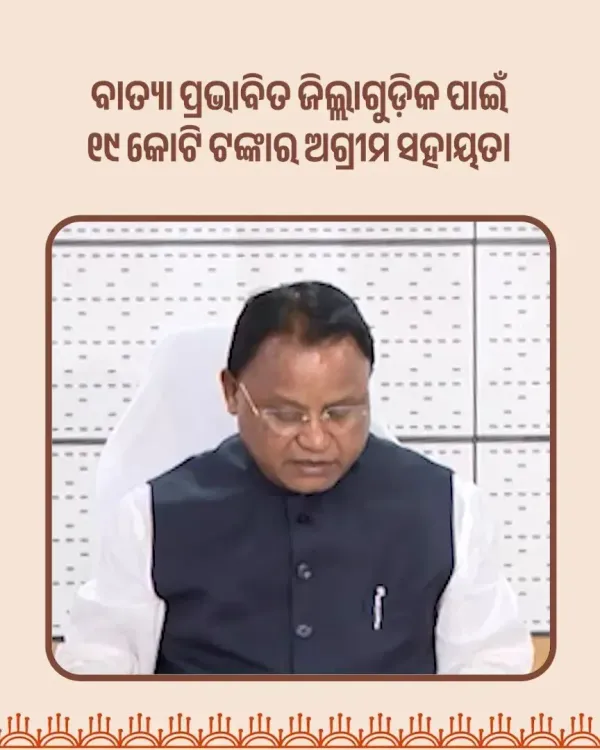
Odisha Chief Minister Mohan Charan Majhi has released ₹19 crore in advance relief for eight cyclone-affected districts, with ground-level monitoring and active coordination with the central government and neighbouring states confirmed.
Key Takeaways
₹19 crore in advance relief funds has been released for eight cyclone-affected districts in Odisha.
The state government is maintaining close ground-level surveillance across all impacted areas.
Continuous coordination is underway with the central government and neighbouring states .
CM Mohan Charan Majhi reaffirmed the government's commitment to the protection of every affected citizen.
The advance relief mechanism follows Odisha's established cyclone response playbook, rooted in practices developed since Cyclone Fani (2019) .
Further damage assessments are expected, which could lead to formal requests for additional NDRF assistance .
When a cyclone tears through Odisha's coast, the first hours matter most — and Odisha Chief Minister Mohan Charan Majhi has moved fast, releasing an advance relief fund of ₹19 crore for eight cyclone-affected districts as ground-level operations get underway on Wednesday, 28 October 2026.
₹19 Crore in Advance Relief — What It Covers
The funds, released ahead of full damage assessments, are intended to finance immediate relief operations at the district level. This mechanism — disbursing advance amounts from the State Disaster Response Fund before final tallies come in — is a well-established part of Odisha's cyclone playbook, designed to ensure that local administrations are not waiting on paperwork while communities need food, shelter, and rescue.
CM Majhi confirmed the release on X, stating that the government is committed to the safety of every citizen: 'ପ୍ରତ୍ୟେକ ନାଗରିକଙ୍କ ସୁରକ୍ଷା ପାଇଁ ସରକାର ପ୍ରତିଶ୍ରୁତିବଦ୍ଧ' — 'The government is committed to the protection of every citizen.'
Ground Surveillance and Cross-Border Coordination in Motion
Beyond the money, Majhi stressed that close ground-level surveillance is being maintained across affected areas, with continuous coordination running in two directions: with the central government in New Delhi and with neighbouring states — a critical step for cyclones whose wind and rain do not respect state borders.
Odisha has honed this coordination architecture over decades of cyclone experience, most visibly after Cyclone Fani in 2019, when advance SDRF disbursements and Centre-state synchronisation were credited with keeping the humanitarian response ahead of the storm's aftermath. The current activation follows that same template.
Odisha's Institutional Edge in Disaster Response
Sitting on the Bay of Bengal, Odisha is one of India's most cyclone-exposed states — and over successive administrations, it has built a response system that disaster-management experts frequently cite as a benchmark. Advance relief releases, pre-positioned teams, and real-time coordination with the National Disaster Response Force (NDRF) are now standard operating procedure.
CM Majhi, who took office in June 2024 after the BJP's victory in the state elections, is now navigating one of the most demanding tests any chief minister faces: keeping eight districts functional while the full scale of damage comes into view. The next critical milestone will be official damage assessments that could trigger a formal request for additional assistance under NDRF guidelines.
Eight districts. Nineteen crore. The relief clock is already running.
Point of View
Visible, fast-moving disaster response is a high-visibility opportunity to build public trust. The emphasis on Centre-state coordination also aligns with BJP's broader governance messaging of 'cooperative federalism.' The critical next test is whether damage assessments translate into adequate central funds — a moment that will reveal the real depth of that coordination.
NationPress
29 Oct 2026
Frequently Asked Questions
How much relief has Odisha released for cyclone-affected districts?
Odisha CM Mohan Charan Majhi has released ₹19 crore as advance relief for eight cyclone-affected districts to support immediate on-ground response operations.
Which districts in Odisha are cyclone-affected in 2026?
CM Majhi's post confirms that eight districts are currently affected, but the specific names of the districts have not been officially listed in the post.
What is the SDRF and how does Odisha use it during cyclones?
The State Disaster Response Fund (SDRF) is a state-level fund used to finance immediate disaster relief. Odisha routinely releases advance amounts from the SDRF before full damage assessments are completed, ensuring district administrations can act without delay.
What is Odisha's track record in cyclone disaster management?
Odisha is widely regarded as having one of India's most robust cyclone-response systems, built over decades of experience. The state's response to Cyclone Fani in 2019 — involving advance fund releases and tight Centre-state coordination — is frequently cited as a benchmark.
Who is Mohan Charan Majhi?
Mohan Charan Majhi is the Chief Minister of Odisha, a BJP leader who assumed office in June 2024 after the party's victory in the state assembly elections.