CM Majhi pays tribute to Swami Lakshmanananda, hails new biography
Synopsis
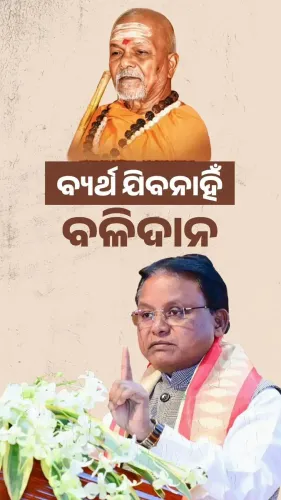
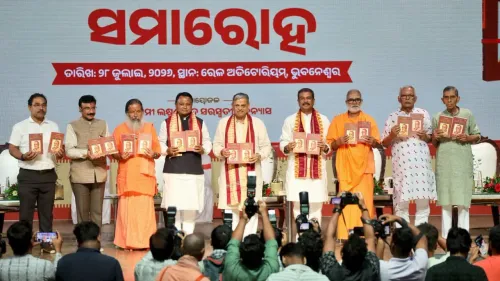
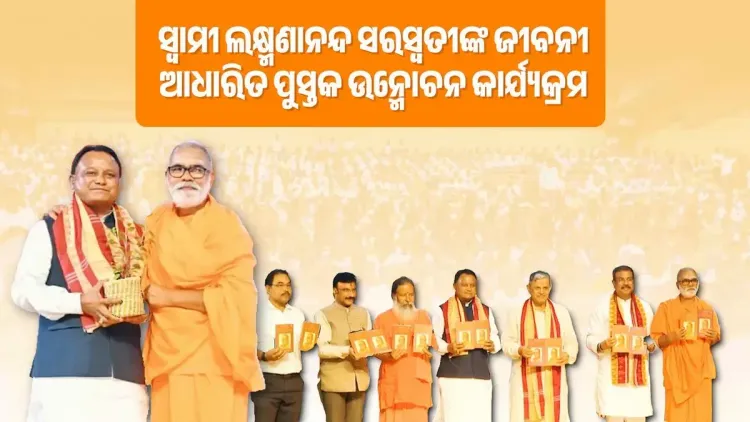
Odisha CM Mohan Charan Majhi paid tribute to slain Hindu monk Swami Lakshmanananda Saraswati on 29 July 2026, calling him an eternal inspiration and endorsing a new book, 'Vedanta Keshari Swami Lakshmanananda Saraswati: Kriti O Byaktitwa', to carry his legacy forward.
Key Takeaways
Odisha CM Mohan Charan Majhi posted a tribute to Swami Lakshmanananda Saraswati on 29 July 2026 .
The swami was assassinated on 23 August 2008 in Kandhamal district , triggering widespread communal violence in Odisha.
Majhi described the swami's life as an 'eternal inspiration of renunciation, penance, service, spiritual practice, and national consciousness.' A new book titled 'Vedanta Keshari Swami Lakshmanananda Saraswati: Kriti O Byaktitwa' compiles the monk's works and personality.
The Chief Minister framed the book as a vehicle to transmit the swami's ideals of national devotion and social service to future generations.
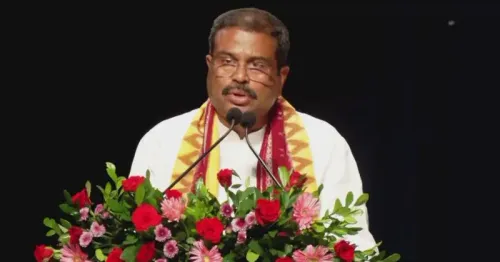
A monk who walked Odisha's tribal heartland for decades, championing Vedic education and resisting religious conversions, is being remembered anew. Odisha Chief Minister Mohan Charan Majhi on Wednesday, 29 July 2026 paid a solemn tribute to Swami Lakshmanananda Saraswati, calling the slain ascetic an eternal inspiration — and spotlighting a new book that seeks to carry his legacy forward.
Writing in Odia, CM Majhi described the swami's life as 'tyaga, tapasya, seva, sadhana o rashtrachetanara eka chirantana prerana' — 'an eternal inspiration of renunciation, penance, service, spiritual practice, and national consciousness.' He called him not merely a monk, but 'a consciousness of an era' devoted to protecting Sanatana values and dedicating himself to the nation.
The ascetic who shaped Kandhamal — and its aftermath
Swami Lakshmanananda Saraswati spent roughly five decades working among tribal communities in Odisha's interior, establishing schools, promoting Vedic studies, and opposing religious conversions. He was assassinated on 23 August 2008 in Kandhamal district — a killing that detonated into one of independent India's most serious episodes of communal violence, reshaping political and social discourse in Odisha for years that followed.
The swami's death anniversary and the passions it still stirs mean his name carries weight far beyond a simple tribute. For BJP governments in Odisha, invoking his memory is also a statement about cultural protection and tribal welfare — a thread that runs through the party's broader Sanatana Dharma messaging.
'Vedanta Keshari': a life put into print
The centrepiece of CM Majhi's post is a book titled 'Vedanta Keshari Swami Lakshmanananda Saraswati: Kriti O Byaktitwa' — translating roughly as 'Works and Personality.' The volume, the Chief Minister wrote, will carry the swami's ideals of national devotion and social service to future generations, opening 'a new chapter of inspiration.'
Majhi expressed confidence that the book would ensure the swami's message of rashtrabhakti (national devotion) and samajseva (social service) reaches the next generation — framing it as a living document, not a memorial relic.
For Odisha's tribal belts, where the swami's educational and cultural work still echoes, such a publication carries genuine resonance. The kicker is simple: Swami Lakshmanananda Saraswati was silenced in 2008, but the Chief Minister of his home state is making sure the silence does not last.
Point of View
Embedding it in educational and cultural spaces. Watch for whether an official book-launch event follows, which would amplify the political signal considerably.
NationPress
28 Oct 2026
Frequently Asked Questions
Who was Swami Lakshmanananda Saraswati?
Swami Lakshmanananda Saraswati was a Hindu ascetic who worked for roughly five decades among tribal communities in Odisha, establishing schools, promoting Vedic education, and opposing religious conversions. He was assassinated on 23 August 2008 in Kandhamal district, an event that triggered serious communal violence in the state.
Why did Odisha CM Mohan Majhi post about Swami Lakshmanananda?
CM Majhi posted a tribute to Swami Lakshmanananda Saraswati on 29 July 2026 to honour the monk's legacy of service, renunciation, and national consciousness, and to promote a new book — 'Vedanta Keshari Swami Lakshmanananda Saraswati: Kriti O Byaktitwa' — documenting his life and works.
What is the book 'Vedanta Keshari Swami Lakshmanananda Saraswati: Kriti O Byaktitwa'?
It is a book compiling the life, works, and personality of Swami Lakshmanananda Saraswati, intended to carry his ideals of national devotion and social service to future generations, as mentioned by CM Majhi in his post.
What happened in Kandhamal in 2008?
Following the assassination of Swami Lakshmanananda Saraswati on 23 August 2008 in Kandhamal district, Odisha witnessed one of its most serious episodes of communal violence, which shaped political and social discourse in the state for years afterward.
What does CM Majhi mean by 'Sanatana values' in his tribute?
CM Majhi used the phrase to describe the ancient Hindu philosophical and ethical framework that Swami Lakshmanananda Saraswati devoted his life to protecting and propagating, particularly among tribal communities in Odisha.