CM Majhi Marks World Heart Day With Health Pledge for Odisha
Synopsis
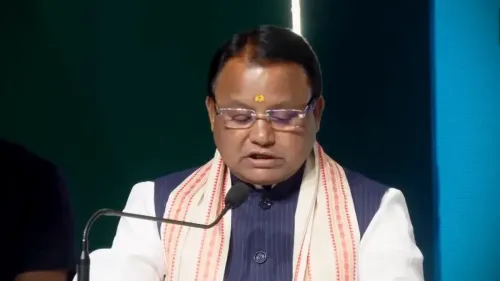
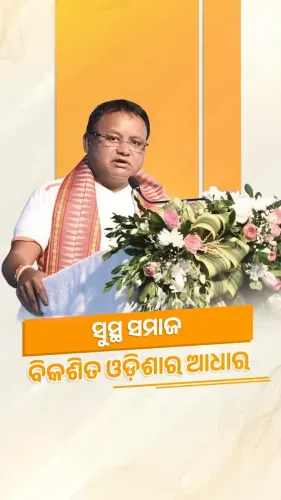
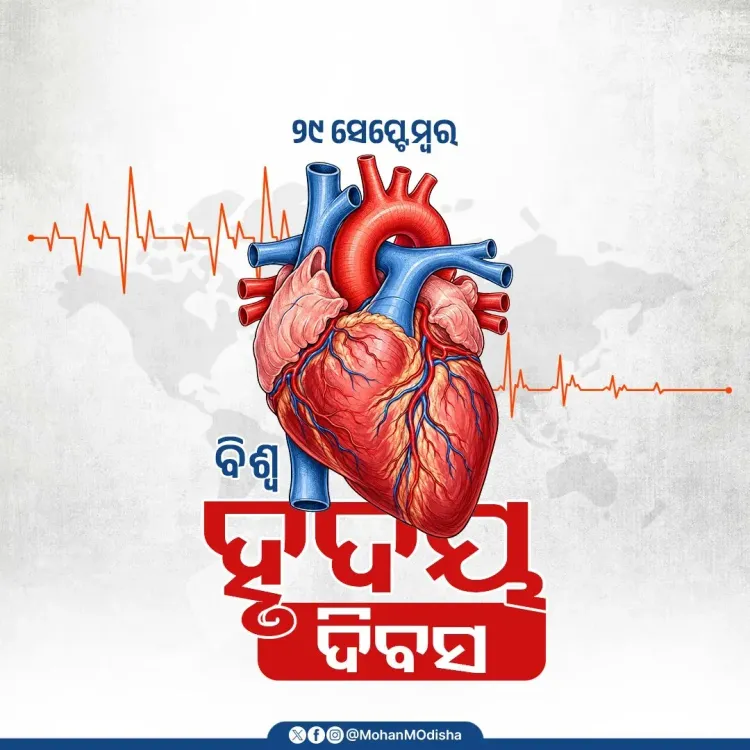
Odisha Chief Minister Mohan Charan Majhi used World Heart Day on 29 September 2026 to call on citizens to adopt regular exercise, balanced diets, stress-free routines, and timely check-ups — framing a healthy heart as the bedrock of a prosperous Odisha.
Key Takeaways
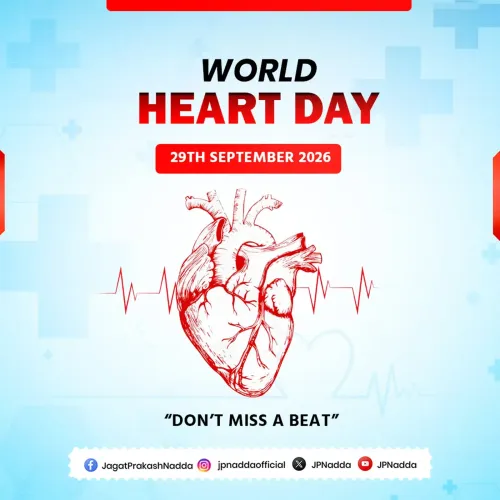
World Heart Day 2026 : CM Majhi posted his appeal on 29 September 2026 , the global observance date.
He urged four specific habits: regular exercise, balanced diet, stress-free routine, and timely health check-ups .
The message was posted in Odia and addressed all residents of Odisha.
The appeal aligns with India's National Health Policy 2017 focus on preventing non-communicable diseases through lifestyle change.
Cardiovascular disease is a rising concern in Odisha, particularly in rural districts with limited access to cardiac care.
The post signals potential follow-through via state-level health screening camps and community outreach in coming weeks.
On World Heart Day, 29 September 2026, Odisha Chief Minister Mohan Charan Majhi called on every resident of the state to treat a healthy heart as the foundation of a disease-free life and a prosperous society — and to act on that belief starting today.
Writing in Odia, CM Majhi urged citizens to adopt four concrete habits: 'niyamita byayama, santulita ahara, chapamukta dinacharyya o samayochita swasthya pariksha' — regular exercise, a balanced diet, a stress-free daily routine, and timely health check-ups. His message closed with a direct call to collective action: 'Let us be aware, embrace a better lifestyle, and join in building a healthy and disease-free Odisha.'
Why cardiovascular disease is Odisha's — and India's — growing concern
World Heart Day, observed every 29 September by the World Heart Federation, exists because cardiovascular disease remains the world's leading cause of death. In India, the burden is accelerating — driven by sedentary urban lifestyles, processed diets, rising stress, and a persistent gap in routine screening, especially outside metropolitan centres. Odisha, an eastern state with a large rural population, faces this challenge acutely: access to timely cardiac care in interior districts remains uneven.
India's National Health Policy 2017 had already flagged the prevention of non-communicable diseases — heart conditions chief among them — as a national priority, emphasising lifestyle intervention over reactive treatment. State governments have since been expected to translate that framework into grassroots awareness. CM Majhi's message fits squarely within that national architecture.
Awareness as policy — and what follows on the ground
Routine health-day messages from chief ministers are sometimes dismissed as ceremonial. But they carry a secondary function: they signal to district health administrations where political attention is pointed, often prompting the scheduling of screening camps and community outreach drives in the weeks that follow. The watch-point in Odisha is whether this message translates into state-level heart health screening integrated into existing welfare infrastructure.
For now, CM Majhi's appeal is a clear, public directive — not a new scheme, but a leadership nudge toward prevention. In a state building toward its own vision of a 'healthy Odisha,' that nudge, delivered on the world's most-watched cardiac awareness day, is a signal worth tracking.
Point of View
Diet, stress management, screening — mirrors the language of the National Health Policy 2017, suggesting deliberate alignment with the Centre's non-communicable disease framework. For a state like Odisha, where rural cardiac care infrastructure remains a work in progress, awareness campaigns led from the top carry real mobilisation value. The message will matter most if it triggers concrete follow-up: district-level screening drives, community health worker outreach, and integration with existing welfare schemes.
NationPress
29 Sept 2026
Frequently Asked Questions
When is World Heart Day observed?
World Heart Day is observed every year on 29 September , as designated by the World Heart Federation, to raise global awareness about cardiovascular disease prevention.
What did Odisha CM Mohan Majhi say on World Heart Day 2026?
CM Majhi urged Odisha residents to adopt regular exercise, a balanced diet, a stress-free daily routine, and timely health check-ups, calling these the foundation of a healthy heart and a prosperous society.
What is the National Health Policy 2017's stance on heart disease?
India's National Health Policy 2017 prioritises prevention of non-communicable diseases, including cardiovascular conditions, through lifestyle interventions and community-level awareness rather than solely reactive treatment.
Why is heart health a concern in Odisha?
Odisha has a large rural population with uneven access to cardiac care in interior districts, making preventive awareness campaigns especially important as cardiovascular disease rates rise across India.
What should Odisha residents do to protect their heart health?
CM Majhi specifically recommended four steps: regular physical exercise, a balanced and nutritious diet, a stress-free daily routine, and periodic health check-ups to catch problems early.