CM Mohan Yadav: 20.5 Lakh Free Registries Under MP Scheme
Synopsis
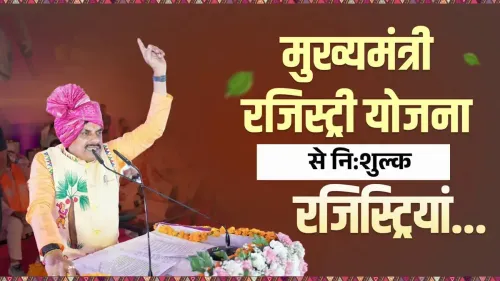
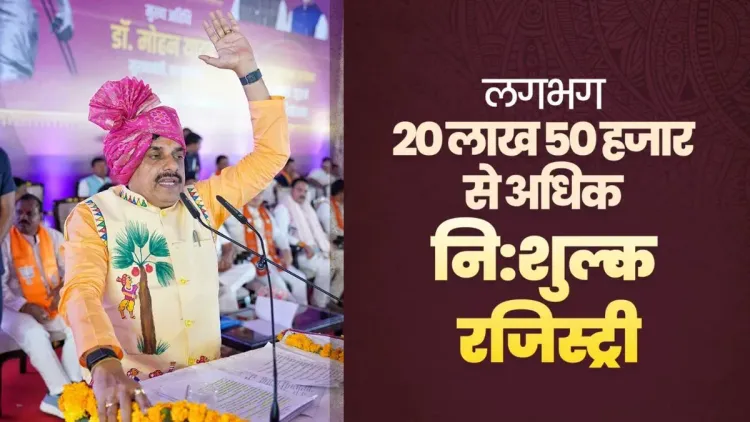
Madhya Pradesh CM Dr. Mohan Yadav announced on Janjatiya Gaurav Diwas that over 20.5 lakh free property registrations have been completed under the Mukhyamantri Registry Yojana, granting legal home ownership to rural and tribal families.
Key Takeaways
More than 20 lakh 50 thousand property registrations completed under the Mukhyamantri Registry Yojana in Madhya Pradesh.
The scheme provides free property registration to rural and tribal households to formalise legal home ownership.
Mohan Yadav made the announcement on Janjatiya Gaurav Diwas, 15 November 2026 , timed to the national tribal welfare observance.
Janjatiya Gaurav Diwas has been observed annually since 2021 on the birth anniversary of tribal leader Birsa Munda.
Legal land titles help tribal and rural families access formal credit and reduce land disputes.
The scheme aligns with national land record modernisation efforts and targeted tribal empowerment policies.
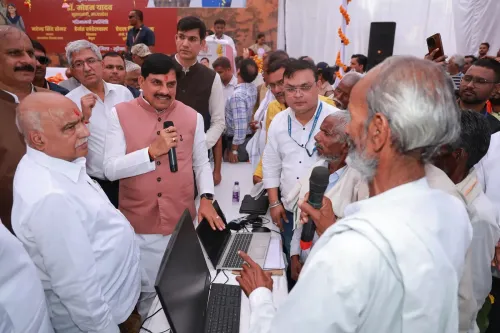
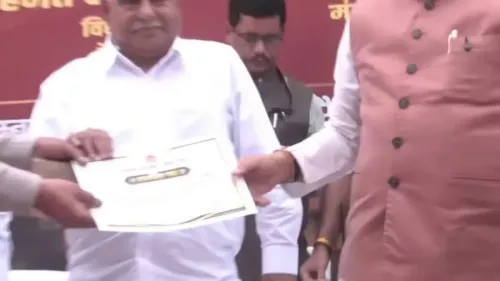
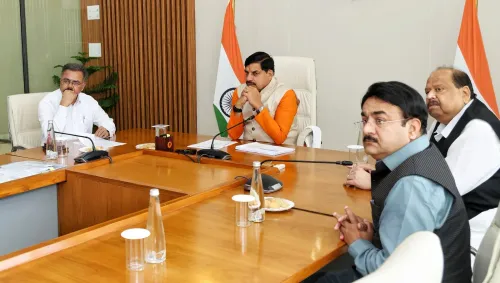
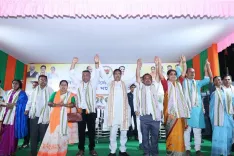
On Janjatiya Gaurav Diwas, 15 November 2026, Madhya Pradesh Chief Minister Dr. Mohan Yadav announced a landmark milestone: more than 20 lakh 50 thousand property registrations have been completed under the state's Mukhyamantri Registry Yojana, a scheme that grants legal ownership of homes to rural and tribal families — entirely free of cost.
What the Mukhyamantri Registry Yojana does
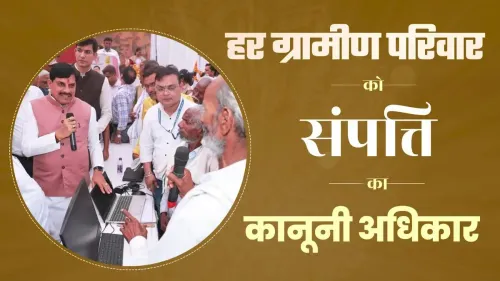
At its core, this scheme solves a problem that has quietly plagued India's villages for generations: families living in homes they built, on land they inherited, but holding koi kagaz nahin — no legal paper to prove it. The Mukhyamantri Registry Yojana eliminates the registration fees and procedural barriers that kept formal ownership out of reach for rural and tribal households in Madhya Pradesh.
CM Yadav put the call to action plainly: 'Come forward and get your property registered for free — claim your right to ownership.' For beneficiaries, that piece of paper is not just symbolic. Legal title unlocks access to formal credit, reduces land disputes with neighbours and local authorities, and gives families a documented stake in what they have always called their own.
Why Janjatiya Gaurav Diwas is the right stage
Janjatiya Gaurav Diwas is observed every 15 November — the birth anniversary of tribal icon Birsa Munda — as a national day to honour tribal leaders and renew commitment to tribal welfare. Observed annually since 2021, it has become a moment when both state and central governments spotlight programmes directed at Adivasi communities.
Anchoring the registry milestone announcement to this day is deliberate. Madhya Pradesh has one of the country's largest tribal populations, and land formalisation sits at the heart of economic inclusion for these communities. A title deed is, in many ways, a foundation — for a loan, for security, for the next generation.
Land formalisation as a wider empowerment push
The drive to digitise and formalise land records has been a running priority across Indian states, feeding into national programmes on land record modernisation. What the Mukhyamantri Registry Yojana adds is the removal of cost as a barrier — a targeted intervention for populations that have historically been most excluded from property documentation systems.
Reduced land disputes, easier access to institutional credit, and a clearer picture of rural land ownership are the downstream stakes. The numbers so far — over 20.5 lakh registrations — suggest meaningful uptake, though the real test will come in measurable reductions in rural land litigation and growth in formal borrowing among newly titled families.
On a day built to celebrate tribal dignity, Madhya Pradesh is making the argument that legal ownership of one's home is not an administrative detail — it is dignity made concrete.
Point of View
Announced on Janjatiya Gaurav Diwas, reflects a calculated effort by the Madhya Pradesh government to position land formalisation as a core tribal empowerment plank ahead of an ongoing welfare narrative. Linking a welfare delivery number to a symbolically charged national observance amplifies visibility and reinforces the BJP's tribal outreach messaging. The deeper policy logic — that formal title is a prerequisite for credit access and dispute resolution — is sound and aligns with decades of land reform thinking. The more demanding question is whether 20.5 lakh registrations translate into measurable improvements in rural borrowing or a reduction in land litigation, metrics that will ultimately define whether the scheme delivers lasting change.
NationPress
15 Nov 2026
Frequently Asked Questions
What is the Mukhyamantri Registry Yojana in Madhya Pradesh?
The Mukhyamantri Registry Yojana is a Madhya Pradesh government scheme that provides free property registration to rural and tribal households, granting them legal ownership of their homes at no cost.
How many registrations have been done under Mukhyamantri Registry Yojana?
As of November 2026, more than 20 lakh 50 thousand property registrations have been completed under the scheme, according to CM Dr. Mohan Yadav.
Who is eligible for free property registration under the MP scheme?
Rural households and tribal (Janjatiya) families in Madhya Pradesh are the primary beneficiaries of the free property registration under the Mukhyamantri Registry Yojana.
What is Janjatiya Gaurav Diwas and when is it observed?
Janjatiya Gaurav Diwas is observed on 15 November every year to honour tribal leaders and promote tribal welfare and cultural pride. It falls on the birth anniversary of tribal icon Birsa Munda and has been observed nationally since 2021.
What are the benefits of getting property registered under the Mukhyamantri Registry Yojana?
Legal registration provides formal ownership proof, which helps families access institutional credit, reduces land disputes, and secures property rights for the next generation — all free of charge under the scheme.