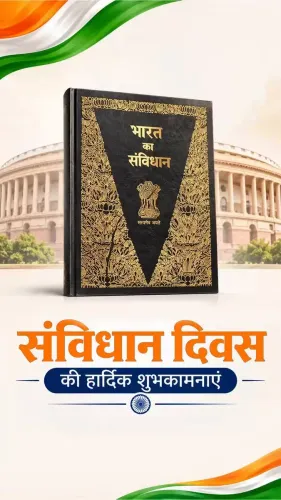
CM Mohan Yadav hails Constitution as nation's pathfinder
Synopsis
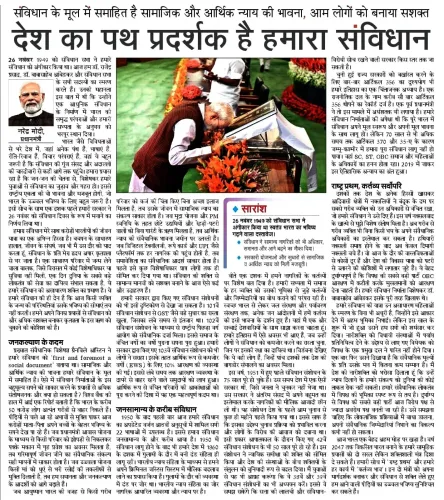
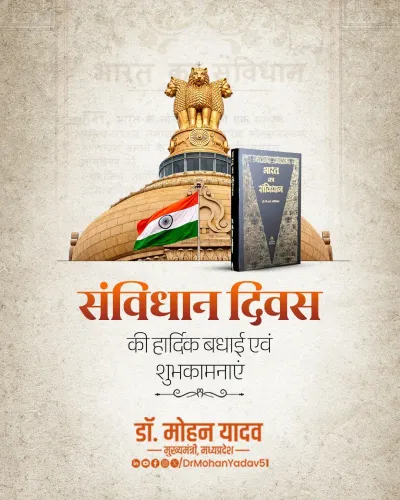
Madhya Pradesh Chief Minister Dr. Mohan Yadav observed Samvidhan Gaurav Diwas by sharing remarks he attributed to Prime Minister Narendra Modi. The quoted message called the Constitution the nation's pathfinder and cited a child from an ordinary family rising to serve the largest democracy as proof of its power. The post landed on the anniversary of the 1949 adoption.
Key Takeaways
Madhya Pradesh Chief Minister Dr.
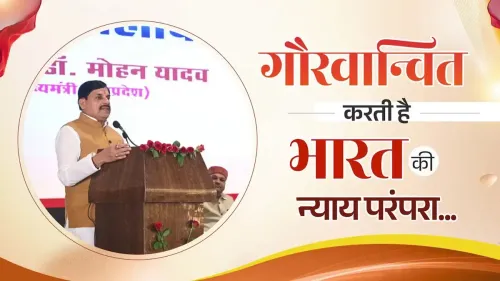
Mohan Yadav posted on 26 November 2026 to mark Samvidhan Gaurav Diwas.
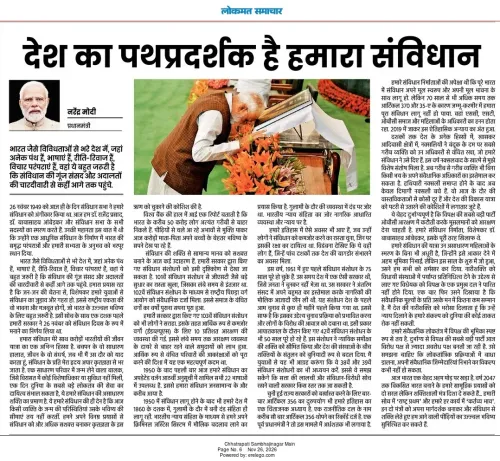
He quoted Prime Minister Narendra Modi calling the Constitution the nation's pathfinder.
The quoted text said a child born in an ordinary family, with no inherited privilege, can serve the largest democracy.
The Constitution of India was adopted on 26 November 1949 and came into force on 26 January 1950.
Mohan Yadav became Chief Minister of Madhya Pradesh in December 2023 after serving as a state minister.
Madhya Pradesh Chief Minister Dr. Mohan Yadav put a stark social-mobility claim at the centre of Samvidhan Gaurav Diwas on 26 November 2026: a child born with no inherited privilege can still serve the world's largest democracy. He quoted Prime Minister Narendra Modi calling the Constitution the nation's pathfinder and an inseparable companion to the life journeys of crores of Indians.
The ordinary child and the largest democracy
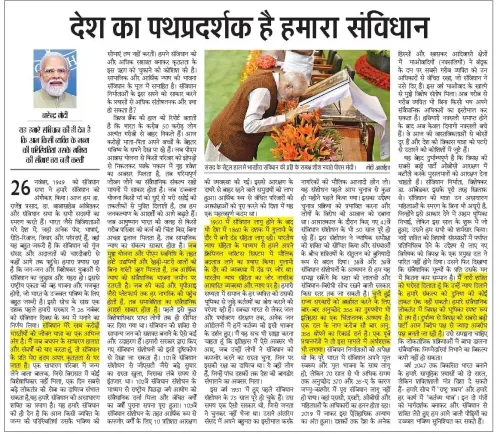
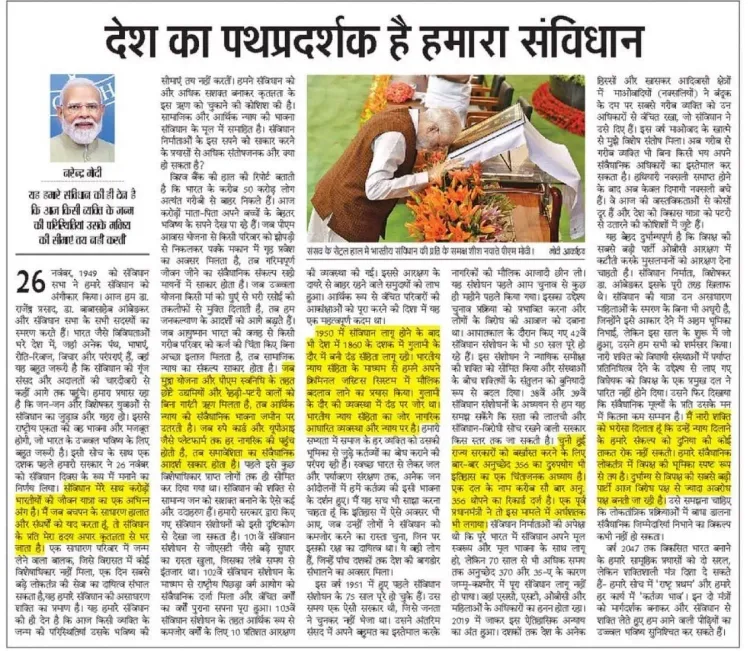
Dr. Yadav opened with a line he attributed to the Prime Minister: देश का पथप्रदर्शक है हमारा संविधान ('our Constitution is the pathfinder of the nation').
The rest of the quoted message framed the document as an integral part of the life journey of crores of Indians. A child born in an ordinary family, who inherited no special privileges, can one day take on the responsibility of serving the largest democracy. That, the post said, is proof of the Constitution's extraordinary power.
The Chief Minister tagged @narendramodi and used the hashtag #SamvidhanGauravDiwas.
From 26 November 1949 to Gaurav Diwas
India's Constituent Assembly adopted the Constitution on 26 November 1949. The text came into force on 26 January 1950, the date the republic now marks as Republic Day.
The November anniversary is observed nationally as Constitution Day, or Samvidhan Gaurav Diwas. Dr. Mohan Yadav, who took office as Chief Minister in December 2023 after serving as a state minister, joined that annual calendar from Madhya Pradesh.
An annual mobility refrain
BJP leaders at the Centre and in the states routinely use 26 November to highlight the document's role in enabling upward mobility within India's democracy. This year's theme, as relayed by the Madhya Pradesh Chief Minister, was social mobility without inherited privilege.
Ordinary citizens are the named subjects of that story: crores of life journeys, not a legal text locked in a vault.
The next round of 26 November observances will test the same sentence again, not as a slogan but as a lived path for the next child born without privilege.
Point of View
Not inherited privilege, is the ladder into public office. Dr. Mohan Yadav's message does not unveil a new law or scheme; it rehearses that mobility narrative through Prime Minister Narendra Modi's attributed words. The image of a child from an ordinary family serving the largest democracy is both a constitutional claim and a political argument about who gets to lead. The watchpoint is whether later 26 November events move from tribute into specific references to constitutional provisions in Parliament or in state assemblies.
NationPress
26 Nov 2026
Frequently Asked Questions
What is Samvidhan Gaurav Diwas?
Samvidhan Gaurav Diwas, also called Constitution Day, is observed every year on 26 November to mark the adoption of the Constitution of India in 1949. The document came into force on 26 January 1950, which India marks as Republic Day.
What did CM Mohan Yadav post on Constitution Day 2026?
Madhya Pradesh Chief Minister Dr. Mohan Yadav quoted Prime Minister Narendra Modi, calling the Constitution the nation's pathfinder. He shared a message that a child born in an ordinary family without inherited privilege can one day serve the largest democracy.
When was the Indian Constitution adopted and when did it come into force?
The Constituent Assembly adopted the Constitution of India on 26 November 1949. It came into effect on 26 January 1950.
Who is Dr. Mohan Yadav?
Dr. Mohan Yadav is the Chief Minister of Madhya Pradesh and a BJP leader. He assumed office in December 2023 after serving as a state minister.
Why do political leaders post on Constitution Day?
BJP leaders at central and state levels routinely issue statements on 26 November highlighting the Constitution's role in enabling upward mobility. The posts form part of a recurring annual pattern of public messaging on constitutional principles.