CM Mohan Yadav says MP Vidhan Sabha passed UCC
Synopsis
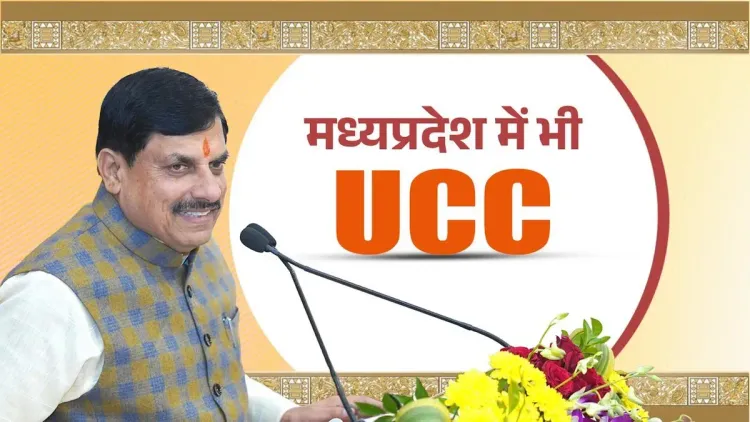
Madhya Pradesh Chief Minister Dr. Mohan Yadav said on Constitution Day that the Vidhan Sabha had passed a Uniform Civil Code. He tied the step to women's rights and one country, one law, thanked Prime Minister Narendra Modi, and said Parliament would one day enact UCC nationwide.
Key Takeaways
Madhya Pradesh Chief Minister Dr.
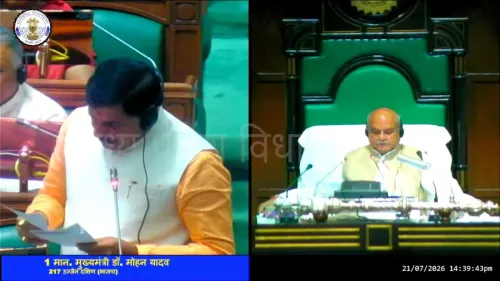
Mohan Yadav on 26 November 2026 said the state Vidhan Sabha had passed a Uniform Civil Code.
He linked the code to women's rights and the slogan ek desh, ek vidhan, ek pradhan (one country, one law, one leader).
He thanked Prime Minister Narendra Modi, saying several state governments have moved toward UCC under that leadership.
He said a day will come when Parliament passes UCC for the entire country.
Article 44 of the Constitution, adopted in 1950 , directs the State to secure a Uniform Civil Code.
Goa has retained a uniform civil code based on Portuguese civil law since 1961 .
Madhya Pradesh Chief Minister Dr. Mohan Yadav on 26 November 2026 said the state's Vidhan Sabha had passed a Uniform Civil Code, framing the moment as a win for women's rights on Constitution Day. He tied the announcement to the idea of one country, one law, and thanked Prime Minister Narendra Modi for pushing states down that path.
In the post, Dr. Yadav wrote that he was proud the Madhya Pradesh Legislative Assembly had passed the UCC. When talk turns to एक देश, एक विधान, एक प्रधान ('one country, one law, one leader'), he said, the same principle applies in the context of sisters' rights. He thanked the Prime Minister, under whose leadership several state governments have taken steps toward a Uniform Civil Code, and added that a day will surely come when Parliament passes UCC for the whole country.
Yadav's Constitution Day post on the UCC
The message landed on Constitution Day, observed each year on 26 November. He tagged it Uniform Civil Code and UCC, placing a state legislative claim inside a national constitutional argument. The post did not list the bill's clauses, a voting margin, or a date of commencement.
Article 44 and Goa's existing civil code
Article 44 of the Constitution, adopted in 1950, directs the State to endeavour to secure a Uniform Civil Code for citizens. It is a Directive Principle, not an immediately enforceable right. Personal laws on marriage, divorce, inheritance and adoption still differ by religious community across much of India.
Goa has retained a uniform civil code based on Portuguese civil law since its integration into India in 1961. The BJP's election manifestos of 2014 and 2019 committed to a nationwide UCC. State assemblies have become the arena where that manifesto promise is tested first.
State votes as a path to a national statute
Dr. Yadav placed women's rights at the centre of the Madhya Pradesh claim and treated uniform application of law across religious lines as the larger prize. Any such code would recast personal law for women and for religious communities. Other BJP-ruled states have moved in the same direction, using assembly bills as incremental steps toward a possible national law.
The next tests are whether more states table similar codes, and whether a Union draft ever reaches Parliament. Until then, every state announcement keeps Article 44 on the political floor.
Point of View
Dr. Mohan Yadav folded a Vidhan Sabha claim into the BJP's long Article 44 project. State-by-state codes let the party test gender-equality rhetoric and legal uniformism without waiting for a parliamentary majority on a national bill. The unresolved question is whether those state statutes become a template for Parliament or remain a patchwork that itself sits uneasily with the idea of one law.
NationPress
26 Nov 2026
Frequently Asked Questions
What did Mohan Yadav say about the Uniform Civil Code?
Dr. Mohan Yadav said he was proud that the Madhya Pradesh Legislative Assembly had passed a Uniform Civil Code. He tied the step to women's rights, thanked Prime Minister Narendra Modi, and said Parliament would one day enact UCC for the whole country.
What is the Uniform Civil Code in India?
A Uniform Civil Code is a proposed set of common personal laws on marriage, divorce, inheritance and adoption for all citizens, regardless of religion. It is mentioned in Article 44 of the Constitution as a Directive Principle.
What is Article 44 of the Indian Constitution?
Article 44, adopted in 1950, directs the State to endeavour to secure a Uniform Civil Code for the citizens of India. It is a Directive Principle, not an immediately enforceable fundamental right.
Does any Indian state already have a Uniform Civil Code?
Goa has retained a uniform civil code based on Portuguese civil law since its integration into India in 1961. Other states have discussed or moved bills as part of the wider Article 44 debate.
When did Mohan Yadav post about the Madhya Pradesh UCC?
He posted on 26 November 2026, which is Constitution Day, using the tags Constitution Day, Uniform Civil Code and UCC.