CM Mohan Yadav: MP passes UCC with full legislative process
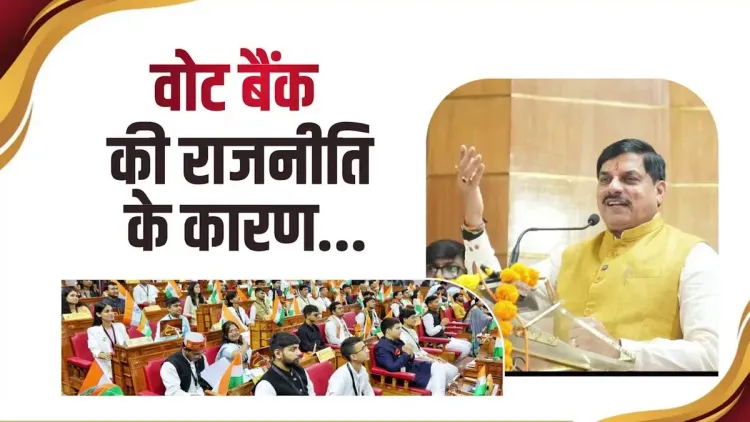
Synopsis
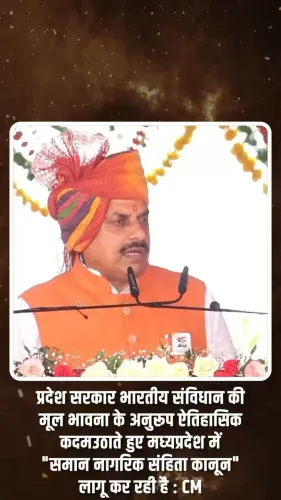
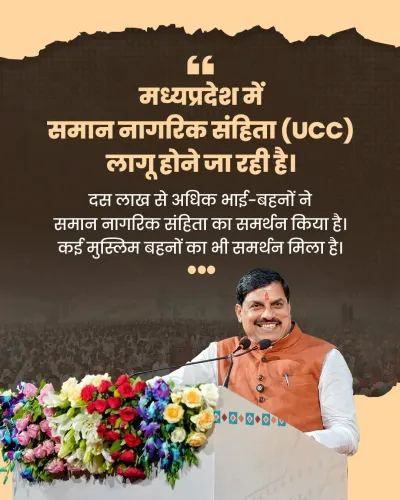
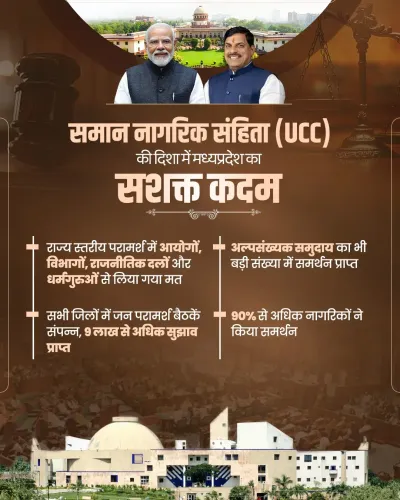
Madhya Pradesh Chief Minister Dr. Mohan Yadav declared on 13 August 2026 that the state has passed the Uniform Civil Code through due legislative process, invoking the principle of one nation, one law and following Uttarakhand's landmark 2024 precedent.
Key Takeaways
Madhya Pradesh has passed the Uniform Civil Code , according to Chief Minister Dr.
Mohan Yadav's post on 13 August 2026 .
The CM framed the UCC as the natural extension of 'one nation, one constitution, one prime minister.' Article 44 of the Indian Constitution has directed the state to pursue a UCC since 1950 .
Uttarakhand became the first Indian state to enact a UCC in February 2024 , setting the legislative precedent.
The BJP has included UCC as a national manifesto commitment since 2014 .
Legal challenges before higher courts are widely anticipated once implementation rules are framed.
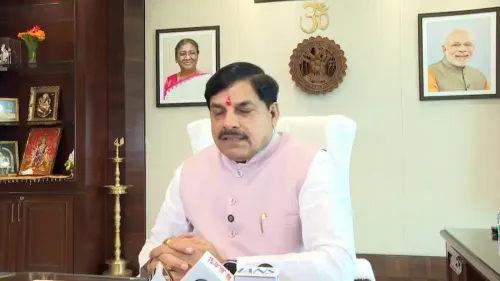
One nation, one constitution, one prime minister — and now, Madhya Pradesh Chief Minister Dr. Mohan Yadav says, one civil code. On 13 August 2026, the Chief Minister posted a pointed declaration on X, framing the state's passage of the Uniform Civil Code (UCC) as the logical completion of a constitutional promise that has waited over seven decades to be kept.
Posting in Hindi, Dr. Yadav posed a rhetorical challenge that cuts to the core of the UCC debate: 'Jab ek desh, ek vidhan, ek pradhan hai, toh alag-alag vidhan kaise ho sakte hain?' — 'When there is one nation, one constitution, one prime minister, how can there be separate laws?' He declared that Madhya Pradesh had passed the UCC 'with full legislative process and resolve.'
A constitutional directive, finally acted upon
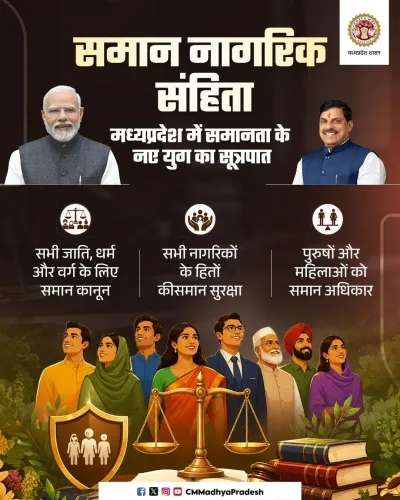
Article 44 of the Indian Constitution, drafted in 1950, placed the Uniform Civil Code in the Directive Principles of State Policy — an aspiration, not a mandate. For over seven decades, it remained precisely that: aspirational. The UCC would replace religion-specific personal laws governing marriage, divorce, inheritance, and adoption with a single, uniform statute applicable to all citizens regardless of faith.
The political momentum shifted decisively when Uttarakhand enacted its own UCC in February 2024, becoming the first Indian state to do so. That precedent cracked open the door for other BJP-governed states to follow. The Bharatiya Janata Party has carried UCC as a manifesto commitment since 2014, and state-level action has become the vehicle of choice in the absence of a central law.
MP's move and what follows
Madhya Pradesh, a BJP stronghold, now joins that legislative arc. Dr. Yadav's emphasis on the phrase 'vidhi-vidhan se' — 'through due process of law' — is deliberate: it signals that the passage was procedurally complete, anticipating the legal scrutiny that will follow. The UCC debate invariably lands in the courts, and challenges before the Madhya Pradesh High Court or the Supreme Court are widely expected once implementation rules are framed.
The specific provisions and the precise passage date of the Madhya Pradesh UCC are yet to be officially detailed in the public domain. What is clear is the political signal: a state of over 85 million people has moved from constitutional aspiration to enacted law — and its Chief Minister wants the country to know exactly why.
The question Article 44 asked in 1950 now has a new answer in Madhya Pradesh. Whether the courts agree will be the next chapter.
Point of View
One law' is a direct pitch to the party's core ideological base ahead of any future electoral cycle. The real test, however, lies not in the legislature but in the courts: Uttarakhand's UCC has already attracted petitions, and MP's version will face similar constitutional scrutiny on questions of federalism and minority rights. How the judiciary responds will determine whether state-level UCC becomes a replicable template or a cautionary tale.
NationPress
27 Sept 2026
Frequently Asked Questions
What is the Uniform Civil Code and why does it matter in India?
The Uniform Civil Code is a proposed single set of civil laws — covering marriage, divorce, inheritance and adoption — that would apply to all Indian citizens regardless of religion, replacing the current system of separate personal laws for different communities. It is directed by Article 44 of the Constitution as a goal for the state to pursue.
Has Madhya Pradesh officially passed the UCC?
Madhya Pradesh Chief Minister Dr. Mohan Yadav announced on 13 August 2026 that the state had passed the UCC through due legislative process. The specific provisions and exact passage date are yet to be officially detailed in the public domain.
Which was the first Indian state to pass the Uniform Civil Code?
Uttarakhand became the first Indian state to enact a Uniform Civil Code in February 2024 , establishing the legislative precedent that other BJP-governed states have since sought to follow.
What does the BJP's position on UCC mean for other states?
The BJP has included the Uniform Civil Code as a national manifesto commitment since 2014 . With both Uttarakhand and now Madhya Pradesh moving ahead at the state level, other BJP-governed states may face pressure — or find political incentive — to pursue similar legislation.
Can the Madhya Pradesh UCC be challenged in court?
Yes. Legal challenges before the Madhya Pradesh High Court or the Supreme Court of India are widely expected once the law's implementation rules are framed, with petitions likely to raise questions about federalism, constitutional validity, and minority rights.