CM Mohan Yadav Hails Vande Mataram's Full Rendition in Parliament
Synopsis
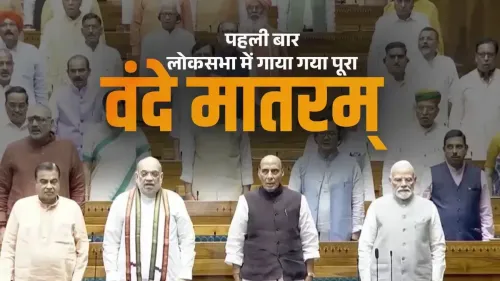
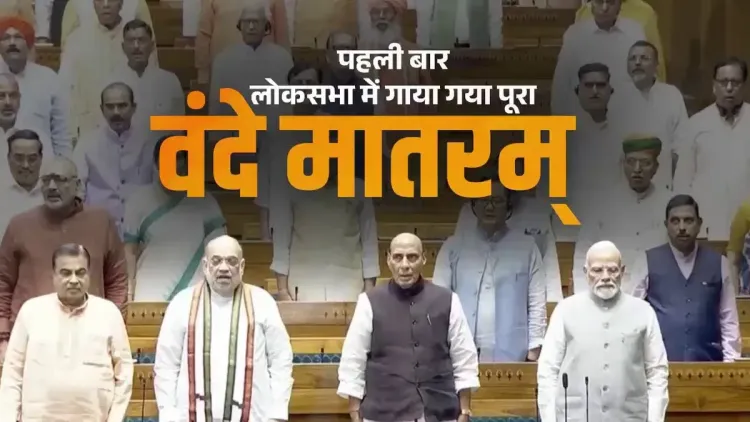
Madhya Pradesh Chief Minister Dr. Mohan Yadav hailed the reported first-ever complete rendition of India's national song Vande Mataram in Parliament, saying the moment will inspire generations to honour their duties to the nation — just ahead of Independence Day 2026.
Key Takeaways
Mohan Yadav , Chief Minister of Madhya Pradesh , posted on 13 August 2026 praising the singing of Vande Mataram in Parliament.
He described it as the first-ever complete rendition of the national song inside Parliament, calling it a source of national pride.
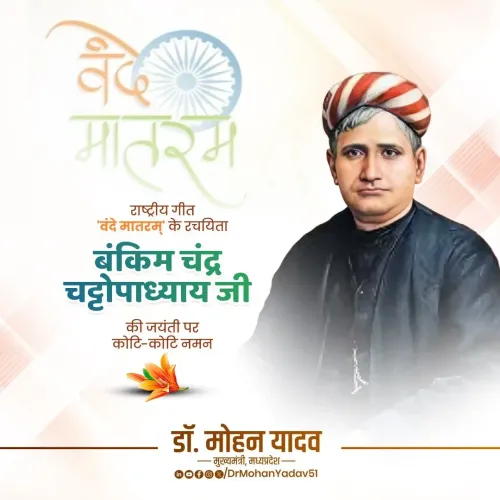
Vande Mataram was adopted as India's national song by the Constituent Assembly on 24 January 1950 , composed by Bankim Chandra Chattopadhyay .
The post came two days before Independence Day, 15 August 2026 , amplifying its patriotic context.
Yadav has served as Chief Minister of Madhya Pradesh since December 2023 .
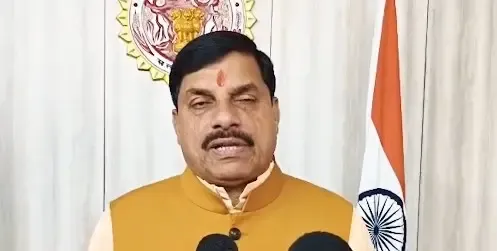
A moment described as historic inside the walls of India's highest legislative body — Madhya Pradesh Chief Minister Dr. Mohan Yadav on Thursday, 13 August 2026, responded with pride to what he called the first-ever complete singing of the national song 'Vande Mataram' in Parliament, calling it a moment that will inspire generations of Indians to remember their duties to the nation.
In his post on X, Dr. Yadav wrote: 'लोकतंत्र के सर्वोच्च मंदिर संसद में पहली बार राष्ट्रीय गीत वंदे मातरम् का पूर्ण गायन समस्त भारतवासियों को गर्व एवं राष्ट्र भावना से ओतप्रोत करने वाला है' — 'The complete singing of the national song Vande Mataram for the first time in Parliament, the supreme temple of democracy, is one that fills every Indian with pride and national feeling.' He added that the moment will 'always remind coming generations of their duties towards the nation.'
Vande Mataram's Place in India's Constitutional Identity
Vande Mataram was composed by Bankim Chandra Chattopadhyay and adopted as India's national song by the Constituent Assembly on 24 January 1950 — the same day the Constitution came into force. It holds equal honour alongside the national anthem, Jana Gana Mana, though it has historically been sung in shorter form at official functions. The song's roots in India's independence movement give it a charged emotional weight that goes well beyond ceremony.
Parliament as the Stage for National Symbolism
Dr. Yadav, who has led Madhya Pradesh as Chief Minister since December 2023, framed Parliament not merely as a legislative chamber but as the 'supreme temple of democracy' — a phrase that has become a recurring motif in BJP political discourse when invoking the sanctity of India's institutions. The choice of Parliament as the setting for such a rendition amplifies its symbolic register: it ties the living song to the living legislature, positioning both as custodians of national identity.
The post is part of a broader pattern in which senior BJP leaders use cultural and patriotic milestones — national symbols, historical anniversaries, constitutional moments — to reinforce a narrative of civilisational continuity and collective duty. With Independence Day falling on 15 August, just two days away, the timing sharpens that resonance further.
Whether this rendition in Parliament becomes a fixture in future sessions or remains a singular occasion, Dr. Yadav has made clear his view: some moments do not just mark history — they teach it to those who weren't yet there to witness it.
Point of View
The timing is unlikely to be incidental. It signals that the party sees cultural nationalism not as a departure from governance, but as an integral part of it.
NationPress
13 Aug 2026
Frequently Asked Questions
What is Vande Mataram and why is it significant?
Vande Mataram is India's national song, composed by Bankim Chandra Chattopadhyay and adopted by the Constituent Assembly on 24 January 1950. It played a central role in India's independence movement and holds equal constitutional honour alongside the national anthem Jana Gana Mana.
What did CM Mohan Yadav say about Vande Mataram in Parliament?
Dr. Mohan Yadav said the complete singing of Vande Mataram in Parliament fills every Indian with pride and national feeling, and that the moment will always remind future generations of their duties to the nation.
Has Vande Mataram been sung in full in Parliament before?
Dr. Yadav's post describes it as the first-ever complete rendition of the national song inside Parliament. This specific claim has not been independently verified from established public records.
Who is Dr. Mohan Yadav?
Dr. Mohan Yadav is the Chief Minister of Madhya Pradesh and a BJP leader who assumed office in December 2023.
Why did this happen just before Independence Day?
The rendition took place on 13 August 2026, two days before Independence Day on 15 August, a period when national symbols and patriotic expressions typically receive heightened official attention across India's institutions.