Gadkari clears ₹2,386 cr to 4-lane key Rajasthan NH stretch
Synopsis
Union Minister Nitin Gadkari has approved ₹2,386.08 crore to four-lane two national highway sections in Rajasthan — NH-954's Sadhuwali–Banwala stretch and NH-54's Banwala–Hanumangarh stretch — to cut congestion, improve safety, and boost connectivity between Sri Ganganagar and Hanumangarh districts.
Key Takeaways
The Centre has approved ₹2,386.08 crore for four-laning two national highway sections in northern Rajasthan.
The upgrade covers NH-954 (Sadhuwali–Banwala) and NH-54 (Banwala–Hanumangarh) , both to be built with paved shoulders.
Urban areas of Lalgadh Jattan, Pakka Sahrana, and Hanumangarh will see through-traffic diverted away from populated zones.
The corridor strengthens road links between Sri Ganganagar and Hanumangarh , two major district headquarters in northern Rajasthan.
Tourism sites including Bhatner Fort, Kalibanga Museum, Balaji Dham , and Brahmani Mata Mandir will gain improved road access.
The project aligns with the PM Gati Shakti national master plan for integrated multimodal infrastructure.
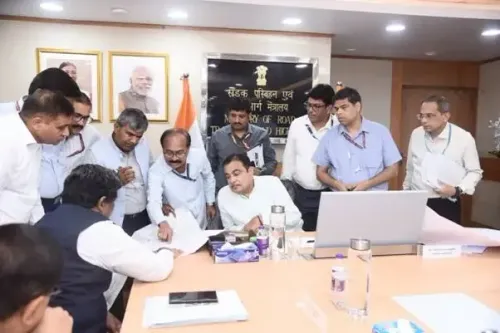
A ₹2,386.08 crore approval is about to redraw the road map of northern Rajasthan — and two district headquarters that have long shared a congested corridor are at the centre of it. Union Road Transport and Highways Minister Nitin Gadkari on Thursday, 13 August 2026, announced the Centre's sanction to upgrade two national highway sections in Rajasthan to four lanes with paved shoulders, directly linking Sri Ganganagar and Hanumangarh districts through a modernised corridor.
The two sections getting the four-lane treatment
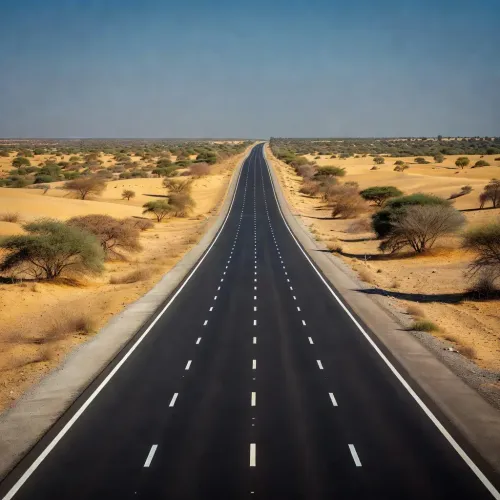
The approved upgrade covers the Sadhuwali–Banwala section of National Highway 954 and the Banwala–Hanumangarh section of National Highway 54. Together, the two stretches form a continuous corridor threading through northern Rajasthan's most densely trafficked zones. Paved shoulders — a critical safety feature that doubles as an emergency lane — are built into the design, reflecting the ministry's broader push to eliminate the narrow, unforgiving road edges that have historically driven accident statistics on Indian highways.
Relief for Lalgadh Jattan, Pakka Sahrana and Hanumangarh town
Gadkari specifically named Lalgadh Jattan, Pakka Sahrana, and Hanumangarh as urban centres that will benefit from traffic being diverted away from populated zones. The four-laning creates a bypass effect: through-traffic, especially heavy freight, no longer has to crawl through market streets and residential arteries. The result is a twin dividend — faster travel times for long-haul commuters and measurably safer, quieter streets for residents.
Sri Ganganagar–Hanumangarh: closing the connectivity gap
The corridor's most strategic payoff is the strengthened link between Sri Ganganagar and Hanumangarh, two of Rajasthan's major district headquarters in the state's northern belt. Better road connectivity between district headquarters is a core metric under the PM Gati Shakti national master plan, launched in October 2021, which coordinates highway upgrades with multimodal logistics and regional economic planning. This approval fits squarely into that framework.
Temples, forts and a museum that stand to gain
Gadkari's announcement also put tourism firmly on the ledger. In Sri Ganganagar district, the upgraded highway will ease access to Balaji Dham, Fort Rajwada, and Gauri Shankar Mandir. Across the district boundary in Hanumangarh, the beneficiaries include Bhatner Fort, the Kalibanga Museum — home to one of the most significant Indus Valley Civilisation excavation sites in India — and Brahmani Mata Mandir. Better roads to heritage and religious sites translate directly into longer tourist stays and higher local economic activity, the kind of soft multiplier that highway budgets rarely headline but consistently deliver.
The next critical milestones are tendering, land acquisition, and construction timelines — the points where approvals become asphalt. For northern Rajasthan's commuters and its tourism economy, the clock has started.
Point of View
A state that has seen successive project sanctions under the PM Gati Shakti framework. Connecting two district headquarters through a dedicated, high-capacity corridor is a deliberate strategy to decongest urban arteries while simultaneously opening heritage tourism routes — a model Gadkari's ministry has deployed in other underserved northern districts. The announcement, tagged to multiple Rajasthan BJP leaders and the PMO, also carries a clear political signal ahead of any state-level electoral cycle: infrastructure delivery as a visible, attributable dividend. The real test, as always, will be whether tendering and land acquisition timelines hold.
NationPress
13 Aug 2026
Frequently Asked Questions
Which national highway sections in Rajasthan have been approved for four-laning?
The approved sections are the Sadhuwali–Banwala section of National Highway 954 and the Banwala–Hanumangarh section of National Highway 54, both to be upgraded with paved shoulders.
What is the cost of the Rajasthan highway upgrade approved by Gadkari?
The total approved cost for the four-laning of both NH sections in Rajasthan is ₹2,386.08 crore.
Which cities will benefit from the NH-954 and NH-54 upgrade in Rajasthan?
Lalgadh Jattan, Pakka Sahrana, and Hanumangarh will see reduced urban congestion, while Sri Ganganagar and Hanumangarh districts will gain improved inter-district connectivity.
Which tourist sites will get better road access after this Rajasthan highway upgrade?
In Sri Ganganagar district: Balaji Dham, Fort Rajwada, and Gauri Shankar Mandir. In Hanumangarh district: Bhatner Fort, Kalibanga Museum, and Brahmani Mata Mandir.
How does this Rajasthan highway project connect to PM Gati Shakti?
PM Gati Shakti, launched in October 2021, is the national master plan for integrated multimodal infrastructure. The Sri Ganganagar–Hanumangarh corridor upgrade aligns with its goal of improving district-level connectivity and regional economic links.