CM Mohan Yadav Holds Cabinet Meet at Gandhi Sagar Dam
Synopsis
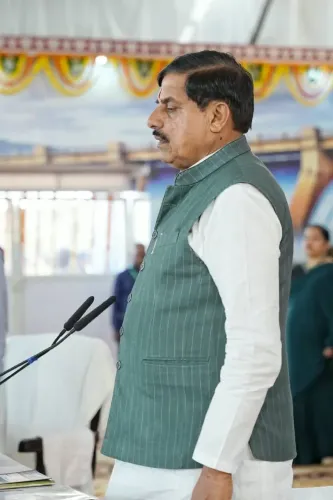
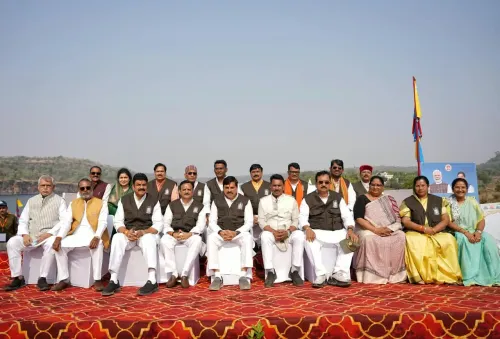
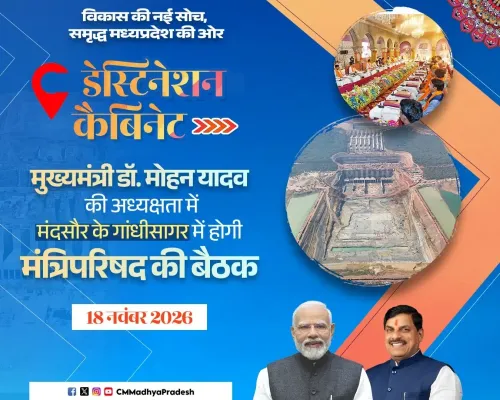
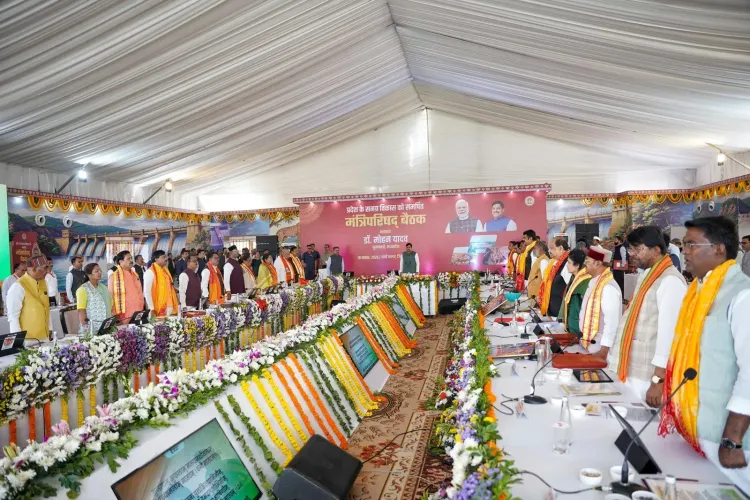
Madhya Pradesh CM Dr. Mohan Yadav held a cabinet meeting at Gandhi Sagar, Mandsaur on 18 November 2026, opened with Vande Mataram, to signal fresh policy focus on the state's energy capacity, industrial growth, and tourism potential centred on the Chambal reservoir.
Key Takeaways
Madhya Pradesh Chief Minister Dr.
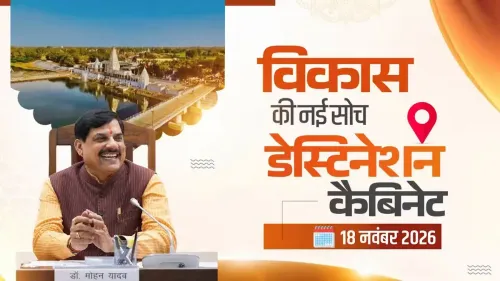
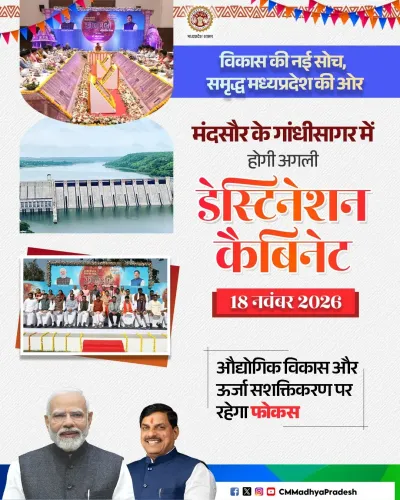
Mohan Yadav convened the state cabinet at Gandhi Sagar, Mandsaur on 18 November 2026 .
The meeting opened with the national song 'Vande Mataram' , in line with BJP-state ceremonial practice.
The stated agenda covers three pillars: energy capacity , industrial development , and tourism potential .
Gandhi Sagar is Madhya Pradesh's largest reservoir, with hydroelectric infrastructure and significant eco-tourism scope on the Chambal River in western MP.
The out-of-capital cabinet format is a deliberate governance signal, placing ministers at a priority site rather than the Bhopal secretariat.
Specific policy decisions or project approvals from the meeting are yet to be announced publicly.
With Vande Mataram ringing out over the waters of one of Madhya Pradesh's most storied reservoirs, Madhya Pradesh Chief Minister Dr. Mohan Yadav convened a full cabinet meeting at Gandhi Sagar, Mandsaur on Wednesday, 18 November 2026 — a deliberate signal that the state's energy, industry, and tourism agenda is moving beyond the capital's corridors.
The session opened with the national song 'Vande Mataram' before the cabinet turned to what Dr. Yadav described as a renewed resolve to give 'new direction' to the state's energy capacity, industrial development, and tourism potential. Hosting the cabinet at the dam site itself — rather than in Bhopal — is a pointed statement of intent.
Why Gandhi Sagar, and Why Now
Gandhi Sagar is the largest reservoir in Madhya Pradesh, sitting on the Chambal River in Mandsaur district in the state's western reaches. The dam carries significant hydroelectric infrastructure and has long been identified as an anchor for eco-tourism development in a region that has historically lagged behind central MP in investment attention. Holding cabinet here frames the site not merely as existing infrastructure but as a live economic asset waiting to be unlocked.
Indian state governments have increasingly used out-of-capital cabinet meetings as a governance tool — a way to put ministers physically on-site at a priority area, generate local visibility, and signal to investors and residents alike that decisions are being taken in the field rather than from behind a desk. For BJP-led Madhya Pradesh, which has been actively pitching industrial corridors and renewable energy expansion since Dr. Yadav took office in December 2023, the Gandhi Sagar location ties that broader pitch to a specific, tangible geography.
Energy, Industry, Tourism: Three Threads, One Site
The three themes the Chief Minister flagged — energy capacity, industrial growth, and tourism — are not incidental. Gandhi Sagar's hydroelectric potential makes it directly relevant to the state's power agenda. The surrounding Mandsaur-Neemuch belt has seen interest from pharmaceutical and agro-processing industries. And the reservoir's scenic expanse, wildlife corridor access, and heritage surroundings have been pitched to tourism planners as an underexploited draw for both domestic and international visitors.
The convergence of all three threads at a single cabinet venue is a rare alignment — suggesting that whatever announcements emerge, they are likely to be integrated rather than piecemeal.
Ceremony and Substance at Gandhi Sagar
Opening with Vande Mataram is standard ceremonial practice in BJP-governed states, lending an air of national purpose to state-level deliberations. But the choice of Gandhi Sagar over a district collector's conference hall or the Bhopal secretariat does extra symbolic work: it asks ministers to see the reservoir not as a file reference but as a place where policy lands in the real world.
Specific resolutions, project approvals, or investment figures from the meeting have not yet been released — but the cabinet's presence at the site all but guarantees that the Gandhi Sagar region will feature prominently in MP's near-term policy announcements on energy and tourism.
The decisions made beside the Chambal today will be the ones to watch when the minutes are published. Gandhi Sagar has waited a long time for this kind of attention — the question now is what the cabinet puts on paper to match the symbolism.
Point of View
Out-of-Bhopal cabinets also serve as internal party messaging, projecting energy and regional reach. The Gandhi Sagar location, sitting at the intersection of hydropower, the emerging Neemuch-Mandsaur pharma belt, and underdeveloped eco-tourism, offers a rare policy trifecta that could, if matched by concrete announcements, advance MP's pitch to investors. The real test is whether the symbolism at the reservoir translates into funded projects — or remains an evocative backdrop.
NationPress
18 Nov 2026
Frequently Asked Questions
Why was the Madhya Pradesh cabinet meeting held at Gandhi Sagar instead of Bhopal?
The meeting was deliberately held at the Gandhi Sagar dam site in Mandsaur to signal the state government's focus on the region's energy, industrial, and tourism potential. Indian state governments increasingly use out-of-capital cabinet sessions to visibly prioritise specific project sites and regional development.
What is Gandhi Sagar and why is it significant for Madhya Pradesh?
Gandhi Sagar is the largest reservoir in Madhya Pradesh, located on the Chambal River in Mandsaur district. It hosts hydroelectric infrastructure and is considered a major potential hub for eco-tourism and industrial development in western MP.
What were the main topics of the Gandhi Sagar cabinet meeting on 18 November 2026?
CM Dr. Mohan Yadav stated the cabinet convened with a resolve to give new direction to the state's energy capacity, industrial development, and tourism possibilities centred on the Gandhi Sagar region. Specific decisions had not been publicly announced at the time of the post.
Who is Dr. Mohan Yadav and when did he become Madhya Pradesh Chief Minister?
Dr. Mohan Yadav is a BJP leader who became Chief Minister of Madhya Pradesh in December 2023. He succeeded Shivraj Singh Chouhan after the BJP's victory in the state assembly elections.
What is the significance of opening the cabinet with Vande Mataram?
Vande Mataram is India's national song and opening state government functions with its recitation is standard ceremonial practice in BJP-governed states, symbolically framing policy work within a framework of national purpose.