CM Mohan Yadav Launches MP Urban Growth Conclave 2.0 in Indore
Synopsis
Chief Minister Dr. Mohan Yadav inaugurated MP Urban Growth Conclave 2.0 in Indore on 28 October 2026, releasing the Indore Economic Region 2047 masterplan, three draft urban policies on housing, wastewater reuse and land rules, and signing six MoUs with banks and institutions.
Key Takeaways
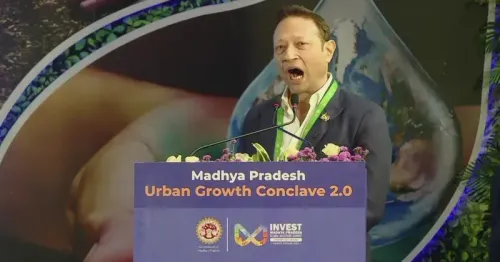
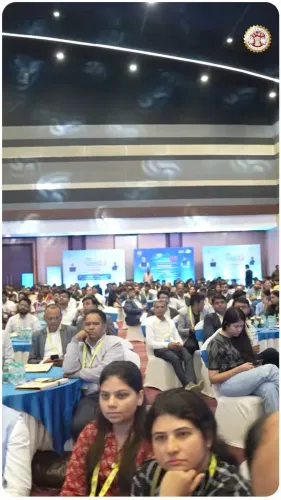
Mohan Yadav inaugurated MP Urban Growth Conclave 2.0 at Brilliant Convention Centre, Indore on 28 October 2026 .
The Indore Economic Region 2047: Arthik Mahayojana was released under NITI Aayog's City Economic Region (CER) initiative.
Three draft policies launched: MP Urban Affordable Housing and Habitat Policy 2026 , MP Treated Wastewater Recycling and Reuse Policy 2026 , and MP Unified Land Development and Building Promotion Rules 2026 .
Six MoUs signed, linking Indore, Ujjain, and Rewa civic bodies with Bank of India, Indian Overseas Bank, and HDFC Bank respectively.
Cross-state institutional tie-up with Maharashtra Institution for Transformation (MITRA) included in the MoU bundle.
BRSR sustainability reports of Bhopal and Indore municipal corporations released, signalling ESG-oriented urban governance.
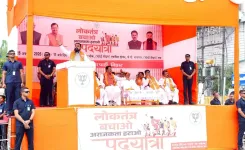
Three sweeping urban policy drafts, six financial MoUs, and a long-range economic masterplan for Indore — all unveiled in a single afternoon. Chief Minister Dr. Mohan Yadav inaugurated the Madhya Pradesh Urban Growth Conclave 2.0 at the Brilliant Convention Centre, Indore, on Wednesday, 28 October 2026, signalling the state's most concentrated push yet to reframe its cities as investment-ready, future-proofed economic engines.
Indore Economic Region 2047: A NITI Aayog-backed masterplan takes shape
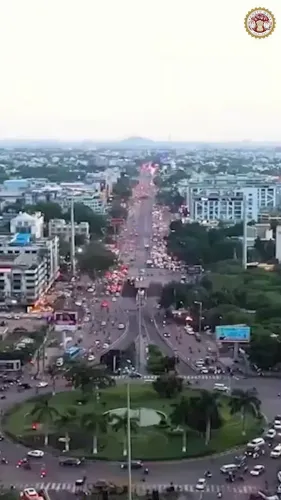
The headline document of the conclave was the release of the 'Indore Economic Region 2047: Arthik Mahayojana' — a long-horizon economic masterplan prepared under NITI Aayog's City Economic Region (CER) initiative. The CER framework is central government's push to move urban planning beyond municipal boundaries and treat major cities as integrated economic zones. Indore, already the state's commercial capital and a perennial topper in national urban sanitation rankings, now has a blueprint stretching two decades into the future.
CM Yadav also released the Business Responsibility and Sustainability Report (BRSR) of both Bhopal Municipal Corporation and Indore Municipal Corporation — a disclosure exercise more commonly associated with listed corporates, now being applied to civic bodies to attract ESG-conscious investors.
Three draft policies that could reshape housing, water and land use
The conclave saw the launch of three significant policy drafts. The Madhya Pradesh Urban Affordable Housing and Habitat Policy, 2026 takes direct aim at the state's urban housing deficit. The Madhya Pradesh Treated Wastewater Recycling and Reuse Policy, 2026 builds a regulatory spine for water circularity — critical for a state where rapid urbanisation is stressing existing water infrastructure. The Madhya Pradesh Unified Land Development and Building Promotion Rules, 2026 consolidates what has historically been a fragmented maze of land-use regulations across different civic jurisdictions.
All three remain drafts at this stage and their notification timelines and budgetary backing have not yet been finalised, but their simultaneous launch at a single conclave signals coordinated intent across the Urban Development and Housing Department.
Six MoUs: banks, hospitality, and cross-state institutional tie-ups
In CM Yadav's presence, six Memoranda of Understanding were exchanged — spanning urban financing, sustainable resource management, institutional collaboration, and investment promotion. The six partnerships are:
- Indore Municipal Corporation and Bank of India
- Ujjain Development Authority and Indian Overseas Bank
- Rewa Municipal Corporation and HDFC Bank
- Urban Development and Housing Department, all urban local bodies, and the Hotel and Restaurant Association (Western India)
- Urban Development and Housing Department and Maharashtra Institution for Transformation (MITRA)
- Urban Development and Housing Department and the Industrial Policy and Investment Promotion Department
The bank linkages — spanning a public sector bank, a regional public sector bank, and a private lender — reflect a deliberate strategy to diversify the financing architecture for urban infrastructure beyond state budget allocations. The tie-up with MITRA, Maharashtra's state transformation agency, points to inter-state knowledge-sharing on urban governance reform. The internal MoU between Urban Development and the Investment Promotion Department is designed to streamline the pipeline from investor interest to project clearance.
Madhya Pradesh's urban growth trajectory and what comes next
This conclave is the second in the series — Urban Growth Conclave 2.0 — continuing a momentum Madhya Pradesh built after successive smart-city upgrades in Indore and Bhopal under the Smart Cities Mission (2015). The state has steadily positioned these two cities as twin growth nodes, with Indore anchoring commercial and industrial activity and Bhopal driving governance and institutional investment.
The real test now lies in execution: whether the three draft policies are notified with clear implementation timelines, and whether the six MoUs translate into disbursed credit and measurable project pipelines. The Urban Development Department's quarterly reviews will be the first public signal of whether 28 October 2026 was a planning milestone or merely a well-attended declaration.
Point of View
A NITI Aayog-anchored masterplan, and a diversified MoU bundle is less a single event than a deliberate policy-signalling exercise — MP is telling investors and central planners that it has both the vision documents and the financing architecture in place. Anchoring the conclave in Indore, the state's commercial engine, while including Ujjain and Rewa in the MoU framework, suggests an attempt to distribute urban investment pull beyond the Indore-Bhopal corridor. The use of BRSR disclosures for municipal corporations is a novel governance instrument that, if institutionalised, could materially improve civic credit ratings and unlock cheaper debt. The immediate caveat: all three policies remain drafts, and India's urban policy landscape is littered with frameworks that never cleared the notification stage — the conclave's real legacy will be written in gazette notifications and bank disbursals, not podium announcements.
NationPress
28 Oct 2026
Frequently Asked Questions
What is the MP Urban Growth Conclave 2.0?
It is a state-level urban development summit organised by the Madhya Pradesh government, inaugurated by CM Dr. Mohan Yadav in Indore on 28 October 2026, focused on attracting investment, launching urban policy drafts, and signing financing MoUs for city infrastructure.
What is the Indore Economic Region 2047 masterplan?
It is a long-range economic masterplan for the Indore urban region, prepared under NITI Aayog's City Economic Region (CER) initiative, released at the conclave to guide integrated urban and economic development up to the year 2047.
Which policies were launched at the MP Urban Growth Conclave 2.0?
Three draft policies were launched: the MP Urban Affordable Housing and Habitat Policy 2026, the MP Treated Wastewater Recycling and Reuse Policy 2026, and the MP Unified Land Development and Building Promotion Rules 2026. All three are currently in draft form.
Which banks signed MoUs at the conclave?
Bank of India signed an MoU with Indore Municipal Corporation, Indian Overseas Bank with Ujjain Development Authority, and HDFC Bank with Rewa Municipal Corporation, alongside three other institutional partnerships.
What is BRSR and why did Indore and Bhopal release it?
BRSR stands for Business Responsibility and Sustainability Report, a disclosure framework typically used by listed companies. Its release by Indore and Bhopal municipal corporations signals a move toward ESG-style transparency in urban governance to attract sustainability-focused investors.